By Baptiste Murier, antique and second-hand dealer in Île-de-France.
In a French estate, the inventory is the official list of the deceased's property, with a value for each item. It is compulsory when an heir accepts the estate "up to the net assets" (à concurrence de l'actif net). It is also required when a usufructuary (someone with the right to use the property for life) takes over the use of the furniture. In other cases, it is optional, but it can be very helpful: protecting the heirs against debts, avoiding disputes when the property is shared out, or lowering inheritance tax.
We are antique dealers, not lawyers. We often meet families who ask themselves this question when they come to empty a home. This article gives the main rules under French law. For your own situation, your notaire (notary) remains the right person to ask.
What is an estate inventory?
It is a written deed that describes the property left by the deceased and gives it a value. Under article 789 of the French Civil Code, it includes an estimate "item by item" of the assets and the debts. In other words, every piece of furniture, every valuable item, every account and every debt is listed.
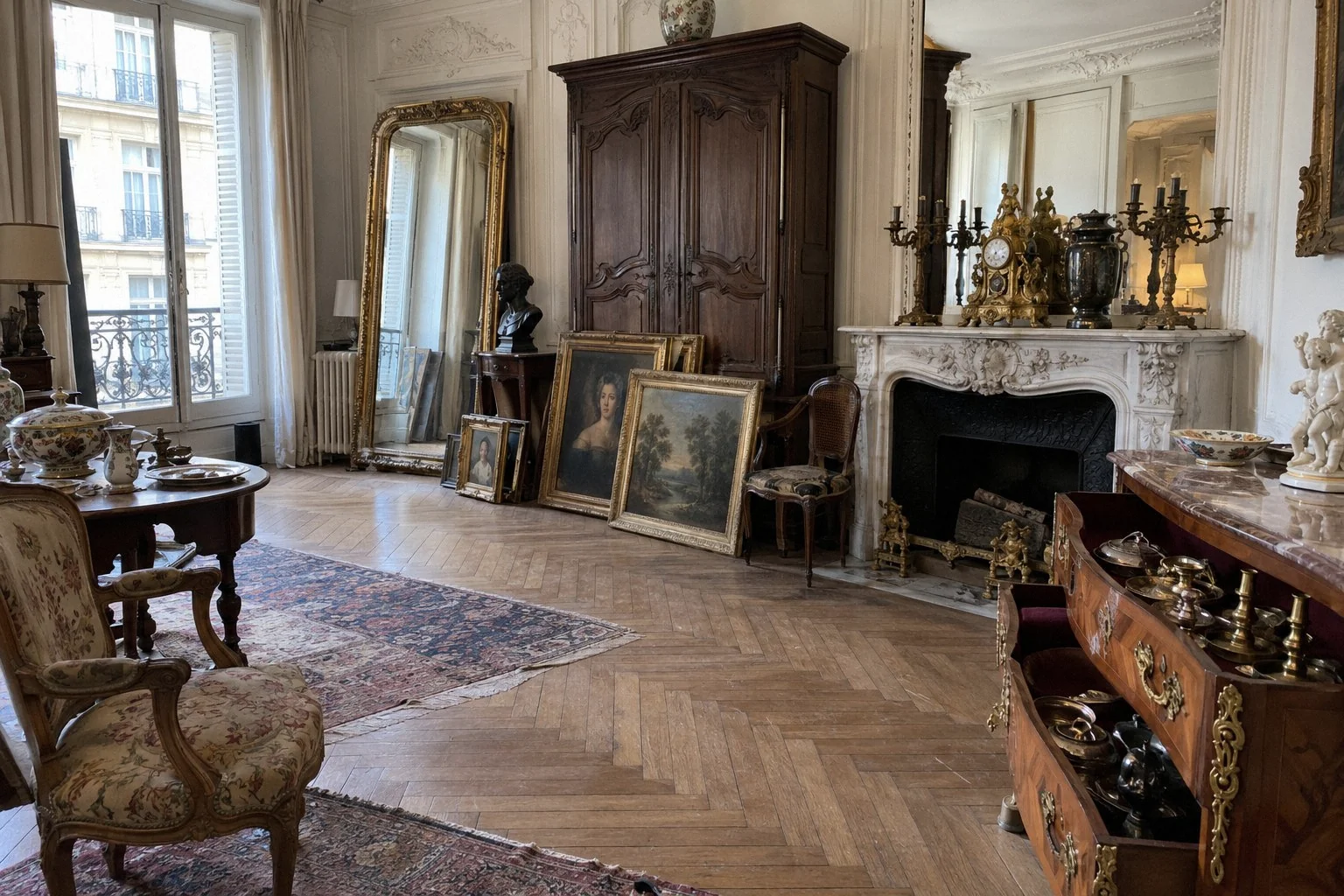
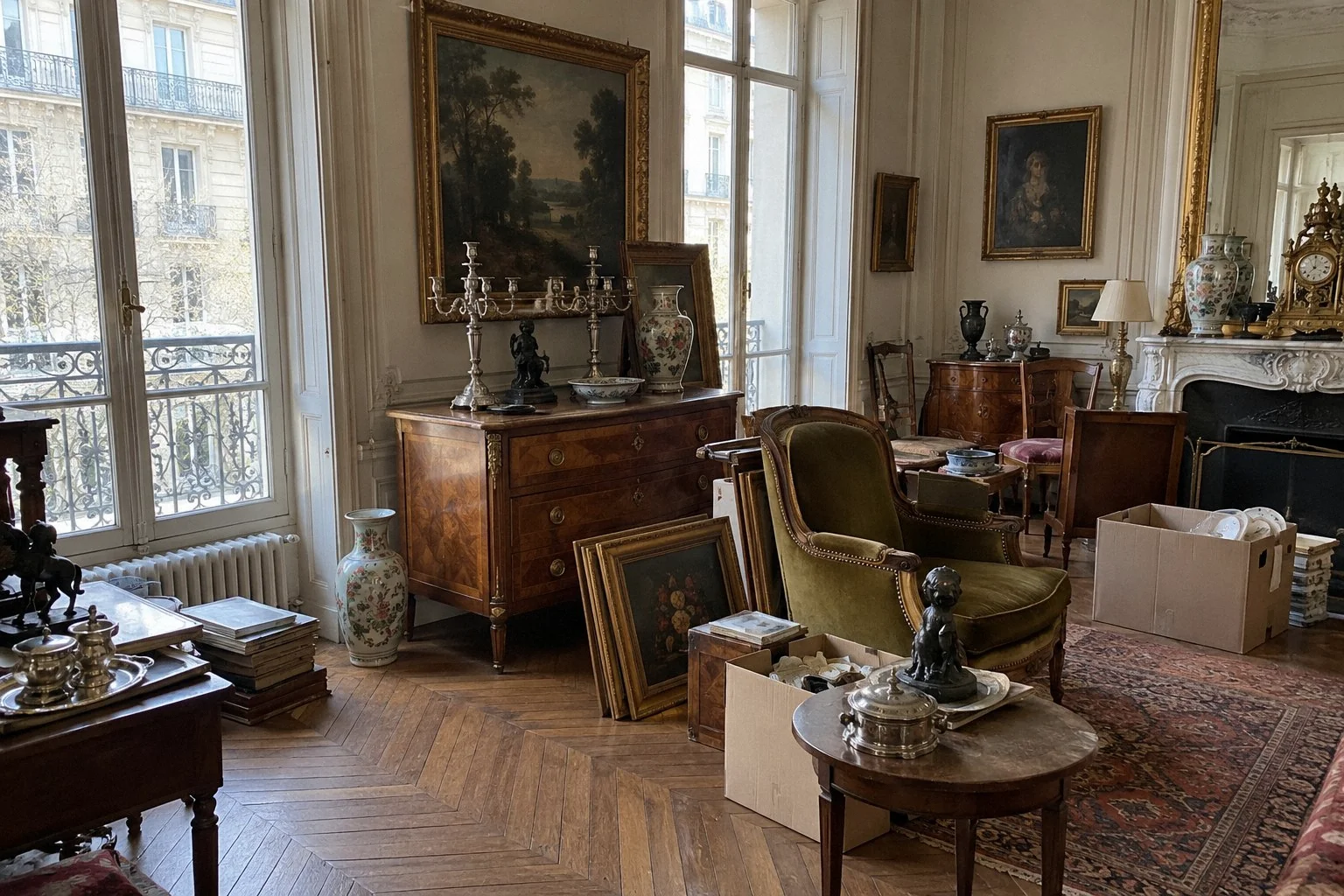
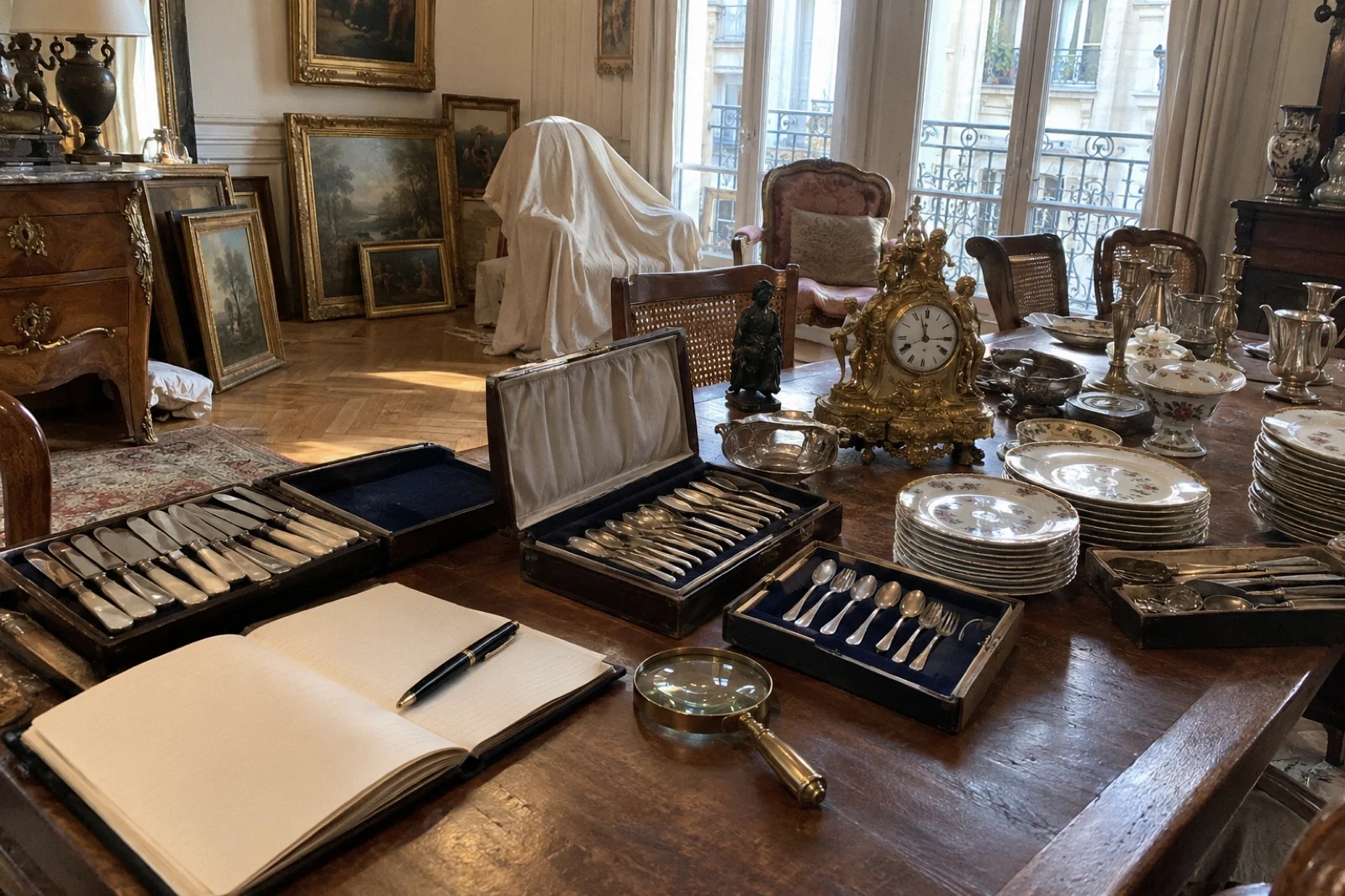
For the contents of the home, the inventory is usually done on site. The person in charge of the valuation goes from room to room. They note the furniture, the crockery, the paintings, the silver, the clocks, the jewellery. This valuation of the furniture is called the prisée.
It should not be confused with:
- the déclaration de succession (inheritance tax return), which the heirs file with the French tax authorities to calculate the tax;
- the attestation or acte de notoriété (deed of heirship), which says who the heirs are;
- a simple valuation, made by a dealer or an antique dealer, which has no official standing.
When is the inventory compulsory?
When an heir accepts up to the net assets
Under French law, an heir has three choices (article 768 of the Civil Code): accept outright, renounce, or accept up to the net assets. This last choice is a protection. The heir only pays the deceased's debts up to the value of what they receive.
In return, the law asks for transparency. The heir makes an official declaration, then must have an inventory drawn up (article 789 of the Civil Code). This inventory is then filed with the court within two months, a time limit the judge can extend (article 790). Without filing in time, the heir is treated as having accepted outright. They then lose their protection against the debts.
This is therefore the clearest case: no acceptance up to the net assets without an inventory.
When an heir is a minor or under guardianship
French law protects heirs who are minors and adults under guardianship. For them, accepting an estate outright in principle requires the permission of the judge or the family council. Without this permission, the estate is accepted up to the net assets. And in that case, as seen above, the inventory becomes necessary.
The exact rules depend on the protective measure in place. The notaire and, where relevant, the guardianship judge (juge des tutelles) will explain the steps to follow.
When there is a usufruct over the furniture
This is often the case of a surviving spouse who receives the usufruct (the lifelong right to use) of the property. Article 600 of the Civil Code provides that the usufructuary has an inventory of the furniture drawn up before taking over its use, in the presence of the bare owners (nus-propriétaires, those who will own it fully later). This makes it possible to know, later on, what must go back to them.
In practice, this rule is sometimes set aside, for example when the deceased exempted the usufructuary from it. Your notaire will tell you whether an inventory is expected in your case.
When is the inventory simply useful?
To reduce inheritance tax
Without an inventory or an auction sale, the French tax authorities count household furniture as at least 5 % of the other assets in the estate. This is the allowance under article 764 of the French tax code (CGI). If the furniture is worth clearly less, this allowance inflates the taxable base.
An inventory drawn up in the form set by article 789 of the Civil Code, and within five years of the death, makes it possible to use the real value instead. We explain this rule in detail in our article on the 5 % furniture allowance in French inheritance.
Be careful, an inventory has a cost. It is only useful if there is tax to pay. The surviving spouse and the Pacs partner (civil partner) are exempt (article 796-0 bis of the CGI), and in that case the allowance in principle changes nothing.
To prepare a sharing out without conflict
When several heirs share the furniture, each wants to know what their share is worth. An official list, with values set by a neutral professional, limits disagreements. It also serves as a basis if one heir keeps a piece of furniture and must compensate the others.
To keep a record before emptying the home
Once the home has been emptied, it is too late to describe what it contained. The inventory fixes the situation at a point in time. This is useful if an heir lives far away, if items have already gone missing, or if the family fears a dispute later on.
Who makes the inventory: notaire or commissaire de justice?
Article 789 of the Civil Code names the notaire, the commissaire-priseur judiciaire (court appointed auctioneer) and the huissier (bailiff). Since 1 July 2022, these last two professions have become one: the commissaire de justice (court officer). That is why people now talk about an estate inventory by a commissaire de justice.
In practice, the two often work together:
- the notaire writes the deed, brings the heirs together and lists the accounts, investments and debts;
- the commissaire de justice goes to the home and makes the prisée (valuation) of the furniture and items.
The choice depends on the estate and on what the inventory is for. The notaire handling the estate knows whom to call on. Fees follow regulated rates: ask for them before starting the inventory.
And where does the antique dealer fit in?
An antique dealer does not draw up an official inventory. Our opinion has no standing for the court or for the tax authorities within the meaning of article 789 of the Civil Code. It can still be useful, before and after.
Before the inventory, our free valuation helps the family see where it stands:
- is the furniture worth much less than the 5 % allowance, or more?
- are there items that deserve the eye of the commissaire de justice, such as a clock, silver, a painting or jewellery?
- is an official inventory worth its cost, or is the allowance enough?
These answers help the notaire advise the family. We explain how we work in these situations on our page antique dealer for estates in the Ile-de-France.
After the inventory, once the heirs have decided to sell, we can buy the items, with immediate payment by bank transfer. The amount we pay can also be deducted from the cost of clearing the home.
One important point: if an inventory is planned, do not sell or move anything beforehand. Decisions are made with the notaire, then come the sale and the house clearance. For the order of the steps, see also what to do with the furniture in an estate.
Good habits in the meantime
- Tell the notaire before any sale or any removal.
- Photograph each room, and the furniture and items close up.
- Gather the invoices, the home insurance policies and their schedules.
- Leave items where they are, without sorting them or dividing them between heirs.
- Have the contents valued to know whether an official inventory is justified.
A first opinion on the furniture
Not sure whether to start an inventory? Call us on 06 24 56 38 58 (from abroad: +33 6 24 56 38 58), or send photos of the rooms on WhatsApp to the same number. We give you a free valuation without obligation, from photos or on site, in Paris and the Ile-de-France.