
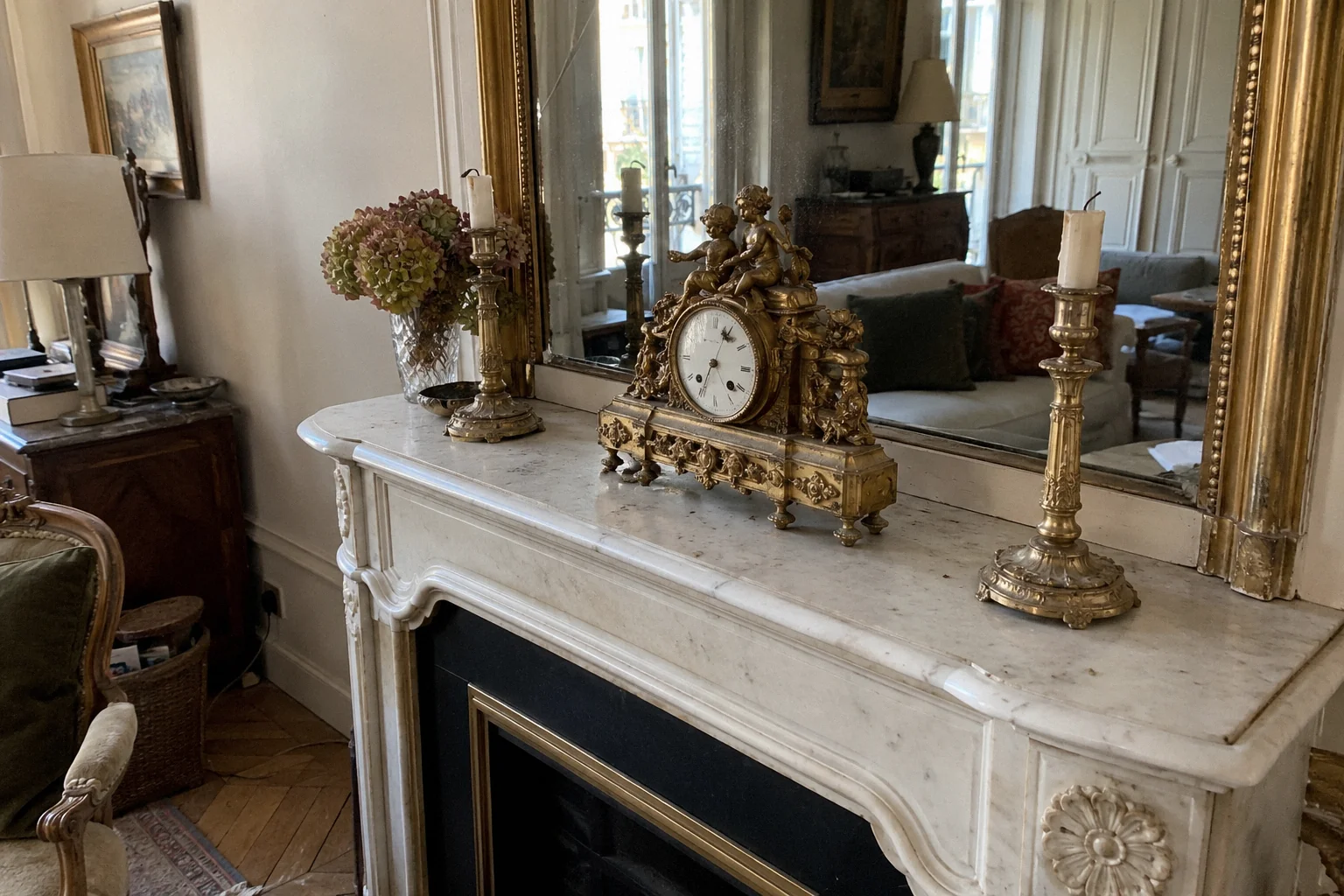
Antique clocks and watches
Antique clock, wall clock and pocket watch valuation
A mantel clock, a cartel wall clock, a regulator or a grandfather's watch? We look at the movement, the case, the dial and the signatures, then give you a free valuation.
4,6/5 · 53 Google reviews · Free valuation and free travel
People often show us a clock that has sat on a mantelpiece for years, or a watch kept in a drawer. Before deciding what to do with it, you need to know what it is. Here is how we work.
Which antique clocks we value
We look at all the clocks and watches found in houses and apartments around Île-de-France:
- mantel clocks, alone or with their garniture (the matching pair of candelabra or vases);
- cartels, clocks that hang on the wall, sometimes on a bracket;
- regulators, precision wall or floor clocks, and comtoise longcase clocks;
- pocket watches, small fob watches and old wristwatches.
A clock that has stopped often keeps its value. Do not throw it away because it no longer works.
What we look at to value an antique clock
The movement
We open the back door and look at the backplate, the brass plate that holds the mechanism. Many 19th-century French movements bear a stamped mark, for example that of Japy Frères, a major maker of the time. The name written on the dial is often that of the clockmaker who sold the clock, not the one who made the mechanism.
The pendulum suspension also helps with dating. Silk thread suspension is the oldest. The suspension invented by Achille Brocot, adjusted with a small key through a hole in the dial, then spread during the 19th century.
The case and decoration
The case often matters more than the movement. We look at the material: gilt bronze, marble, marquetry wood, porcelain or spelter, a less noble alloy that imitates bronze. Bronze is heavy and its details are fine. Spelter is lighter and its relief is softer.
We also look at the gilding. Mercury gilding, which is older, has a warm, deep tone. Electrolytic gilding, which spread in the 19th century, is thinner.
The style gives a first idea of the period: portico clocks with columns at the end of the 18th century, figural bronze clocks under the Empire and the Restoration, black marble clocks at the end of the 19th century. We then check that the movement and the case belong together.
Watches
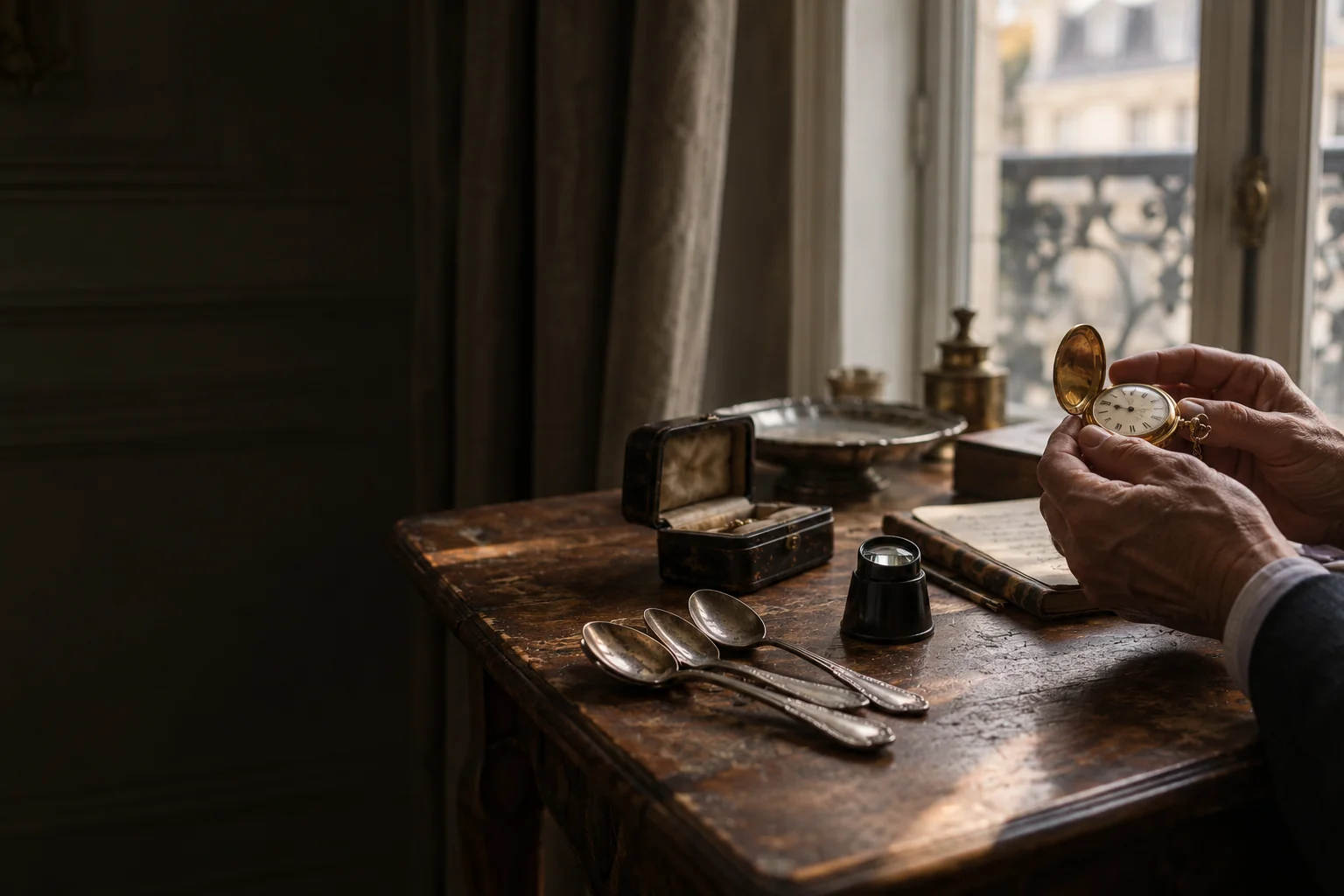
For a watch, we look at the case (gold, silver or another metal), its hallmarks, the dial, the name of the maker and the movement. A watch wound with a key is generally older than a keyless watch, wound by the crown, which spread in the second half of the 19th century. For a wristwatch, the original box and papers matter a lot.
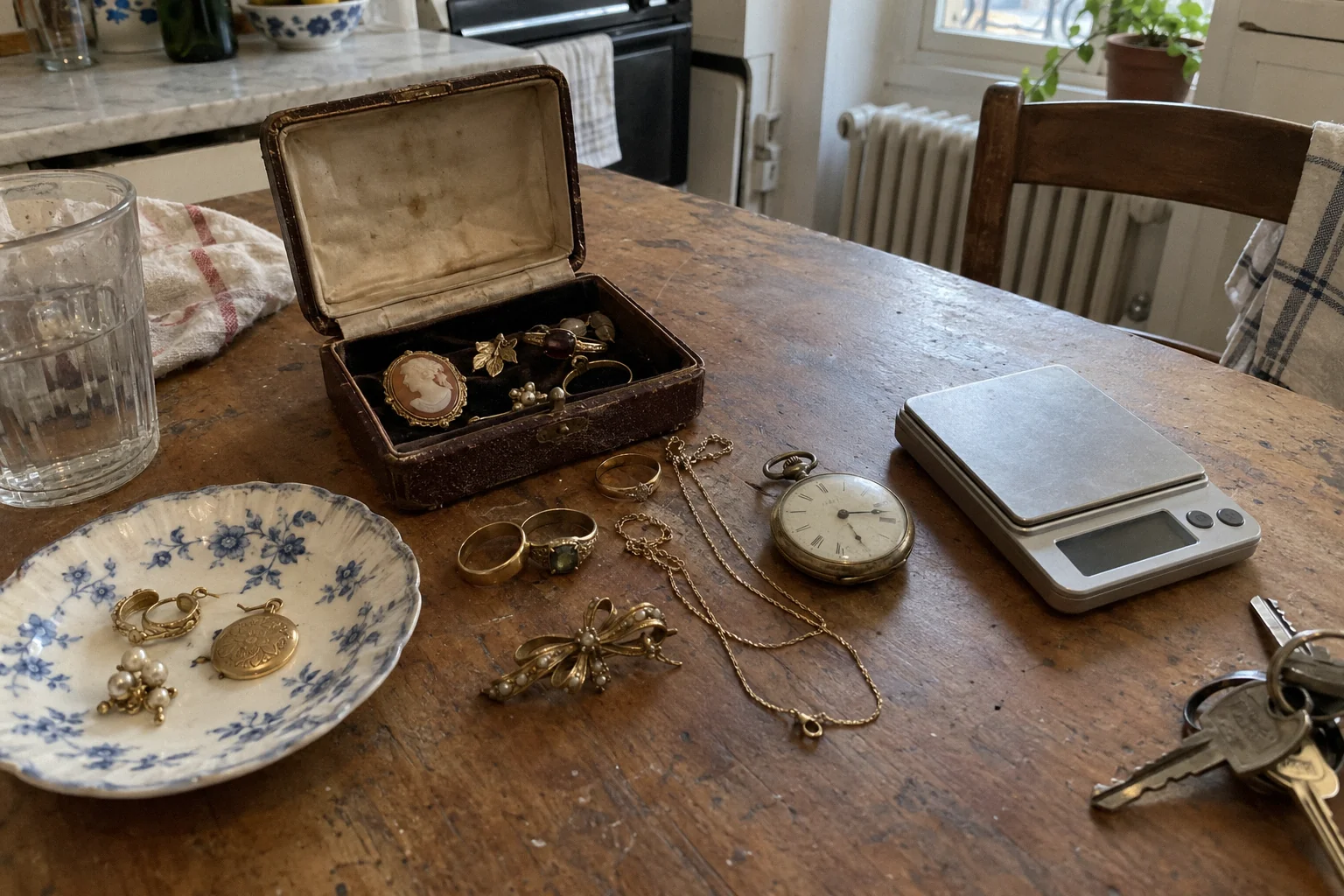
If the case is gold, we value it first as a watch, then as a gold object. For any jewellery that comes with it, see our page on selling antique jewellery.
Mistakes to avoid before selling
- Do not force the winding of a stopped clock. A broken spring or a bent hand is expensive to repair.
- Before moving a clock, unhook the pendulum. Otherwise the suspension can break.
- Do not rub bronzes with a copper cleaner: you remove the gilding, and it does not come back.
- Do not separate the clock from its garniture, its glass dome or its base.
- Keep the key, the pendulum, the receipts, and for a watch, the box and papers, even if empty or damaged.
- There is no need to have the clock serviced before showing it to us. We value it as it is.
To go further, we have written a guide to help you value an antique clock yourself before calling us.
How the valuation works
A clock does not travel well, so we come to you, at no cost and with no obligation, for the valuation. We travel for free to your home in Paris and Île-de-France. You can also start with photos on WhatsApp: the front, the dial, the open back with the movement, the signature and the underside. For a watch, the dial, the back and the hallmarks.
If you decide to sell, we buy with immediate payment, by bank transfer. Bank transfer is compulsory for gold and precious metals. If the clock is part of a whole house to clear, we can also handle the house clearance: the amount we pay is then taken off the price.
You can also visit us at weekends on our stand at the Puces de Vanves flea market.
A photo of the dial, one of the movement seen from the back and one of the whole clock already let us answer you: WhatsApp or call 06 24 56 38 58 (+33 6 24 56 38 58 from abroad). We reply with a first idea of what you have.
Frequently asked questions
Read next
A question about an item?
Send us a photo on WhatsApp or give us a call. Free valuation and free travel.