Estates and inheritance
An antique dealer at your side for an inheritance in Paris and Île-de-France
After a death, there is often a home to empty, things to share out and sometimes to sell. We help you know what has value, buy what can be bought and take care of the rest, at your pace.
4,6/5 · 53 Google reviews · Free valuation and free travel
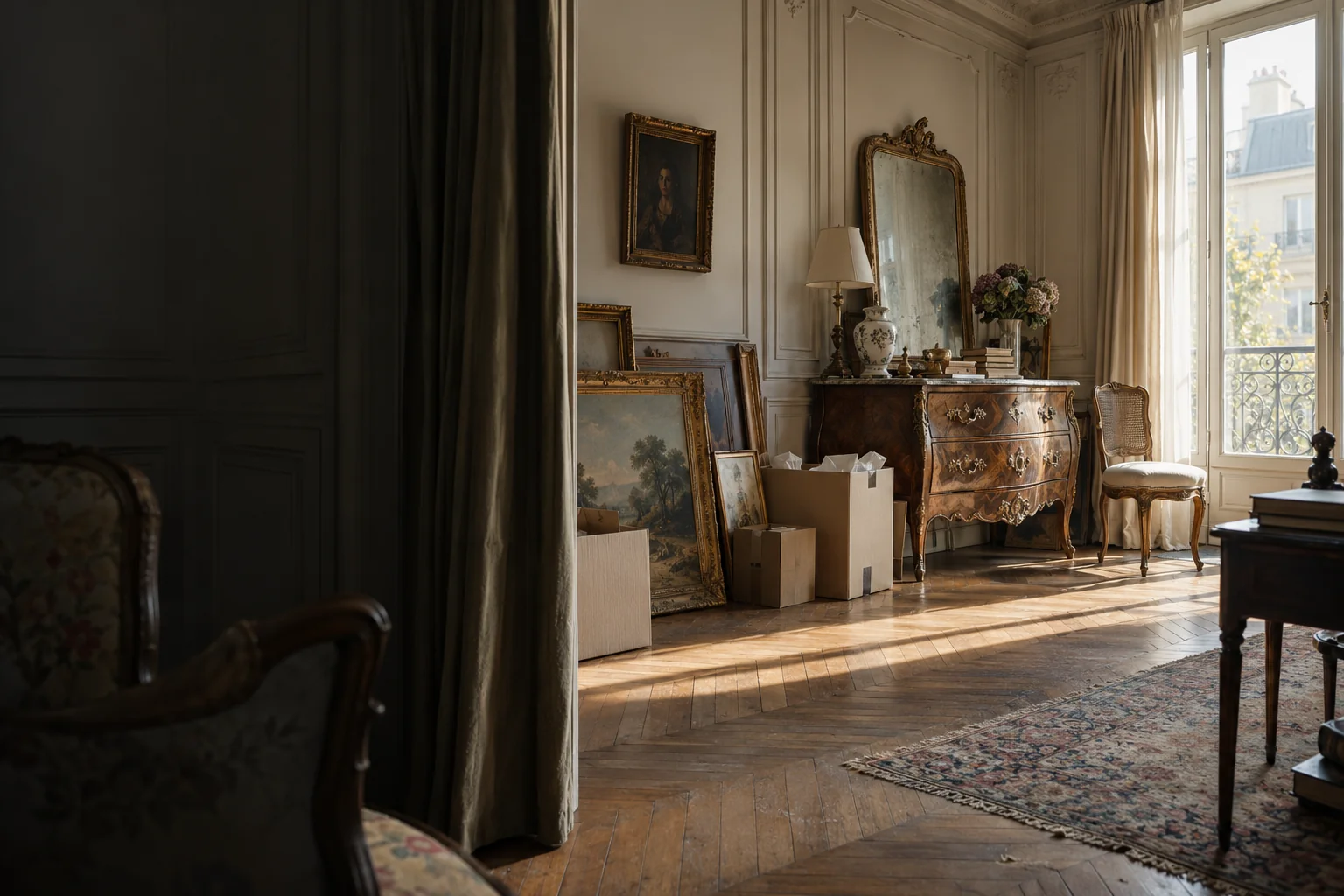
Emptying a parent's home is first of all a hard time. You have to sort through years of life, decide what to keep, agree between brothers and sisters, and often move quickly. As antique dealers, we help you with the practical side: knowing what has value, buying what can be bought and handing the home back empty.
Where to start when you inherit a furnished home in France
A few simple habits avoid mistakes that are hard to undo:
- Do not throw away or give away anything straight away. What looks worthless may have value, and the opposite is true too.
- Put jewellery, silver and papers somewhere safe if the home stays empty.
- Contact the notaire. The notaire runs the estate in France. They will tell you what you can do, and when.
- Take stock as a family. Everyone says what they would like to keep, starting with keepsakes.
- Have the furniture and objects valued before any sharing out and any sale.
How we help with an estate
- The visit. It is free. We go through every room, without forgetting the cellar, the attic, the wardrobes and the drawers.
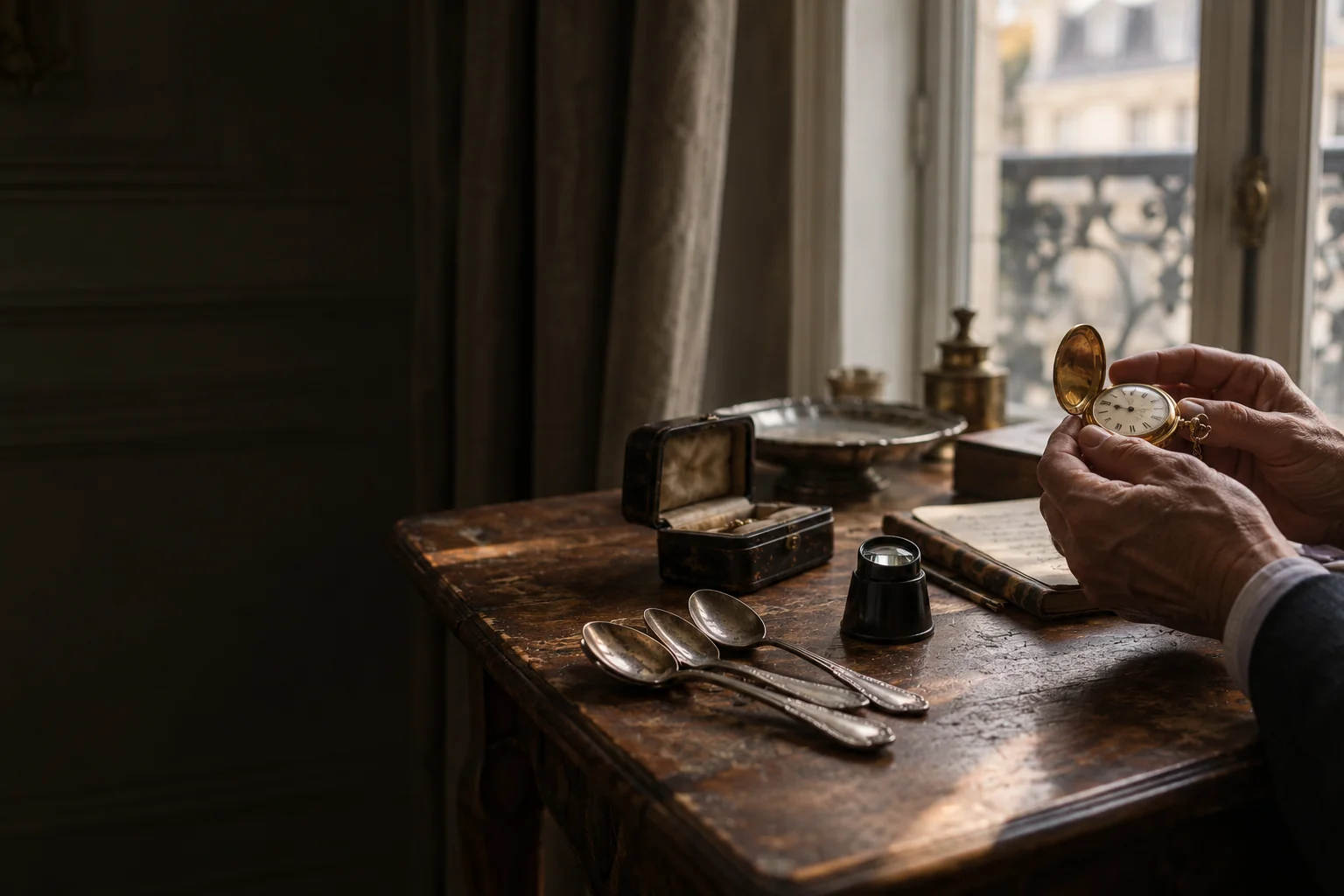
- The valuation. We tell you what has market value, what has little, and what only has sentimental value. We explain it simply, so that all the heirs understand.
- The offer to buy. You decide together what you sell. Payment is immediate, by bank transfer.
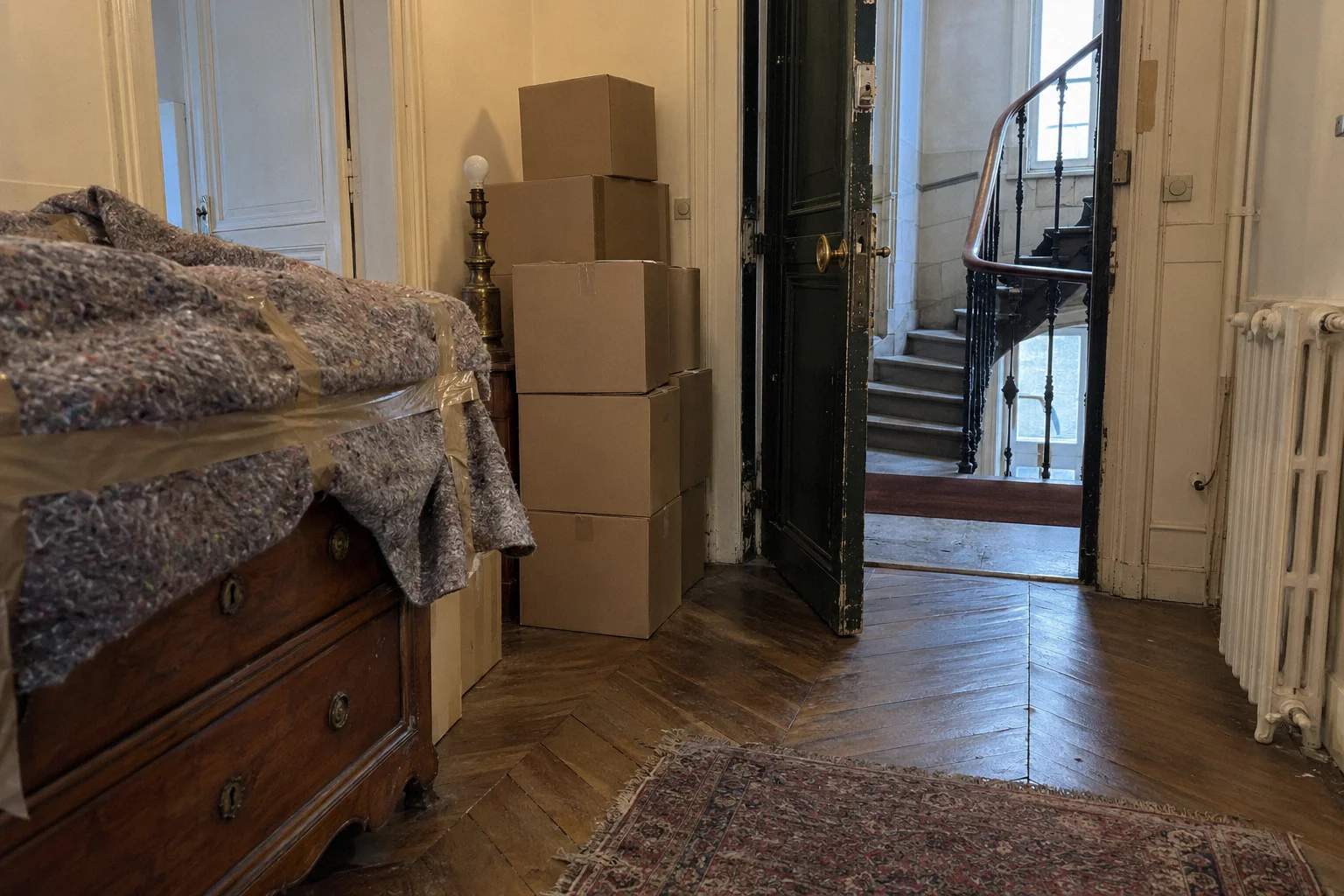
- The clearance. If you wish, we sort, remove and take care of the cleaning if needed. The amount we pay is taken off the price of the house clearance.
You can stop at any step. Some families only want a valuation to share things out, others want an empty home by a set date.
Inventory, notaire and the 5% furniture allowance: what to know
In the French inheritance tax return, the deceased's furniture must be declared. Article 764 of the French General Tax Code (CGI) says that, unless there is a public sale or an inventory made in the legal form, the value of the "meubles meublants" (household furniture) cannot be less than 5% of the other assets in the estate, unless proven otherwise. This is called the forfait mobilier, or furniture allowance.
In practice:
- "meubles meublants" are the furniture and objects that furnish a home: beds, tables, chairs, mirrors, clocks, decorative porcelain (article 534 of the French Civil Code);
- jewellery and collections, for example, are not included and are declared separately;
- when the furniture is worth little, this flat rate can be higher than its real value. An inventory can then be useful, and your notaire will tell you if it is worth it.
Our valuation is not an inventory in the legal sense. It gives you a concrete idea of what the furniture and objects are worth, which helps you discuss it with the notaire and between heirs. For details, read our article on the 5% furniture allowance in a French estate. We are neither notaries nor tax advisers: for any decision, your notaire is the one who advises you.
Heirs: how to agree on the family's belongings?
Family belongings are often the most delicate subject. A few ideas:
- Start with the keepsakes. Everyone lists what matters to them, without talking about money.
- Rely on a valuation. If one heir keeps the clock and another the sideboard, everyone knows what that represents. The sharing is fairer and calmer.
- Decide together before selling. Until the estate is shared out, the belongings are owned by all the heirs. As a general rule, a sale needs everyone's agreement.
- Be careful if you have not yet accepted the estate. Selling the deceased's belongings can be treated as accepting it (article 782 of the French Civil Code). Ask the notaire for advice first.
What is often found in a family home?
In many old homes, the valuable things are not where you expect them. Look in particular at:
- the dining room sideboard, for silver and porcelain;
- drawers and small boxes, for jewellery, watches and coins;
- albums and boxes in the attic, for old postcards;
- the walls, for paintings, engravings and mirrors;
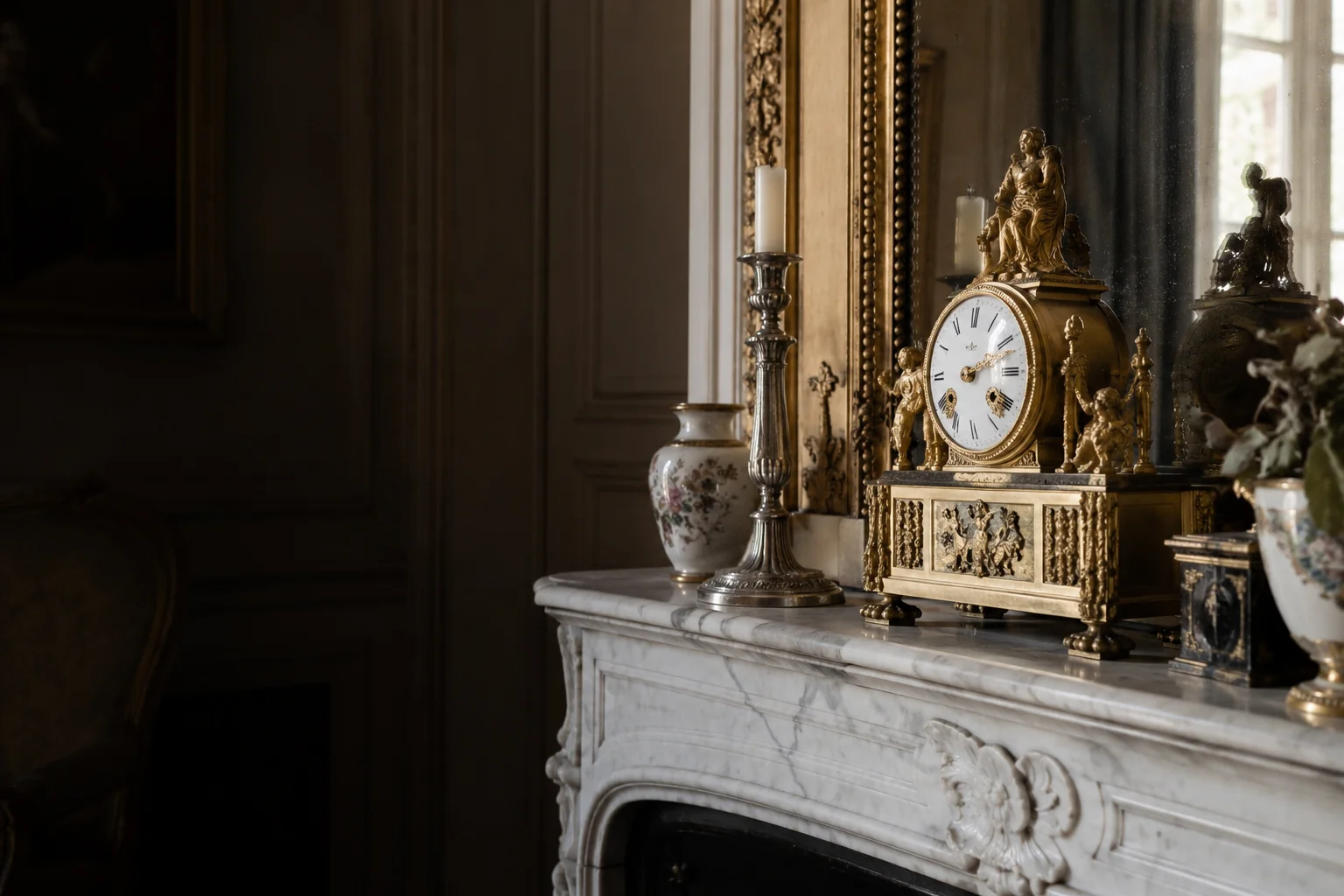
- the mantelpiece, for the clock.
Do not sort too quickly: we prefer to see things where they are. A box that goes to the tip does not come back.
House clearance after an estate: what happens to the belongings?
Nothing is thrown away if it can still be used. What we buy is taken off the price of the clearance, which can be free when the purchase covers it. What we do not buy but can still be used is given to Emmaüs, Secours catholique, the Armée du Salut or nearby reuse centres. The rest goes to the proper channels: the tip, recycling.
The home is handed back empty, and cleaned if you wish, ready to be sold or returned to its owner. Our article what to do with the furniture after an inheritance gives more practical advice.
Discretion and respect for the home
Entering the home of someone who has just passed away calls for tact. We take our time, we do not rush decisions, and we respect the belongings, even those with no market value. What we see in your home stays between us.
Are you handling an estate in Paris or Île-de-France? Call us on 06 24 56 38 58 (+33 6 24 56 38 58 from abroad) or send a few photos on WhatsApp to the same number. We will come for a free first visit, at a time that suits you.
Frequently asked questions
out of 5, 53 Google reviews Official count of 9 October 2026
- 5 ★48
- 4 ★0
- 3 ★0
- 2 ★0
- 1 ★5
Read next
A question about an item?
Send us a photo on WhatsApp or give us a call. Free valuation and free travel.