Period furniture
Antique and period French furniture valuation
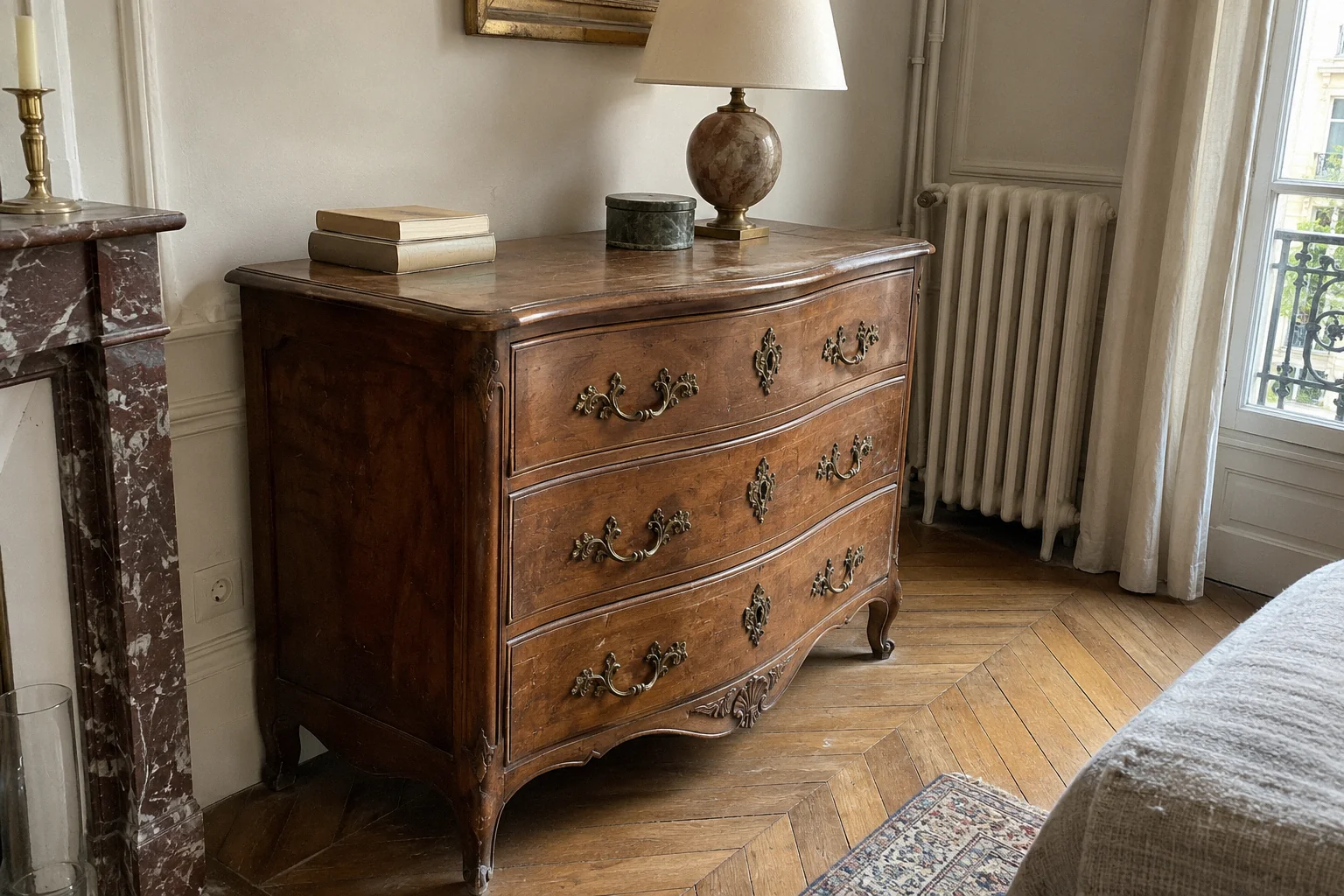
A chest of drawers, a secretary desk, a pair of armchairs or a full salon suite: we come to see your furniture at home, look at the wood, the construction, the style and the condition, and tell you what it is worth, for free.
4,6/5 · 53 Google reviews · Free valuation and free travel
An antique piece of furniture cannot be judged by its looks alone. Two chests of drawers that look alike can be a hundred years apart. To value them, we look closely, inside, underneath and behind.
Period piece or piece in the style?
This is the first question. A "period" piece was made when the style was in fashion. A piece "in the style" copies that style later. The 19th century produced a great deal of Louis XV and Louis XVI style furniture, sometimes of very fine quality. It has its own value, but not the same one.
Recognising the main French styles
A few simple pointers:
- Louis XV (mid 18th century): curves everywhere, cabriole legs, decoration of shells, flowers and foliage.
- Louis XVI (last quarter of the 18th century): a return to straight lines, tapered and fluted legs, classical decoration with beads, ribbons and friezes.
- Empire (early 19th century): mahogany, solid shapes, gilt bronze mounts with classical motifs such as palmettes, swans or sphinxes.
- Restoration (1815 to 1830): softer shapes, light woods such as maple, ash or elm burr, often inlaid with a dark wood such as amaranth.
- Napoleon III (Second Empire): a mix of earlier styles, ebonised wood, brass and tortoiseshell marquetry in the Boulle manner, buttoned upholstered chairs.
- Art Deco (1920s and 1930s): geometric lines, precious woods such as Macassar ebony or rosewood, lacquer, shagreen.
What we look at to value antique furniture
Construction
The inside of a piece often tells its age. We look at the joints: mortise and tenon joints fixed with wooden pegs, dovetails cut by hand, slightly irregular. We look at tool marks, old screws, and the raw wood of backs and drawers, which darkens with time. Natural wear is found where hands and feet have touched the piece for generations.
The maker's stamp
In Paris, from the middle of the 18th century (statutes of 1743, applied from 1751), master joiners and cabinetmakers had to strike their name with a hot iron on their furniture. Next to it you often find the "JME" mark of their guild. This obligation ended when the guilds were abolished in 1791.
A stamp is a good clue, but it is not enough on its own. Fake ones exist, added later. We always look at it together with the rest of the piece.
Marquetry, bronze mounts and marble
We look at the fineness of the marquetry and veneer, any missing or lifting parts. We check whether the bronze mounts, handles and escutcheons are original. We check whether the marble really belongs to the piece, and whether it is whole or glued.
Condition and restorations
An antique piece has almost always been restored. That is not a problem in itself. We look above all at what has been redone: legs, top, veneer, varnish.
Mistakes to avoid before selling
- Do not strip or re-varnish. The patina and the original French polish matter. A shiny modern varnish loses part of the value.
- Do not change the handles, mounts or escutcheons.
- Do not split a pair of armchairs or a salon suite. A pair is usually worth more than two chairs sold separately.
- Keep the marble top, even if broken, and all the keys.
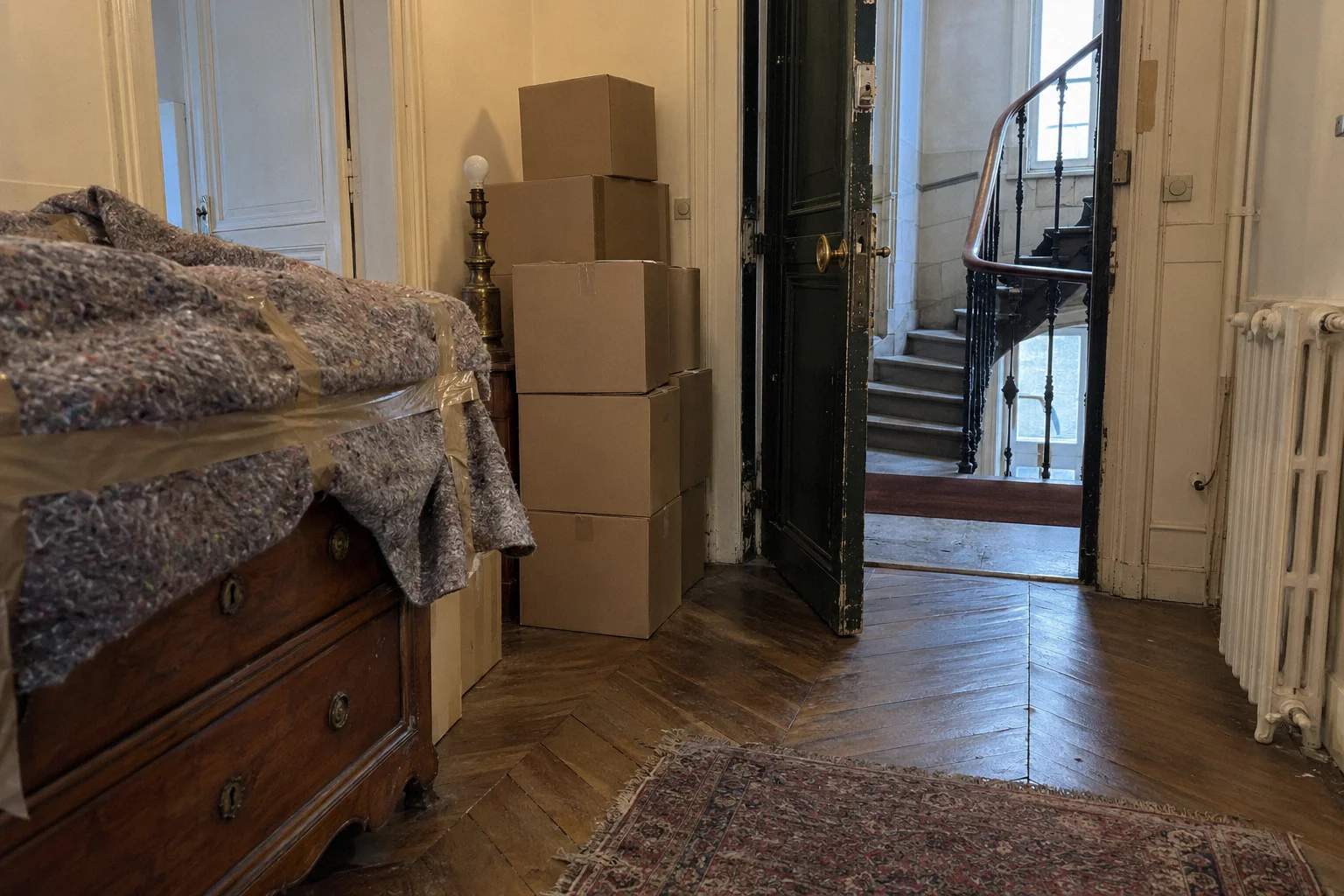
- Do not take a piece apart yourself to move it.
- Keep the papers: receipts, estate inventory, old labels stuck on the back.
How the valuation works
Furniture is best seen in person. We travel at no cost to your home in Paris and Île-de-France. For a first idea, you can send us photos on WhatsApp: the front, the sides, the back, the inside of a drawer, the underside and the stamp if you find it. The valuation is free and comes with no obligation.
If you sell, we buy with immediate payment, by bank transfer. We can also buy other antiques from the home at the same time.
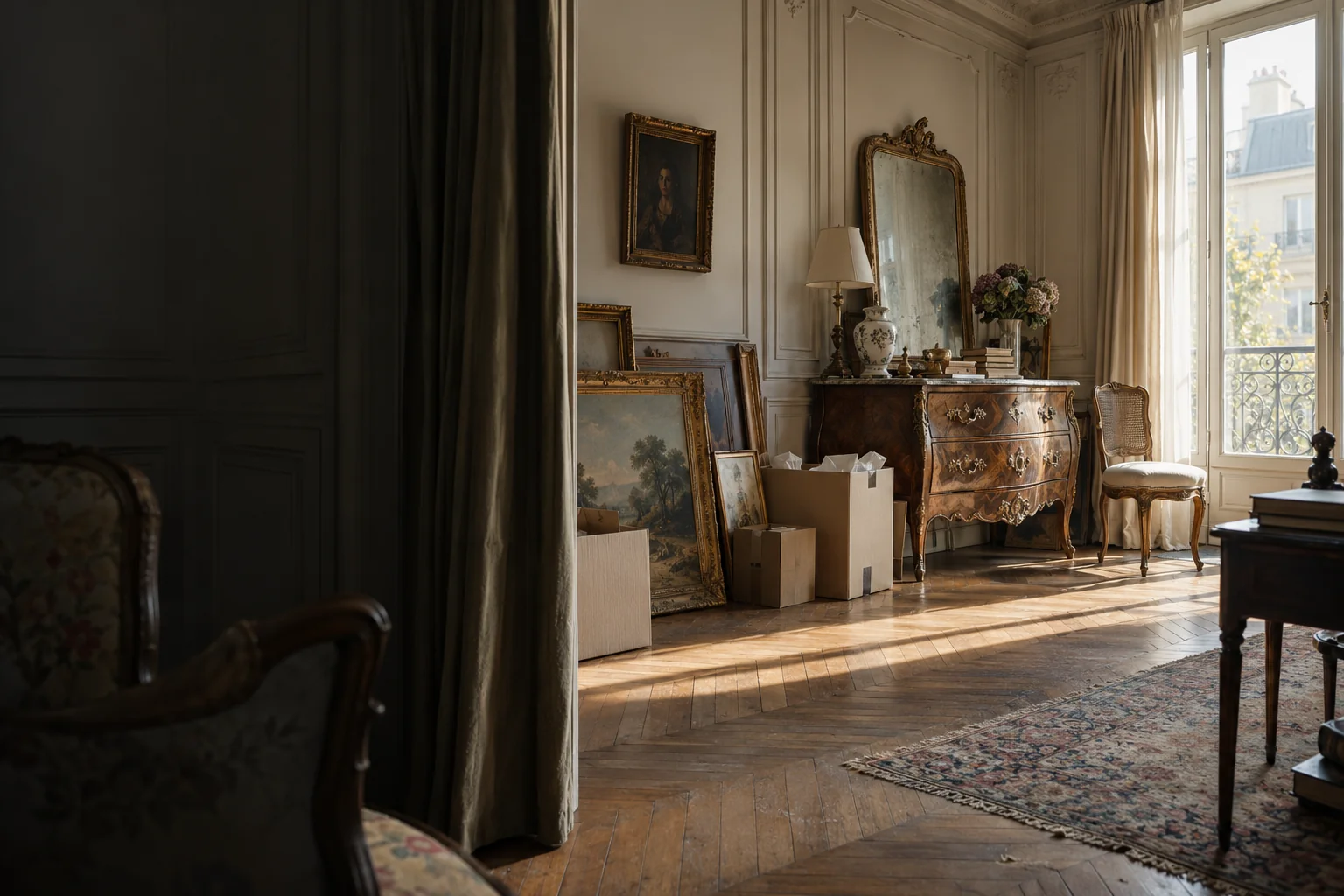
Clearing a whole home? We also offer house and apartment clearance. The amount we pay is taken off the price of the clearance, and the clearance can be free when the purchase covers it. Furniture we do not buy but that is still useful goes to Emmaüs, Secours catholique, the Armée du Salut or a local reuse centre.
For an estate, we help you sort things out. Our article what to do with the furniture from an inheritance explains the steps.
For a piece of furniture, send a front view, a side view and a photo of the inside of a drawer on WhatsApp to 06 24 56 38 58 (+33 6 24 56 38 58 from abroad), or call us to arrange a visit.
Frequently asked questions
Read next
A question about an item?
Send us a photo on WhatsApp or give us a call. Free valuation and free travel.