Antique jewellery and gold
Sell your antique jewellery in Paris: we value the piece and its gold
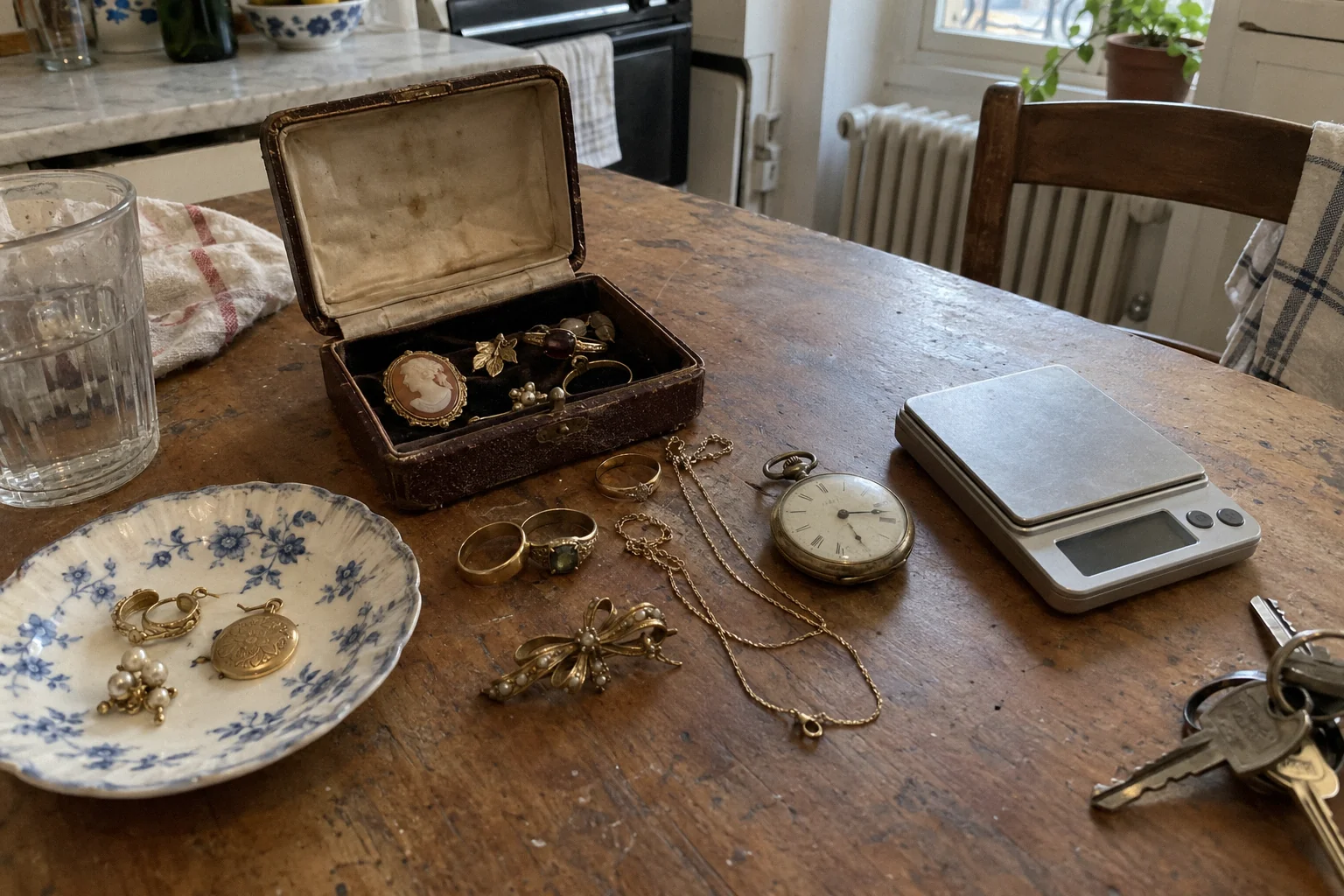
Rings, brooches, chains, gold watches: we look at each piece in detail: period, signature, stones, condition and weight of gold. Free valuation, at your home or from photos, and immediate payment by bank transfer.
4,6/5 · 53 Google reviews · Free valuation and free travel
A grandmother's ring, a brooch forgotten in its case, a broken chain at the bottom of a box: many families keep gold jewellery they no longer wear. Before selling it, there is one thing to know. A piece of antique jewellery is not always worth just the weight of its gold. Sometimes it is worth much more.
Antique jewellery or gold by weight: what is the difference?
A piece of gold jewellery can be valued in two ways.
The value of the metal. It depends on the weight, the fineness (the share of pure gold in the alloy) and the gold price, which changes every day. This is the minimum value of a gold piece.
The value of the jewel. It depends on the period, the style, the quality of the work, the stones, a jeweller's signature and the condition. A finely chased Art Nouveau brooch, a ring with a fine stone or a signed piece can be worth far more than its weight.
On the other hand, a worn wedding ring, a broken chain or a simple, damaged piece is usually bought for its metal. We always tell you which of the two values we use, and why. A piece that deserves to be worn again should not be melted down: if that is the case, we tell you.
How to recognise gold jewellery: hallmarks
A hallmark is a small mark stamped into the metal. You often need a magnifying glass to see it. Look near the clasp, on the band of a ring, on the pin of a brooch or on the back of a watch.
- The eagle's head: in France, this is the hallmark for 18 carat gold, meaning 750 thousandths of pure gold.
- The lozenge-shaped mark: it bears the maker's initials. It is called the maker's mark.
- The numbers 750, 585 or 375: often seen on foreign or recent jewellery. They give the gold content in thousandths.
- The words "plaqué" or "doublé": the piece is not solid gold. It is covered with a thin layer of gold.
Be careful: a hallmark can be worn away until it disappears, and some small or foreign pieces have none. So a piece with no visible hallmark is not necessarily worthless.
Do not try to test the metal yourself with acid or a file: you could damage the piece. We do the check with you.
How does selling your jewellery to us work?
- A first opinion. Send photos on WhatsApp, or show us the jewellery at your home or on our stand at the Puces de Vanves flea market.
- The examination. We look at the hallmarks, condition, stones and quality of the work. We weigh the gold in front of you.
- The offer. We give you a price for each piece, or for the lot, and explain how we calculated it.
- Payment. If you accept, we pay you straight away by bank transfer. We ask for an identity document, which we record in our register as the law requires.
You can also sell only some pieces and keep the others. Nothing obliges you to part with everything at once.
Why keep receipts and jewellery cases?
A piece's papers tell its story. An old receipt, a gemstone certificate or the case from a jewellery house help to know who made it and when. That can change its value.
They can also matter for tax. Selling gold and jewellery in France can be subject to a tax, and the rules change depending on the amount and the proof you have. A dated purchase receipt can therefore be useful. We are not tax advisers: for your own situation, ask your French tax office.
Even without papers, you can sell your jewellery. Just bring what you have.
Gold watches, coins, silver: what else to show us?
While the jewellery box is open, look around:
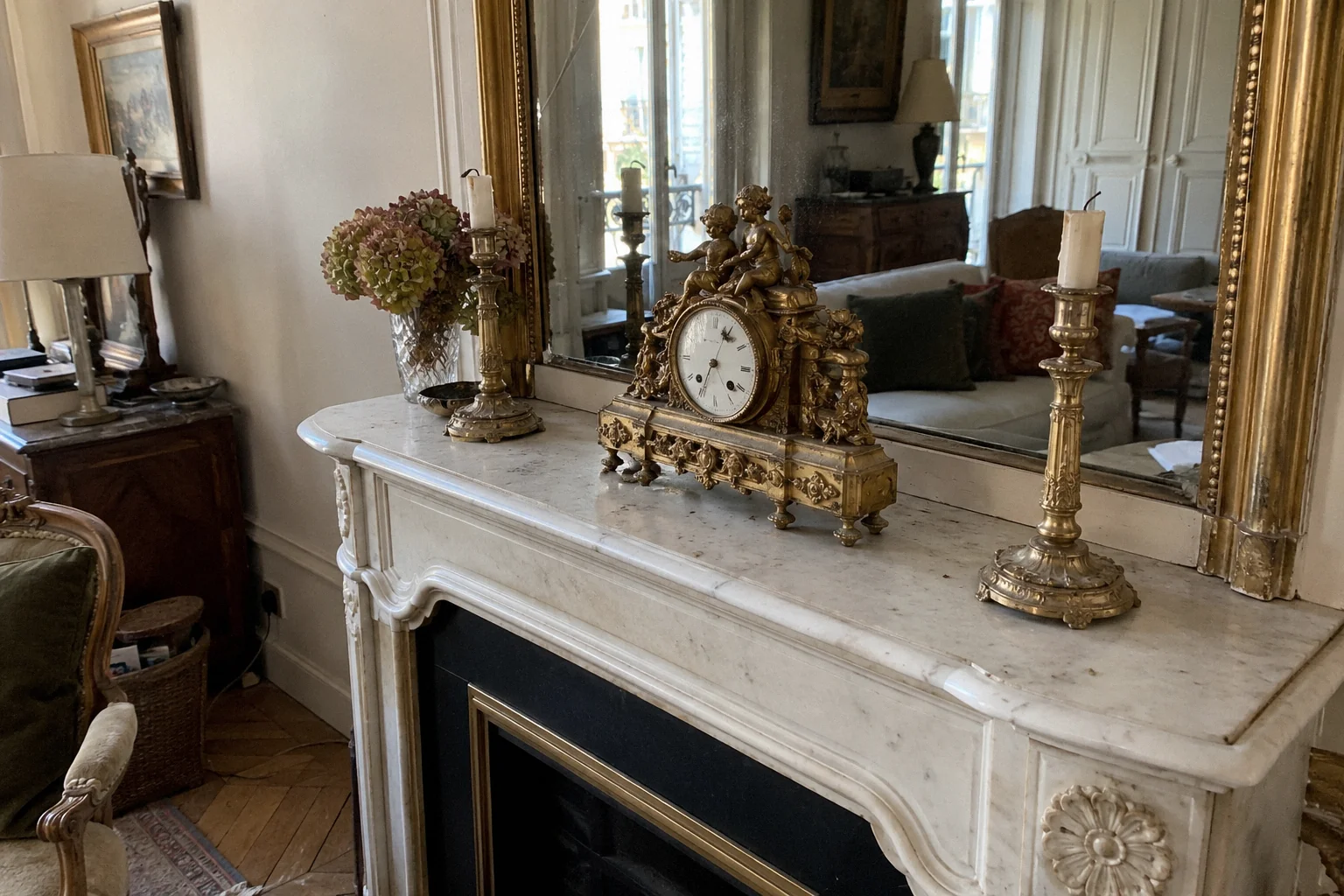
- Gold watches, pocket or wrist, even if they have stopped. The movement and the brand count as much as the case. For watches, the antique clocks and watches page explains what we look at.
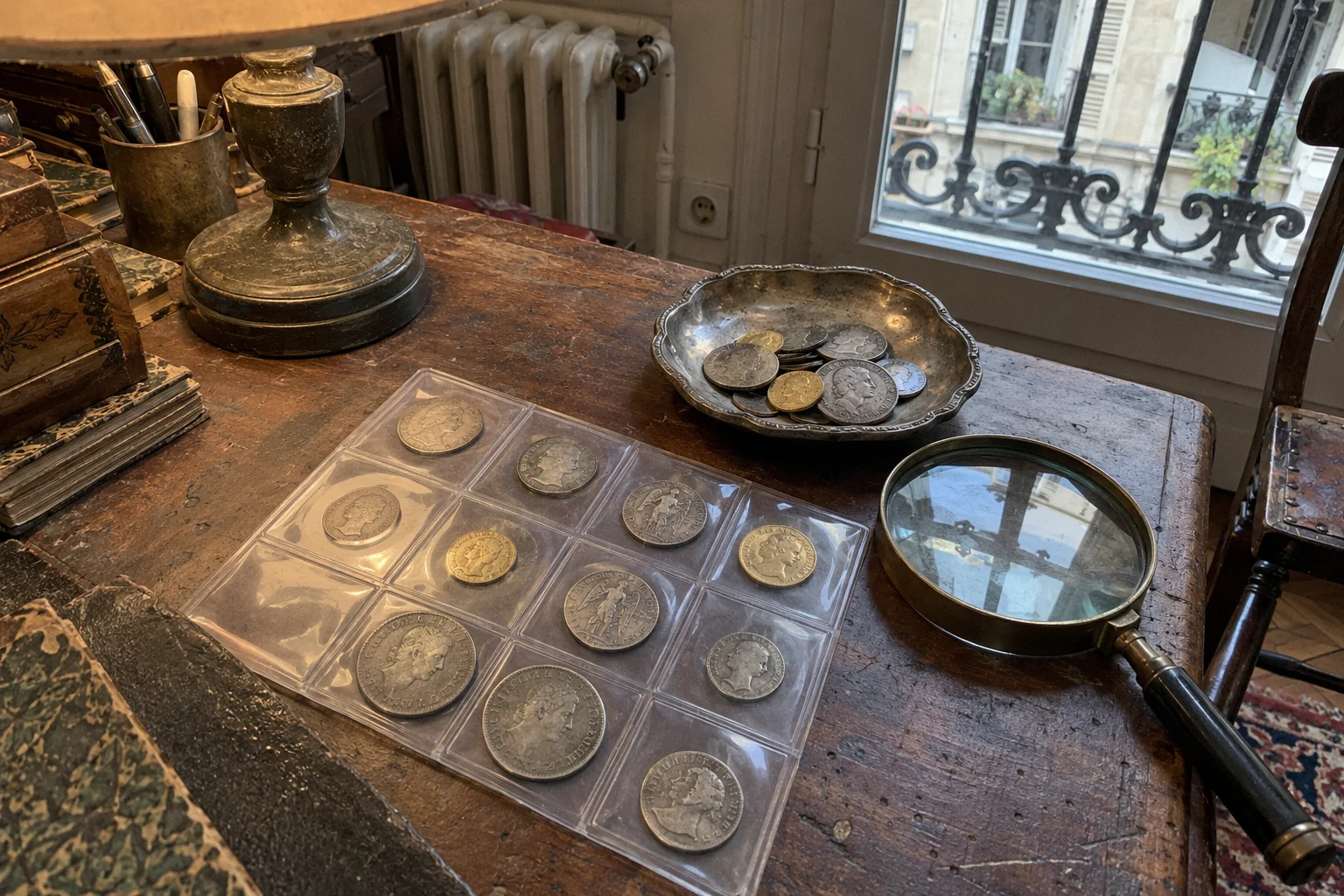
- Gold and silver coins. Some are worth more than their metal, depending on the year, the mint and the condition. See old coin valuation.
- Silver, often kept in the same cupboard. See antique silver valuation.
Selling family jewellery: how to decide?
Jewellery often holds memories. Before selling, talk it over with your family and keep what matters to you. Sell instead what has been sitting in a drawer for years. If the jewellery comes from an estate, make sure all the heirs agree.
To go further, read our article how to find the price of antique jewellery.
To sell antique jewellery in Paris or Île-de-France, send a photo of your pieces on WhatsApp to 06 24 56 38 58 (+33 6 24 56 38 58 from abroad), or call us on the same number. The valuation is free, and you remain free to sell or not.
Frequently asked questions
out of 5, 53 Google reviews Official count of 9 October 2026
- 5 ★48
- 4 ★0
- 3 ★0
- 2 ★0
- 1 ★5
Read next
A question about an item?
Send us a photo on WhatsApp or give us a call. Free valuation and free travel.