Free valuation
Free antique valuation at your home in Paris, with no obligation
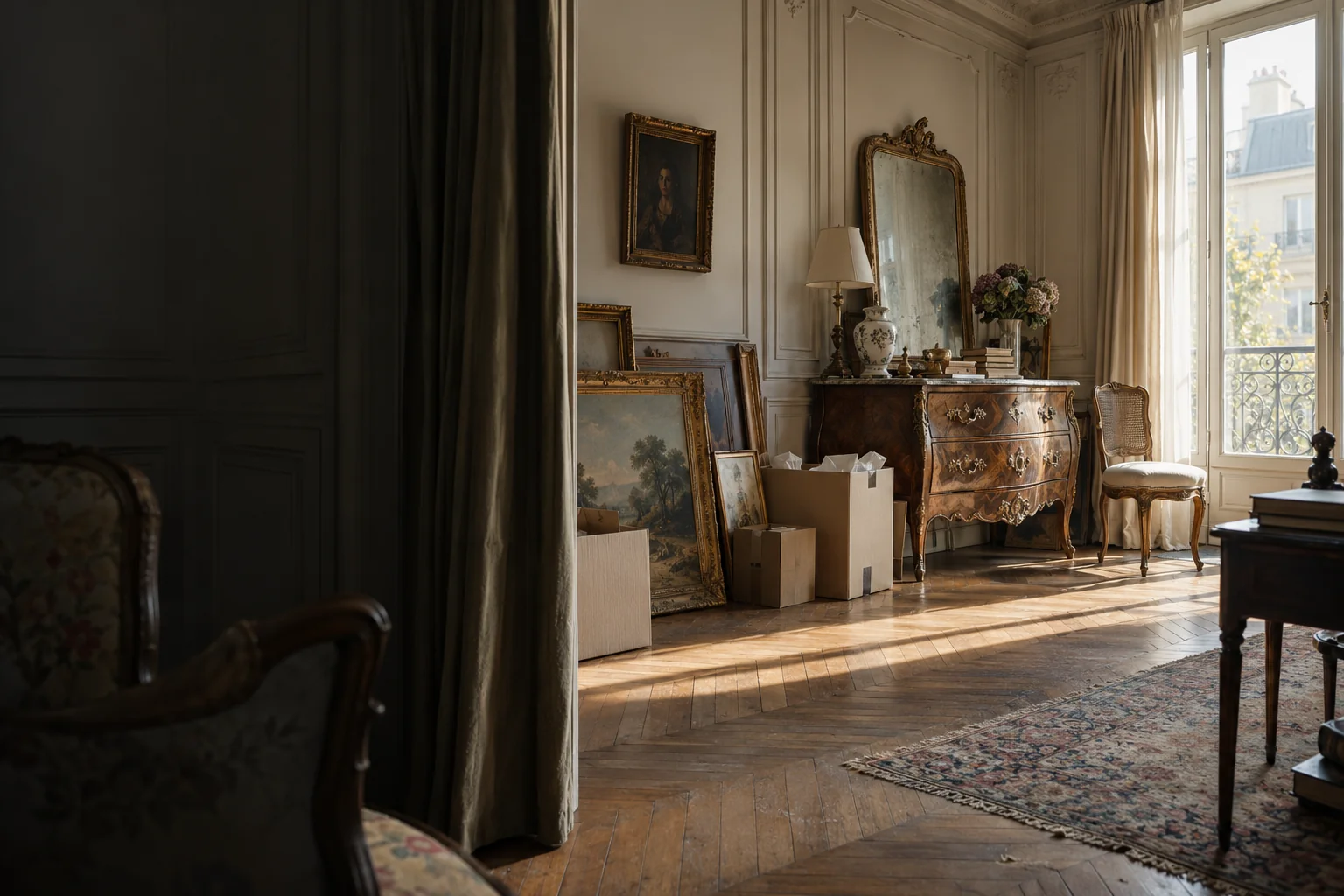
We come to your home in Paris or anywhere in Île-de-France to look at your antiques and tell you what they are worth. The visit and the valuation are free, and you are under no obligation to sell.
4,6/5 · 53 Google reviews · Free valuation and free travel
You have inherited a clock, a sideboard full of silver or a box of old postcards, and you have no idea what it is worth? Before you throw anything away, give it away or sell it, have it looked at. We are antique and second-hand dealers, and we travel for free in Paris and Île-de-France to value your antiques in your own home.
How does a home valuation work?
It all starts with a call or a message. Tell us what you have, even in a few words. If you can, send us two or three photos on WhatsApp: that way we know what to look at first.
Then we arrange a visit to your home. On the day, this is how we work:
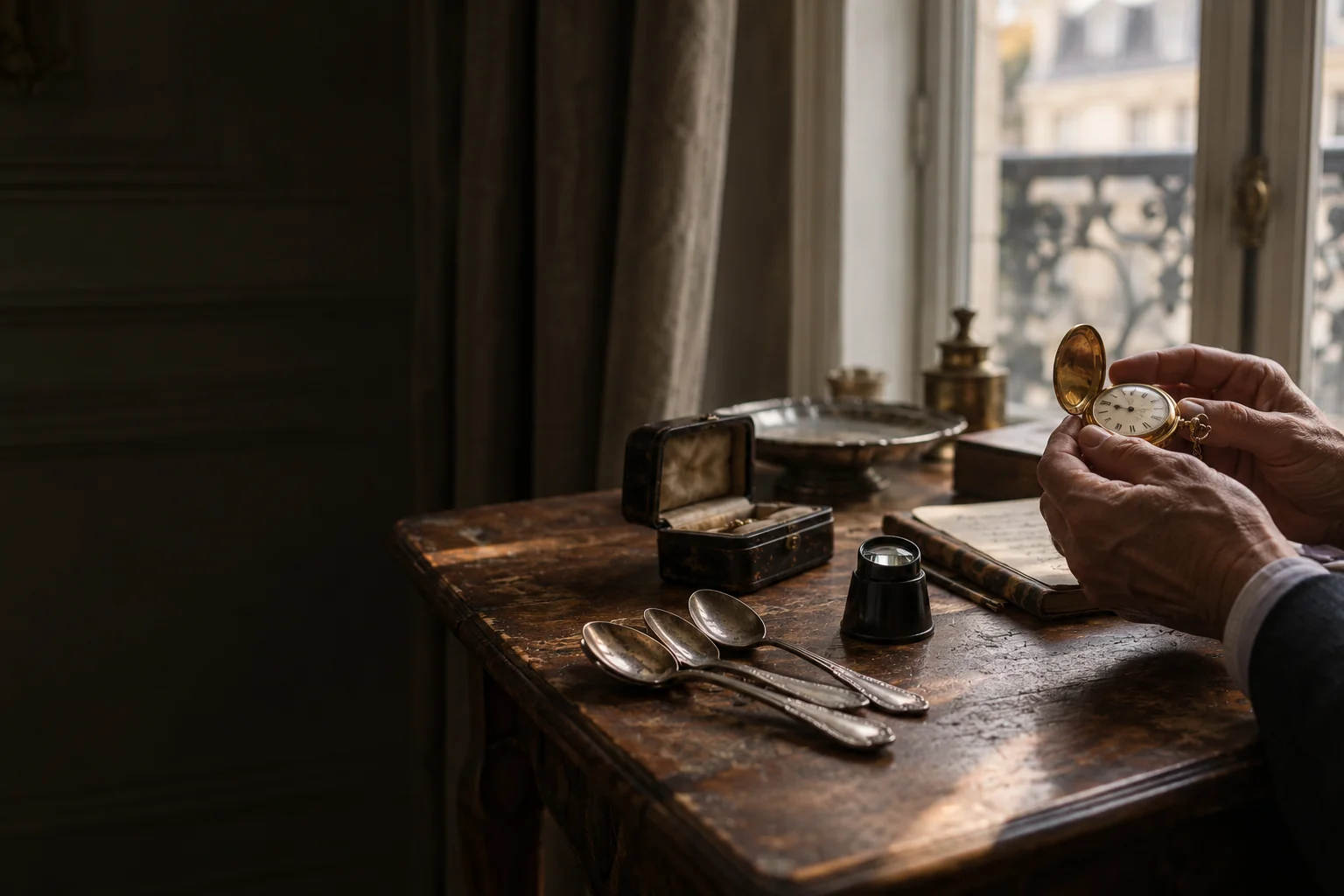
- We handle each item. We turn it over and look for a signature, a maker's mark, a hallmark, a number. We also check the condition: repairs, missing parts, replaced parts.
- We explain what we see. What it is, roughly what period it dates from, why it is sought after or not. You can stop us and ask anything you like.
- We give you a value. We tell you what the item is worth on today's market, and what we can offer you for it if you want to sell.
- You decide. You can sell straight away, think it over, get another opinion or keep everything. The valuation does not commit you to anything.
If you sell, payment is immediate, by bank transfer. It is all explained on our page about selling antiques for cash.
Which antiques are worth having valued?
We look at anything old or well made. Our main areas are:
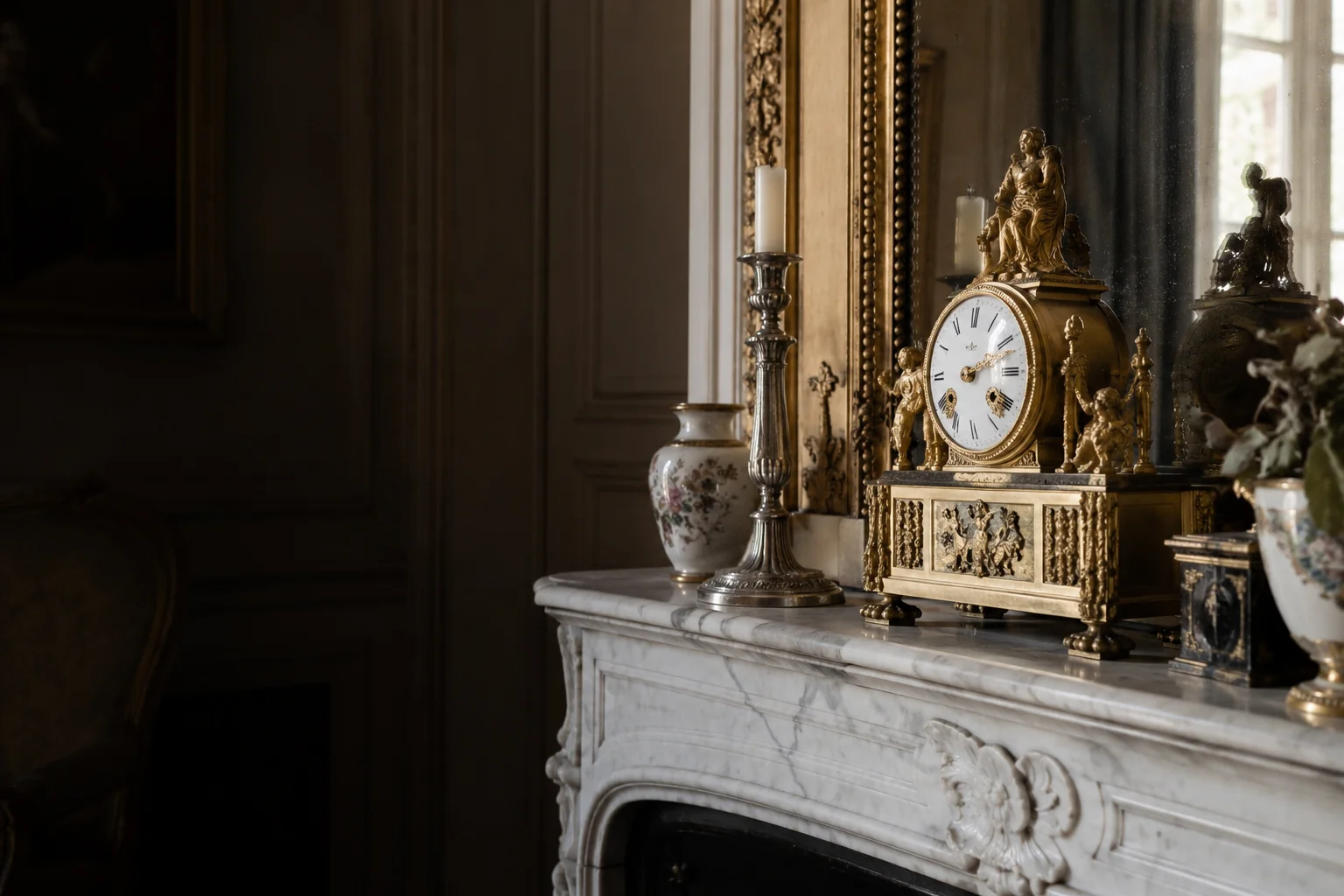
- clocks and watches: mantel clocks, wall clocks and watches (see antique clock valuation);
- period furniture;
- antique jewellery and gold;
- silver: cutlery, dishes, teapots (see antique silver valuation);
- coins and medals;
- old postcards;
- paintings;
- porcelain;
- Asian art;
- curiosities.
Not sure an item is worth it? Show it to us anyway. A small box at the back of a drawer can matter more than a large piece of furniture.
How to prepare for an antique dealer's visit
A few simple steps make the valuation more accurate:
- Do not clean or repair anything. Polishing a bronze, waxing furniture or gluing porcelain back together can reduce the value. The patina is part of the object.
- Throw nothing away before we come. Old papers, boxes of coins, odd pieces of cutlery or postcards often end up in the bin too quickly.
- Find any papers that go with the items. An old invoice, a jewellery case, an original box or a watch's papers help to date and identify a piece.
- Think of forgotten spaces. The cellar, the attic, the tops of wardrobes and the sideboard drawers sometimes hold surprises.
- Write down what you know. Who bought the item, where, and for what occasion. The story of a piece helps to place it.
You do not need to tidy up. We prefer to see the items where they are.
What makes an antique valuable?
Age alone is not enough. A very old object can be worth little, and a more recent one a lot. Here is what we look at.
Period and authenticity
A clock from the period does not have the same value as a later copy made in the same style. Construction details, screws, joints and wear tell us a lot.
Condition
A crack, a missing part, a replaced part or a clumsy restoration lowers the price. Normal wear, on the other hand, is often accepted.
Signature and provenance
The name of a maker, silversmith or painter can change everything. So can a known provenance.
Material
Solid silver or silver plate, gold or gold plate, bronze or spelter: the material matters a great deal. We check hallmarks and marks.
Today's demand
Tastes change. Some furniture that was highly sought after a generation ago sells less well today, and items that were long ignored have come back into fashion. We give you today's market value, not the value from an old catalogue.
Can an antique be valued from photos?
Yes. For a first opinion, photos are often enough. To make them useful:
- take them in daylight, without flash;
- show the whole item, then the back and the underside;
- take close-ups of signatures, marks and hallmarks;
- show the flaws too: chips, cracks, repairs;
- give the dimensions, or place a tape measure next to the item.
Send them on WhatsApp to 06 24 56 38 58. If the item deserves it, we will suggest coming to see it, because a photo does not show everything.
Valuation and offer to buy: what is the difference?
These are two separate things, and we give them to you separately. The valuation is what the item is worth on the market. The offer to buy is what we can pay you as dealers, knowing we then have to sell it on. We explain how we reach that price, plainly.
Our opinion is that of an antique dealer, given for free. It is not an official document. For sharing an estate between heirs or for an inheritance tax return, your notaire will tell you what is needed. Our page on antique dealing for estates explains how we can help in that case.
Where we travel for valuations
We travel for free in Paris and across Île-de-France: Hauts-de-Seine (92), Val-de-Marne (94), Yvelines (78), Essonne (91) and Seine-et-Marne (77). For a small item, you can also come and see us at weekends on our stand at the Puces de Vanves flea market.
For a home valuation of your antiques, call us on 06 24 56 38 58 or send a few photos on WhatsApp to the same number. You can also email us at murierantiquites@gmail.com. We then arrange a visit, with no obligation.
Frequently asked questions
out of 5, 53 Google reviews Official count of 9 October 2026
- 5 ★48
- 4 ★0
- 3 ★0
- 2 ★0
- 1 ★5
Read next
A question about an item?
Send us a photo on WhatsApp or give us a call. Free valuation and free travel.