
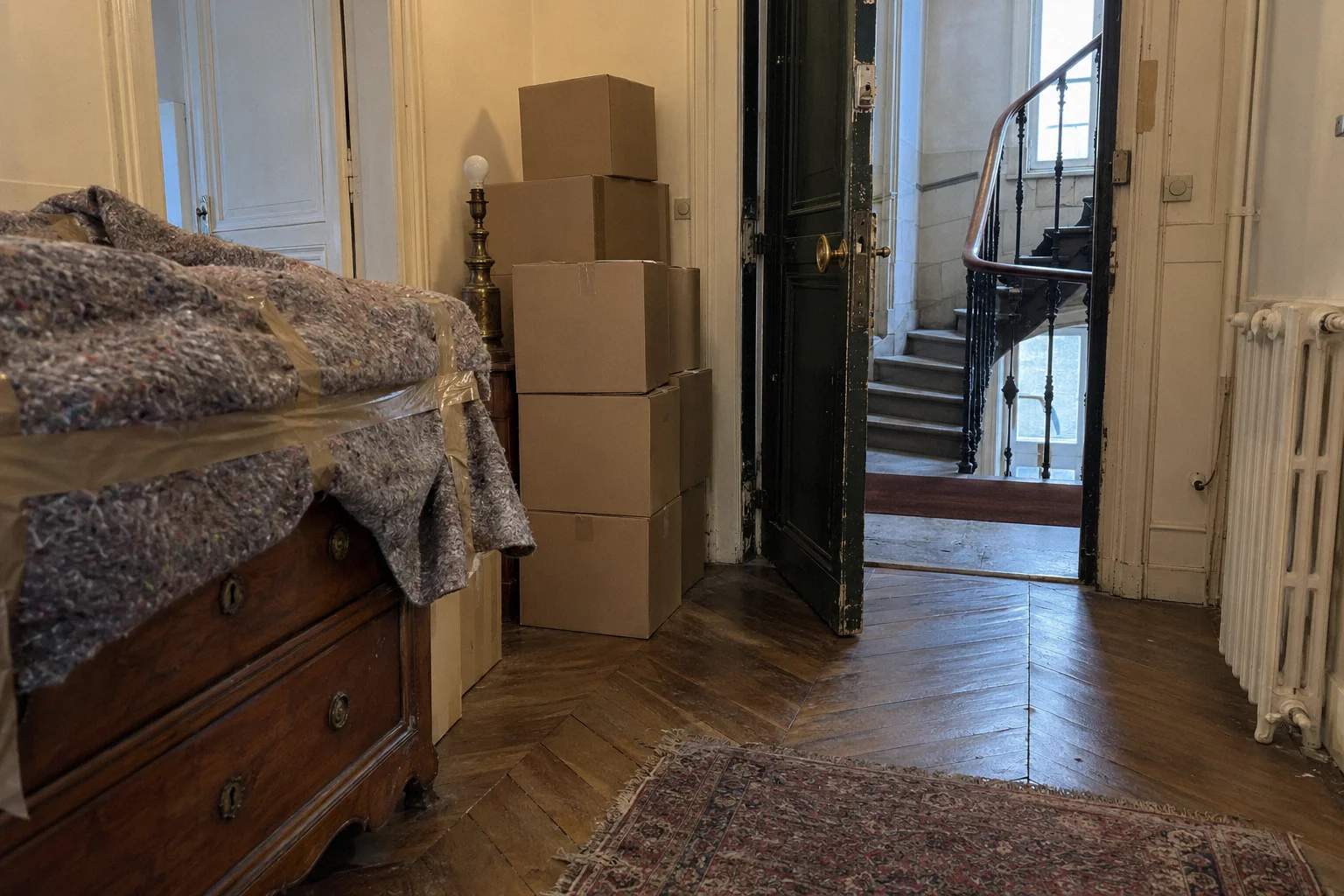
House clearance
House and apartment clearance in Paris and Île-de-France
We clear houses, apartments, cellars and attics in Paris and Île-de-France. We first buy what has value, and that amount is taken off the price of the clearance, which can even become free.
4,6/5 · 53 Google reviews · Free valuation and free travel
A clearance rarely comes at a good time. A home to sell, a parent moving into a care home, an estate, a move to somewhere smaller: it has to be emptied, often quickly, and you are afraid of throwing away something valuable. As antique and second-hand dealers, we do both. We spot and buy what is worth something, then we clear the rest.
How does a house clearance work, step by step?
- The free visit. We come to see the home room by room, including the cellar, the attic and any outbuildings. You tell us what you are keeping.
- The valuation. We identify the furniture and objects we can buy and tell you their value.
- The quote. We give you a price for the clearance, with the amount we buy already taken off.
- The sorting. On the day, we separate what we buy, what is donated and what goes to the tip or to recycling.
- The removal. The home is emptied.
- Cleaning, if needed. To hand the place over clean to a buyer, a landlord or an agency.
Why use an antique dealer for a clearance?
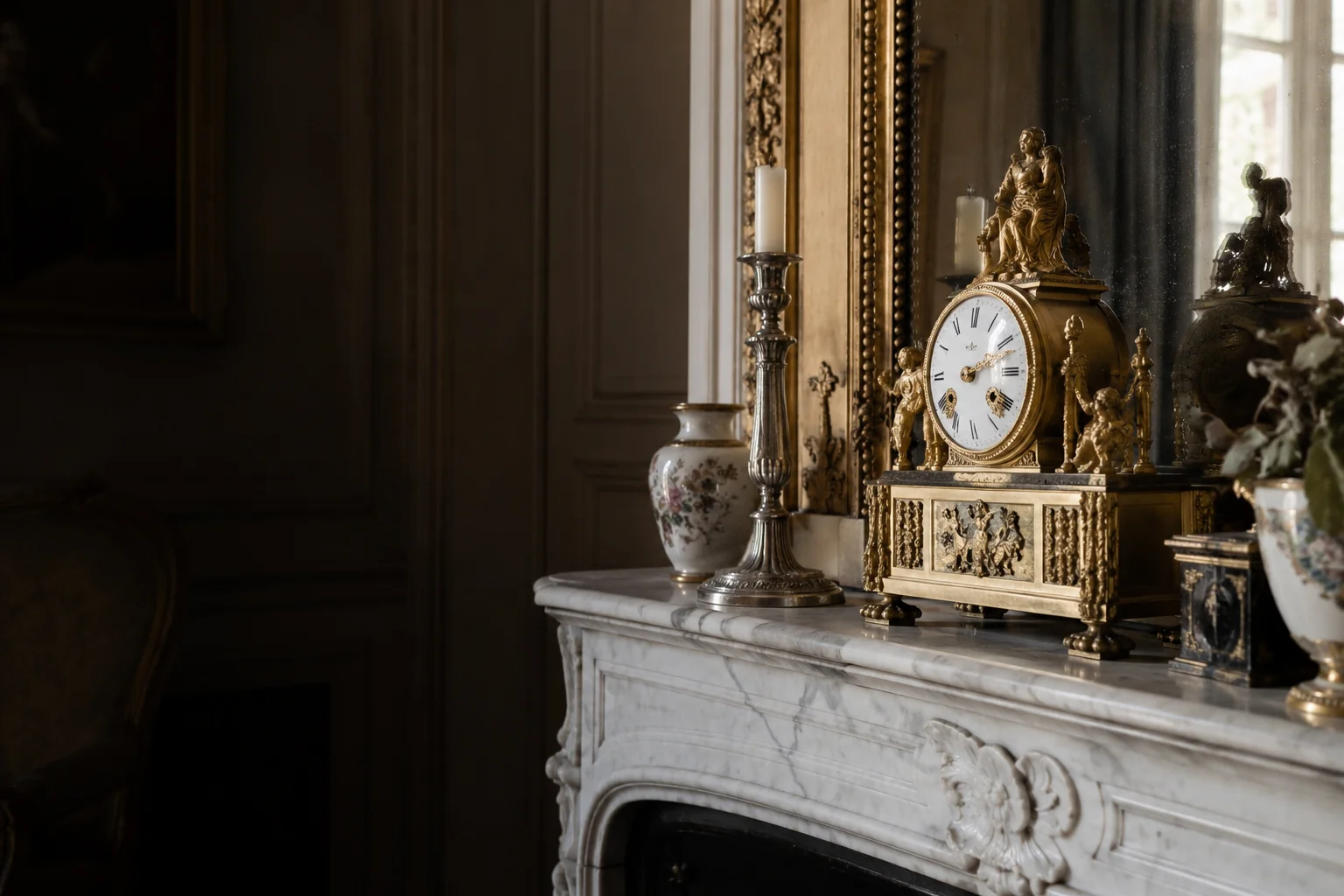
A clearance company focuses on emptying. An antique dealer first looks at what has value. A clock on the mantelpiece, a silver cutlery set in the sideboard, a box of postcards in the attic, a period armchair in the spare room: these items can pay for part of the clearance, sometimes all of it.
The principle is simple. The amount of what we buy is taken off the price of the clearance. When it covers the cost, the clearance is free. We tell you after the visit, before you commit to anything.
For antique furniture, see also period furniture valuation. For just a few items, with no clearance, selling your antiques is enough.
What affects the price of a clearance?
We do not give a price without seeing the place, because every home is different. Here is what matters:
- The volume. The number of rooms and how full they are.
- Access. The floor, whether there is a lift, the width of the staircase. A fifth floor with no lift in an old building takes more time and more hands.
- Parking. The distance between the door and the van, a courtyard to cross, a street where stopping is difficult.
- The type of items. Large furniture to take apart, household appliances, mattresses or paint tins do not go to the same places.
- Extra spaces. A cellar, an attic, a garage, a garden or a shed.
- Cleaning, if you ask for it.
- The date. A fixed date, for example a handover of keys, means organising everything around it.
- The value of the items we buy, which brings the bill down.
What happens to the items we do not buy?
We do not like throwing things away. What we do not buy but can still be used is given to Emmaüs, Secours catholique, the Armée du Salut or reuse centres near the home. Crockery, linen or small furniture in good condition can find a second life with someone else.
The rest goes to the proper channels: the tip and recycling. You know where the contents of the home go, and nothing ends up dumped on a street corner.
How to prepare for a house clearance
- Set aside what you are keeping. In a separate room, or with a clearly visible label.
- Gather important papers. Deeds, statements, photos, keys, documents from the notaire or the bank.
- Do not throw anything away yourself before the visit. We prefer to see items where they are, even in a box.
- Let the caretaker or the building manager know. Some buildings have rules for moves: set times, protection for the lift.
- Think of the meters. Read them on the last day, before handing back the keys.
Clearance after a death, before a sale, or a move to a care home
- After a death. The clearance often comes with the valuation and sharing out between heirs. Our estates page explains how we support heirs.
- Before a sale. The buyer usually expects an empty home on the day of signing.
- A move to a care home. The essentials are kept for the new room, and the rest is sorted with care.
- An apartment to hand back. A tenant or their family must return the place empty.
In Paris, old buildings with no lift, narrow staircases and low cellars call for good organisation. Our guide to clearing an apartment in Paris gives practical tips. We work in Paris and across Île-de-France: Hauts-de-Seine, Val-de-Marne, Yvelines, Essonne and Seine-et-Marne.
For a house or apartment clearance, call us on 06 24 56 38 58 (+33 6 24 56 38 58 from abroad) or send a few photos of the rooms on WhatsApp to the same number. We come for a free visit and tell you what we can buy.
Frequently asked questions
out of 5, 53 Google reviews Official count of 9 October 2026
- 5 ★48
- 4 ★0
- 3 ★0
- 2 ★0
- 1 ★5
Read next
A question about an item?
Send us a photo on WhatsApp or give us a call. Free valuation and free travel.