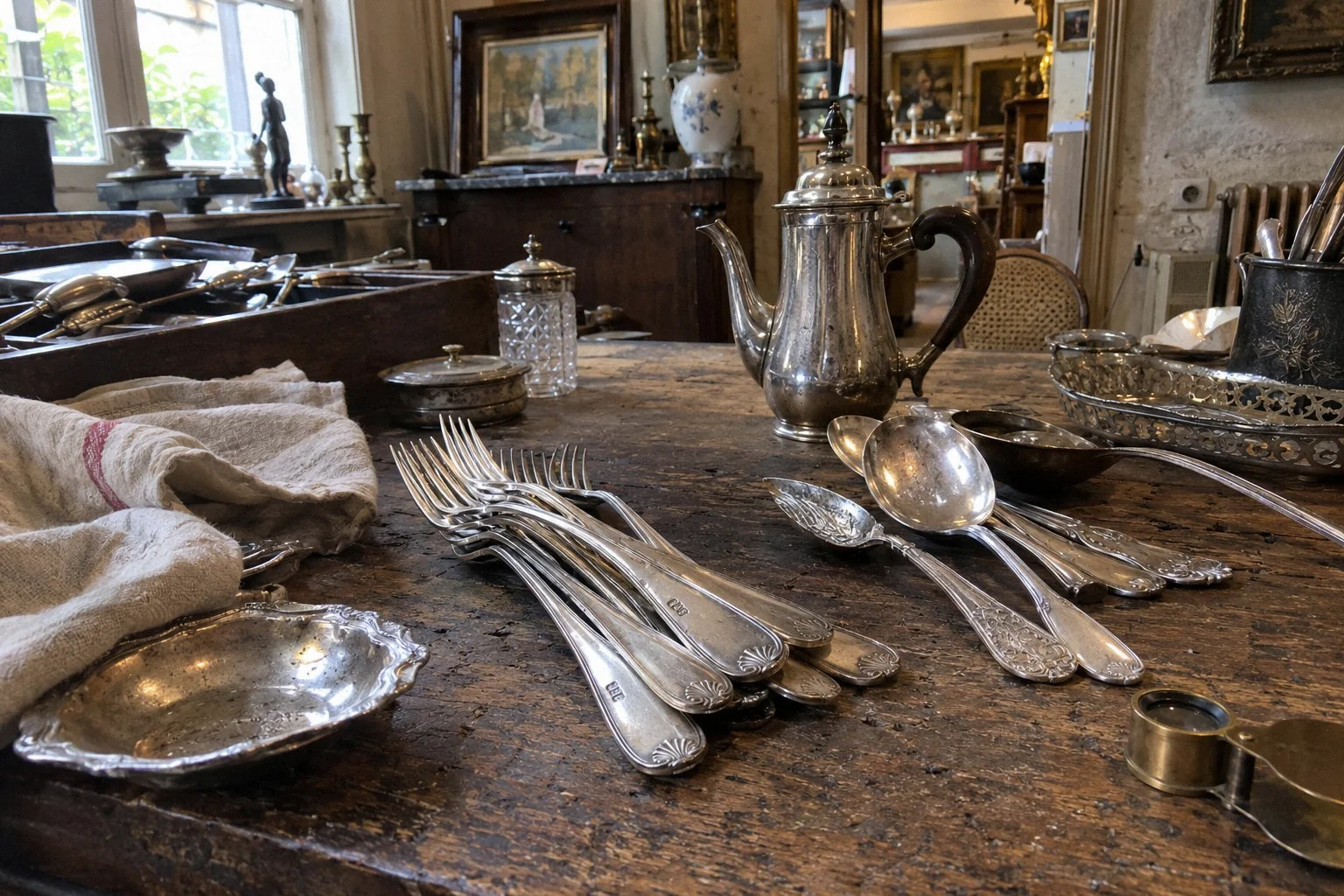
By Baptiste Murier, antique and second-hand dealer in Île-de-France.
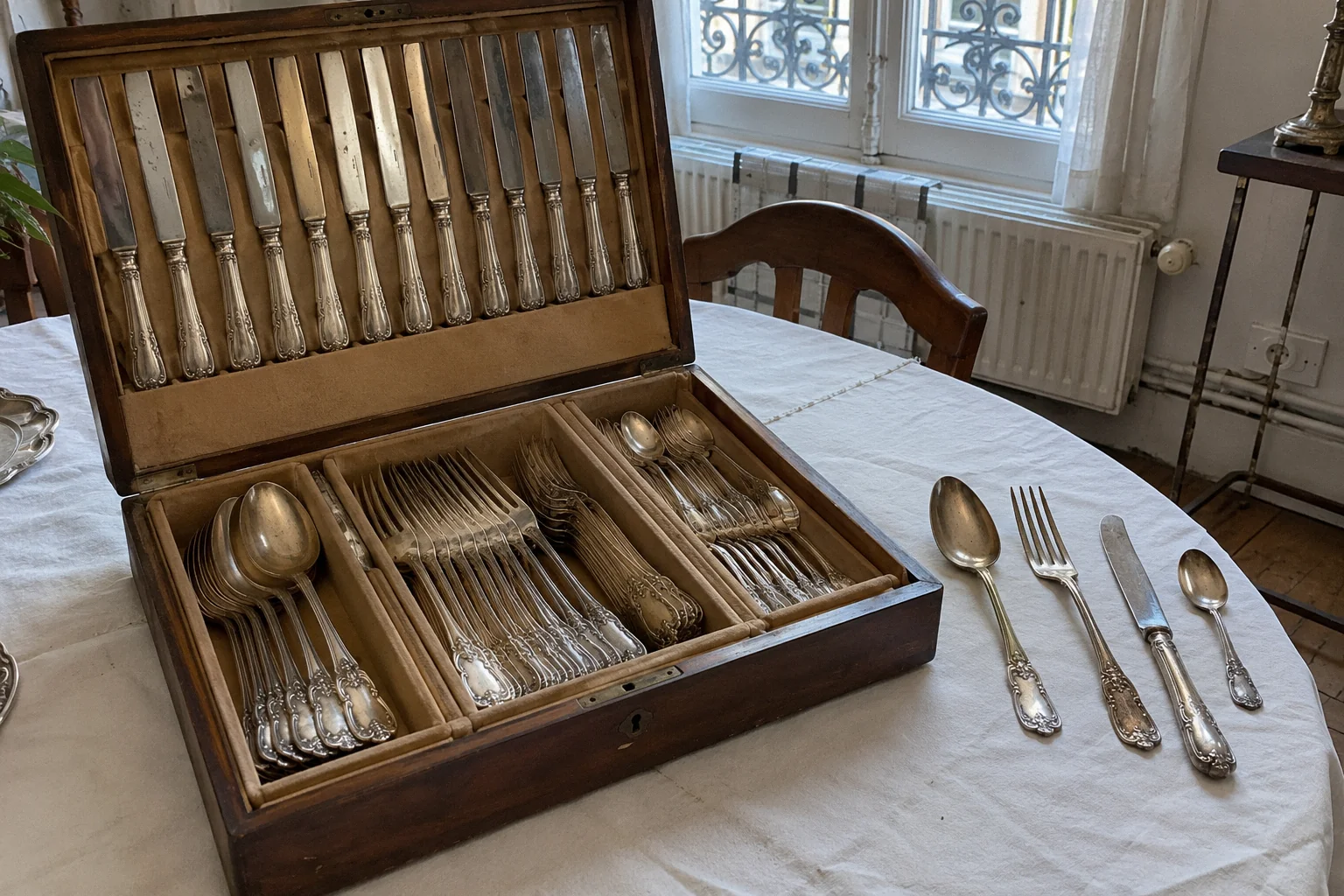
When we open a family cutlery box or an old sideboard, we often find canteens of cutlery, coffee pots, serving dishes or candlesticks. One question comes up straight away: are these pieces solid silver or silver plate? To answer it, careful examination of the stamped marks remains the most reliable method.
The difference between silver plate and solid silver lies in the metal itself. Solid silver is an alloy made mostly of pure silver (usually 800 or 925 parts per thousand), while silver plate is a base metal, such as brass or nickel silver (maillechort), covered with a thin layer of silver by electrolysis. To guide buyers and regulate the trade, the French state and international rules have required separate hallmarks. Understanding the shape and symbol of these marks lets you identify a piece at first glance.
How do you tell silver plate from solid silver?
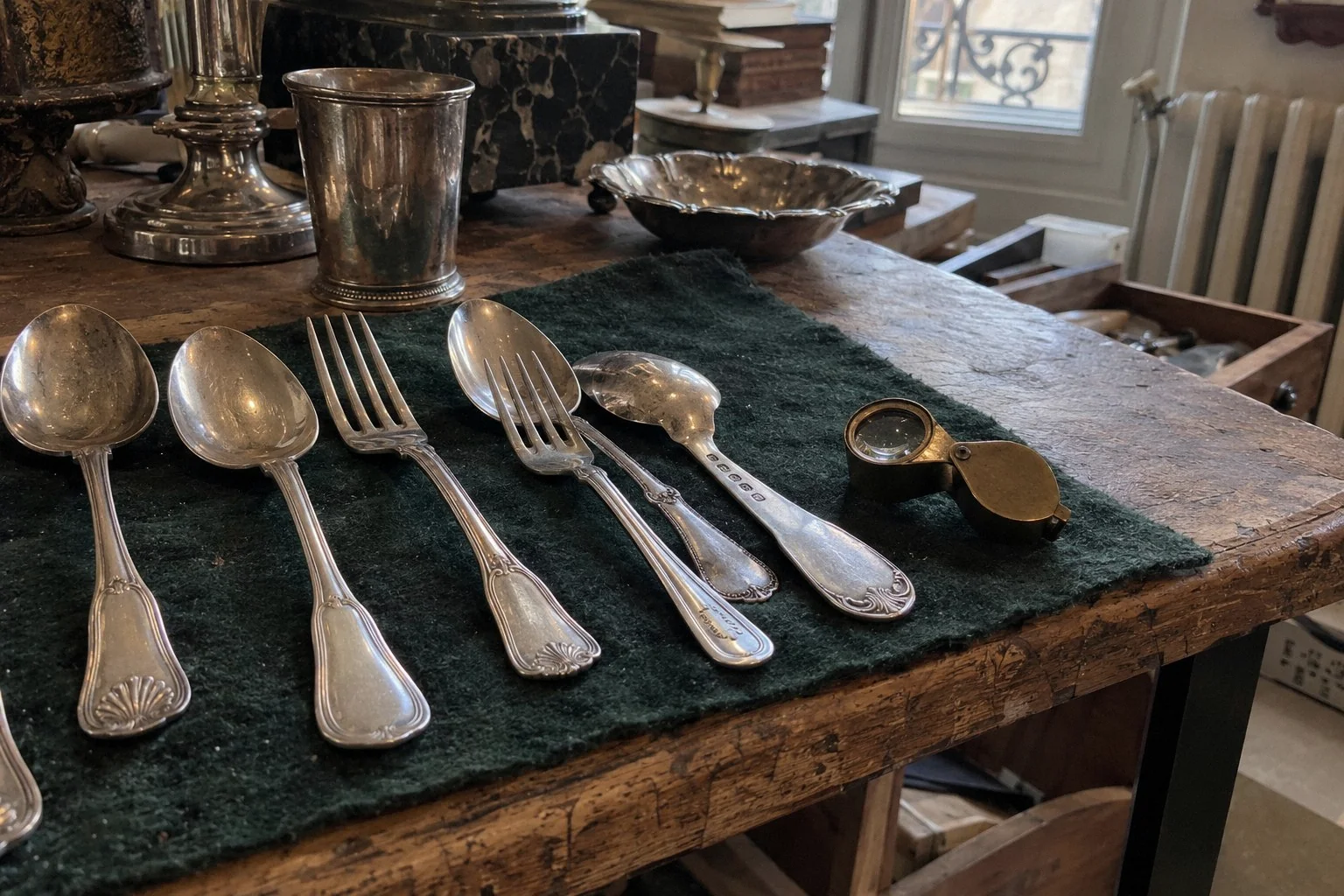
To tell silver plate from solid silver, the first thing to do is look for the official silversmith's hallmarks. In France, solid silver carries a standard mark (poinçon de titre), most often oval, barrel shaped or hexagonal. The best known is the Minerva (Minerve) hallmark, used since 1838 to guarantee the silver standard. To learn more about this distinctive mark, see our article on the Minerva hallmark on French silverware.
Silver plated pieces, on the other hand, receive a maker's mark in the form of a square or rectangular stamp. This right-angled shape signals without any doubt that the object is made of a base metal coated with a thin surface layer of silver.
Another visual clue is wear on the metal. Over time and with repeated cleaning, the surface layer of silver on a plated piece of cutlery can wear thin. Yellowish or pinkish marks then appear where rubbing is greatest, such as the bowl of a spoon, the tines of a fork or the edges of a knife. This shows the brass or nickel silver underneath the silver layer coming through. On a solid silver piece, this change of colour does not happen, because the metal is the same all the way through.
Why does a square hallmark mean silver plate?
In France, the rules on the guarantee of precious metals reserve oval and certain specific geometric shapes for solid precious metals (gold, silver and platinum). The square mark was introduced to identify silver plated ware clearly and to prevent any confusion or trade fraud.
Inside this square mark, the silversmith places two key elements:
- their initials or workshop symbol, around a particular motif;
- a number showing the quantity of silver applied during manufacture.
This master's or maker's mark is sometimes joined by a mark in full letters giving the company name of the silversmith. Great names in tableware such as Christofle, Ercuis, Ravinet d'Enfert, Alfénide, Boulenger or Saint-Médard stamp their pieces with a square mark alongside their name.
When we carry out a valuation of antique silverware, we always check every piece in the set. Some serving pieces can be solid silver while the ordinary table cutlery in the same box is silver plate.
What do the numbers stamped on silver plate mean?
On canteens of cutlery and larger silver plated pieces, a number inside a square mark often puzzles owners. Contrary to what many people think, this number does not show a percentage of purity, but a weight of silver used for a set of pieces.
By long trade custom in France, the number gives the mass of pure silver (in grams) deposited during electroplating on a standard lot of 24 pieces (for example 12 table spoons and 12 table forks).
Here are the most common reference points:
- Number 84: 84 grams of pure silver were deposited on the lot of 24 pieces of cutlery. This was the usual standard in the 19th century and the early 20th century.
- Number 100: a deposit of 100 grams of silver for 24 pieces, giving a thicker layer of silver and so better resistance to wear.
- Numbers 50, 60 or 72: these marks often belong to coffee spoons, dessert cutlery or intermediate size sets.
- Words such as "METAL BLANC" or "ALFENIDE": these name the base alloy (often nickel silver, made of copper, nickel and zinc) used before the silver plating bath.
On a coffee pot, a dish or a tray, the number inside a square stands for the total quantity of silver deposited on that single piece. These figures give a useful indication of the quality of the silversmith's work.
How do you judge the value of silver plate?
Even though it is not solid silver, silver plate is far from without interest. The value of a canteen of cutlery or a larger piece depends on several key criteria that we take into account during our visits.
First, the reputation of the silversmith matters a great deal. Pieces signed by great, well known silversmiths keep a steady appeal for lovers of fine tableware and for collectors. A complete Christofle set in a classic pattern (such as Marly, Malmaison, Spatours or America) keeps real value for use and for passing down.
Next, condition is decisive. A canteen of cutlery kept in its original box, used only moderately and with flawless plating, keeps all its appeal. On the other hand, a broken up set, badly scratched or with heavy loss of plating, loses much of its market interest.
If you would like to have all the old objects in a home valued, or are preparing to sell, see how our service as a dealer in old objects in Paris and the Île-de-France works.
How do you care for silver plate without damaging it?
Silver plate reacts to air and moisture in the same way as solid silver: over time it becomes covered with a layer of silver sulphide, first yellowish then blackish. To clean your pieces without harming the surface plating, a few basic precautions are essential.
We recommend a gentle cleaning product made for silverware, with a soft cloth or a non-abrasive sponge. Avoid at all costs scouring powders, metal scourers or steel wool, which scratch the plating for good and can quickly expose the metal underneath.
To look after silver plate day to day:
- rinse cutlery straight after use to avoid long contact with acidic foods (lemon juice, vinegar, egg);
- dry each piece carefully with a soft cotton cloth before putting it away;
- store sets in anti-tarnish pouches or boxes, which slow down the blackening of the metal.
How do you get your silverware valued?
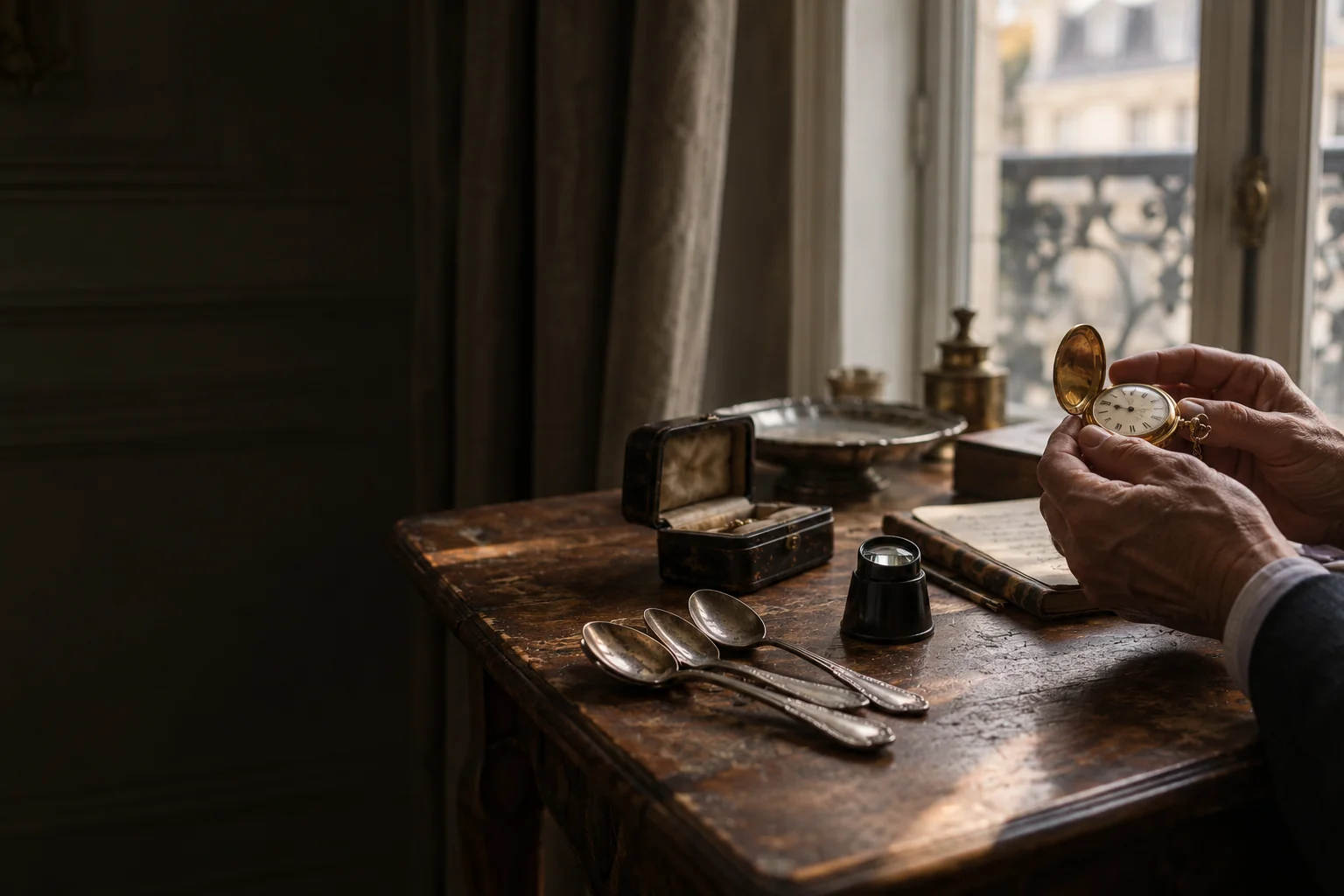
Do you own a canteen of cutlery, a tea service, candlesticks or old dishes, and want to know exactly what they are made of and what they are worth? Baptiste Murier can help you by examining your pieces, checking the shape of the hallmarks and giving you a precise opinion.
When a family is sorting a home or preparing an estate, we offer a free home valuation across the whole Île-de-France region. We can look at silverware, but also furniture, paintings or antique jewellery. You can also come and meet us directly at our stand at the Puces de Vanves flea market on Saturday and Sunday mornings, to show us your pieces or simply photos of your hallmarks.
Feel free to call us on 06 24 56 38 58 (+33 6 24 56 38 58 from abroad), or send us sharp photos of your pieces and their hallmarks today by WhatsApp on the same number. We will reply quickly and simply.