By Baptiste Murier, antique and second-hand dealer in Île-de-France.
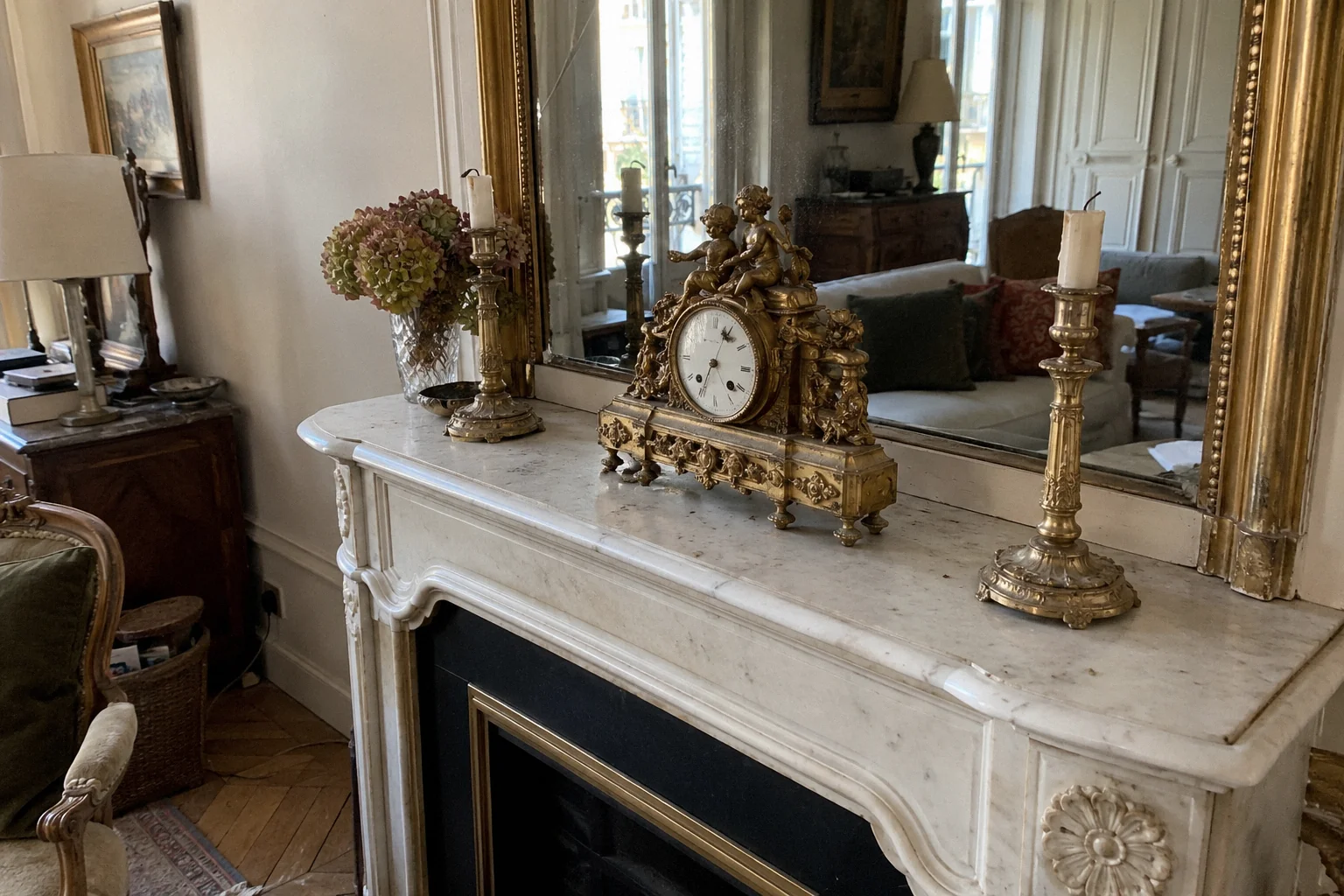
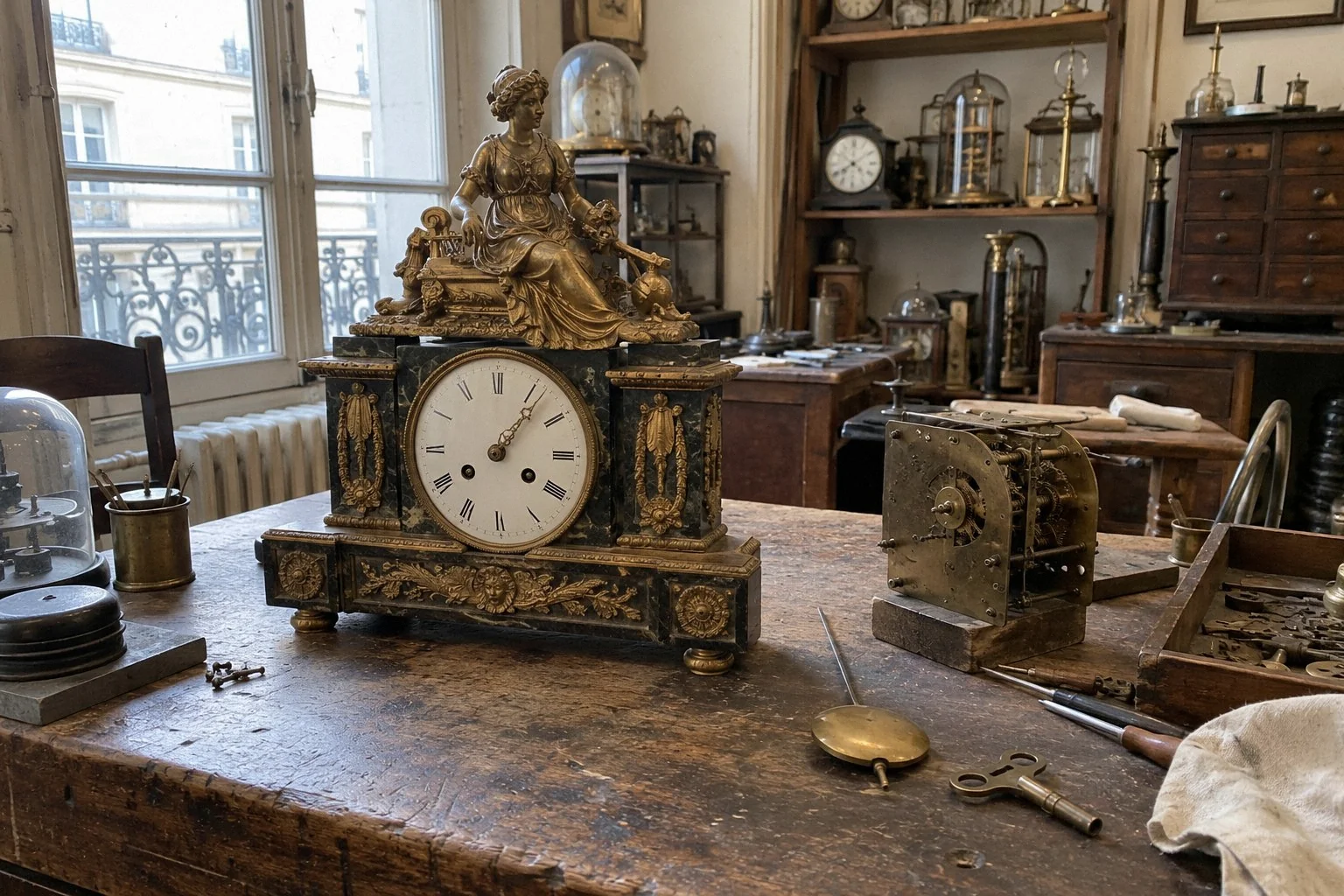
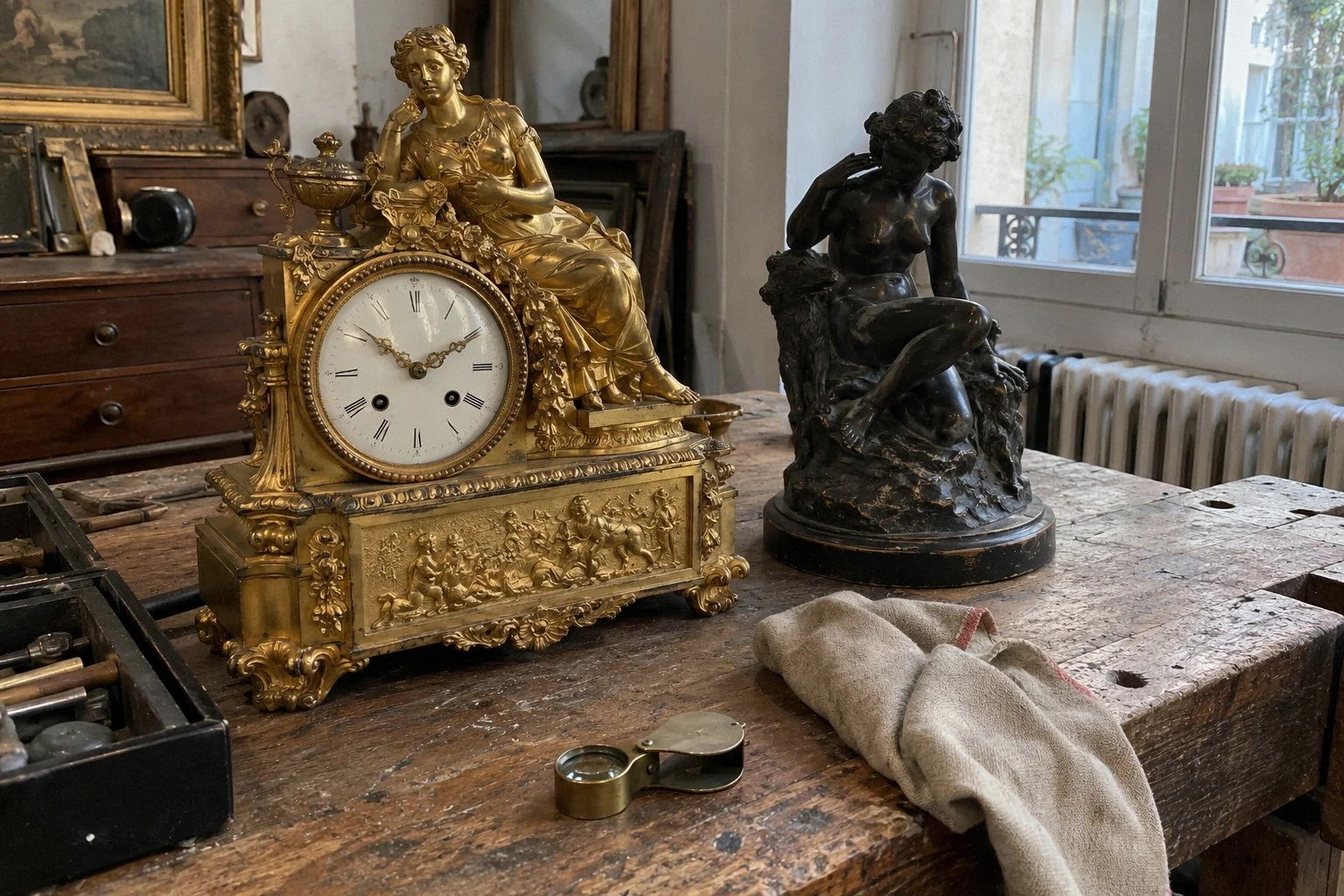
How to tell genuine bronze from spelter (régule in French) is a question we are asked very often during an estate inventory or a home visit. Many families own a mantel clock set (garniture de cheminée), a wall clock (cartel) or a statuette inherited from their grandparents, without knowing exactly whether it is a precious art bronze or a 19th-century spelter piece.
The two materials look alike at first glance, all the more so because the patinas and gilding applied at the time were meant precisely to imitate bronze at a lower cost. Yet for enthusiasts and collectors alike, the difference is major. Here are the practical signs we use to identify the metal without risking damage to your item.
What is spelter compared with bronze?
To understand what separates them, you need to go back to what these two metals are made of and to their history in the decorative arts.
Bronze is a noble, ancient alloy, made mainly of copper and tin. Known since Antiquity, it offers remarkable mechanical strength, excellent casting qualities and great durability over time. It is the metal of choice for sculptors, art founders and the great French clockmakers of the 18th century.
Spelter, for its part, is a modern alloy that appeared in the second half of the 19th century. Designed to meet the growing demand of the middle classes under Napoleon III and the Third Republic, it is made mostly of zinc, sometimes with a tiny proportion of antimony, lead or aluminium added. Cheaper to produce, and melting at a much lower temperature than bronze, spelter made it possible to spread mantel clocks, allegorical figures and decorative lamps on a large scale.
The five telltale signs that make the difference
To work out what an antique item is made of, we look at five points in turn: the colour of the metal under the patina, the weight, the quality of the chasing, the sound and the joins.
1. What colour is the metal under the patina?
This is the most reliable sign. Bronze and spelter do not show the same colour at all when you look at the bare metal.
- Bronze shows a golden, coppery yellow or warm tone. If you look at a rubbed area under the base or a small old chip, you will immediately see the warm glow typical of copper.
- Spelter reveals a greyish, dull white or silvery metal, very close to the colour of lead or raw zinc.
Note: we strongly advise you not to scratch an item with a blade or a sharp tool. An old patina is fragile and is part of the piece's authenticity. Instead, look at areas of natural rubbing: around the base, under the feet, the hole a screw passes through or the inner rim of a clock's access door.
2. Is it heavy for its size?
For a comparable volume, bronze is noticeably denser and heavier than spelter.
The density of bronze is generally between 8.4 and 8.9 depending on its tin content, while that of zinc is about 7.1. When you pick up a statuette, an immediate feeling of heaviness and solidity points to bronze. On the other hand, a spelter item often feels surprisingly light for its size.
However, this test calls for caution. Spelter founders often weighted the inside of their sculptures with plaster, cement or lead poured into the base to create an illusion of mass. A heavy base is therefore not enough on its own to decide: you need to check whether the weight is spread evenly throughout the body of the figure.
3. How sharp are the chasing and the details?
The way it was made leaves a deep mark on the look of a work of art.
On a quality bronze, coming out of the mould is only the first step. The chaser then works the piece over by hand with a set of chisels, matting punches and rifflers. He refines the locks of hair, deepens the folds of fabric, brings out the fingers and draws the veins of the leaves. Every detail is crisp, sharp and expressive.
Spelter, on the other hand, is a soft, fragile metal that cannot take the hard work of hammer and chisel. Spelter pieces are therefore taken out of the mould and simply trimmed before being painted or copper-plated by electrolysis. The details stay rounded and softer, as if blurred. The hollows of faces and the joints lack relief and liveliness.
4. What does it sound like when tapped?
The sound the metal makes is an excellent indicator. When you tap lightly with your fingernail or a coin on a projecting part:
- Bronze rings with a clear, crystal-like and lasting chime, like the sound of a bell.
- Spelter gives a dull, muffled sound that dies away at once, with no ringing.
For an antique clock, this quick test often gives a very useful first indication before examining the movement.
5. What do the gilding and oxidation tell you?
The state of the surface also tells the story of the material:
- On bronze, the original gilding was often done with mercury until the middle of the 19th century. This gilding has an unmatched depth, with a subtle mix of shiny burnished areas and matt gold. Bronze oxidises into verdigris or a fine brown patina.
- On spelter, mercury gilding is impossible because the metal would melt in the heat. So a very thin electrolytic gilding was applied, or simply a gold-coloured varnish. True "or moulu" (ormolu), mercury gilding, is kept for bronze. Over the decades, this thin layer wears and flakes, revealing white spots or whitish crusts caused by the zinc oxidising.
How does the metal affect the value of an antique clock?
What the metal is weighs heavily on the interest of collectors and dealers.
A Louis XVI or Empire period clock in mercury-gilt bronze and white marble is one of the key pieces we actively look for on behalf of our clients in the Ile-de-France. The work of the bronze makers of that period is well valued on the art market.
A late 19th-century spelter clock, even a large one, is a semi-industrial piece. It keeps an undeniable decorative charm on a mantelpiece, but its market value is much more modest. During a flat clearance or when sorting an estate, we take care to explain this difference to families so they get a clear picture with no surprises.
How we can help you get your items valued
If you are unsure what a clock, a chandelier or a sculpture is made of, the simplest thing is to show it to us. We come out anywhere in Paris and the Ile-de-France to examine your pieces on site.
To learn more about the history of movements and dials, see our guide to valuing an antique clock or our page on antique clock valuation. If you are dealing with a family estate, we can also help with a flat clearance or an antiques valuation at home.
You can contact us directly by phone on 06 24 56 38 58 (+33 6 24 56 38 58 from abroad) or send us a few clear photos of your item on WhatsApp. We will be happy to reply with an informed first opinion.