By Baptiste Murier, antique and second-hand dealer in Île-de-France.
The Puces de Vanves flea market is held every Saturday and Sunday, mostly in the morning, at the Porte de Vanves in the 14th arrondissement of Paris. The stands line two avenues, Marc Sangnier and Georges Lafenestre. You get there by metro (line 13, Porte de Vanves) or by the T3a tram. To browse well: come early, bring change, look closely at condition and haggle politely. And if you have an item you would like valued, a photo is enough for a first opinion on our stand.
Where is the Puces de Vanves?
The market is outdoors, on the pavements, very close to the ring road (the périphérique). According to the City of Paris, it occupies:
- the avenue Marc Sangnier, on the even-numbered side, between the avenue de la Porte de Vanves and the avenue Maurice d'Ocagne;
- the avenue Georges Lafenestre, on both pavements, from the avenue Maurice d'Ocagne to the bridge that crosses the ring road.
The Puces de Vanves is smaller than the Saint-Ouen flea market, and that is part of its charm. You can walk round it in a morning, and the dealers have time to talk.
What can you find there?
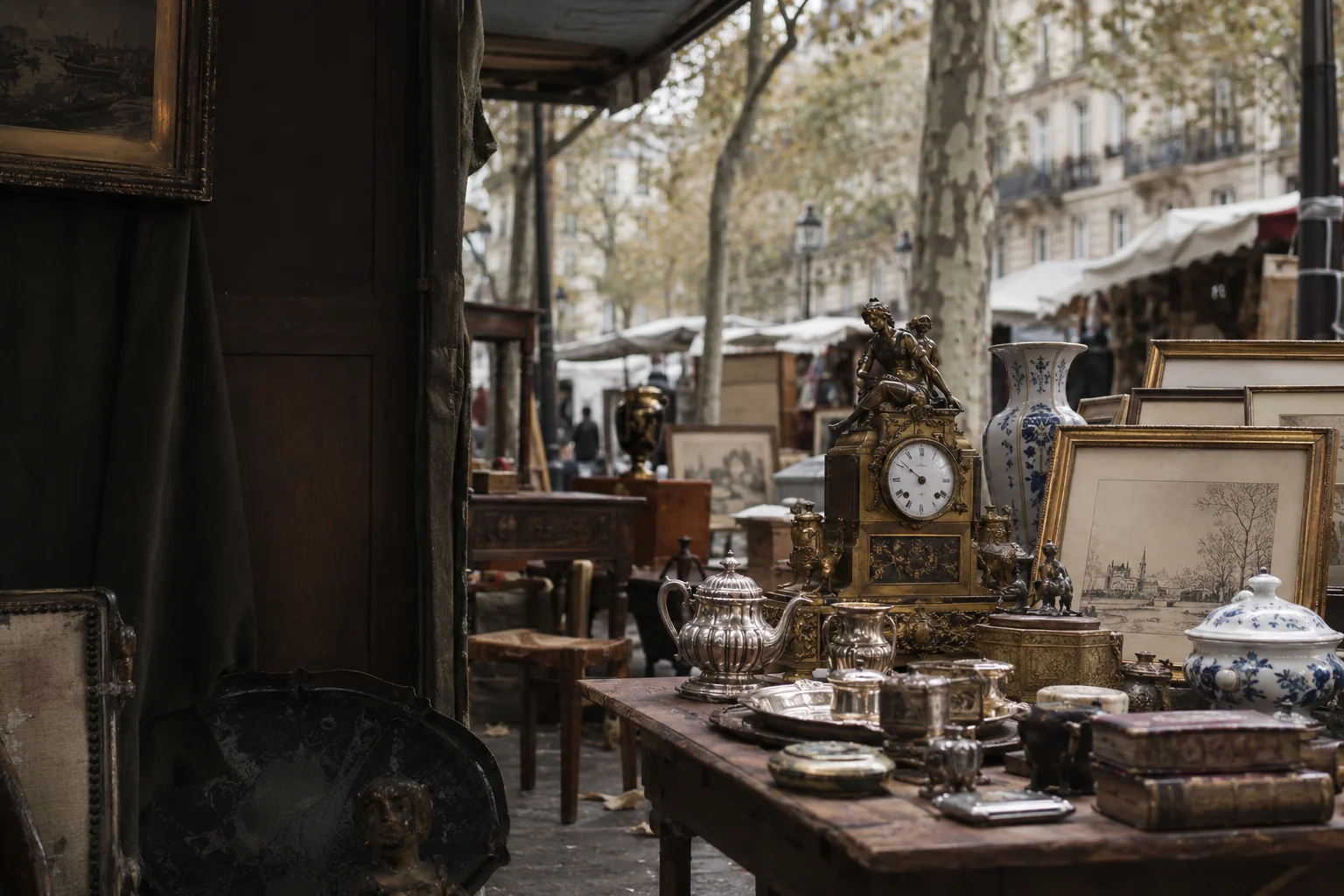
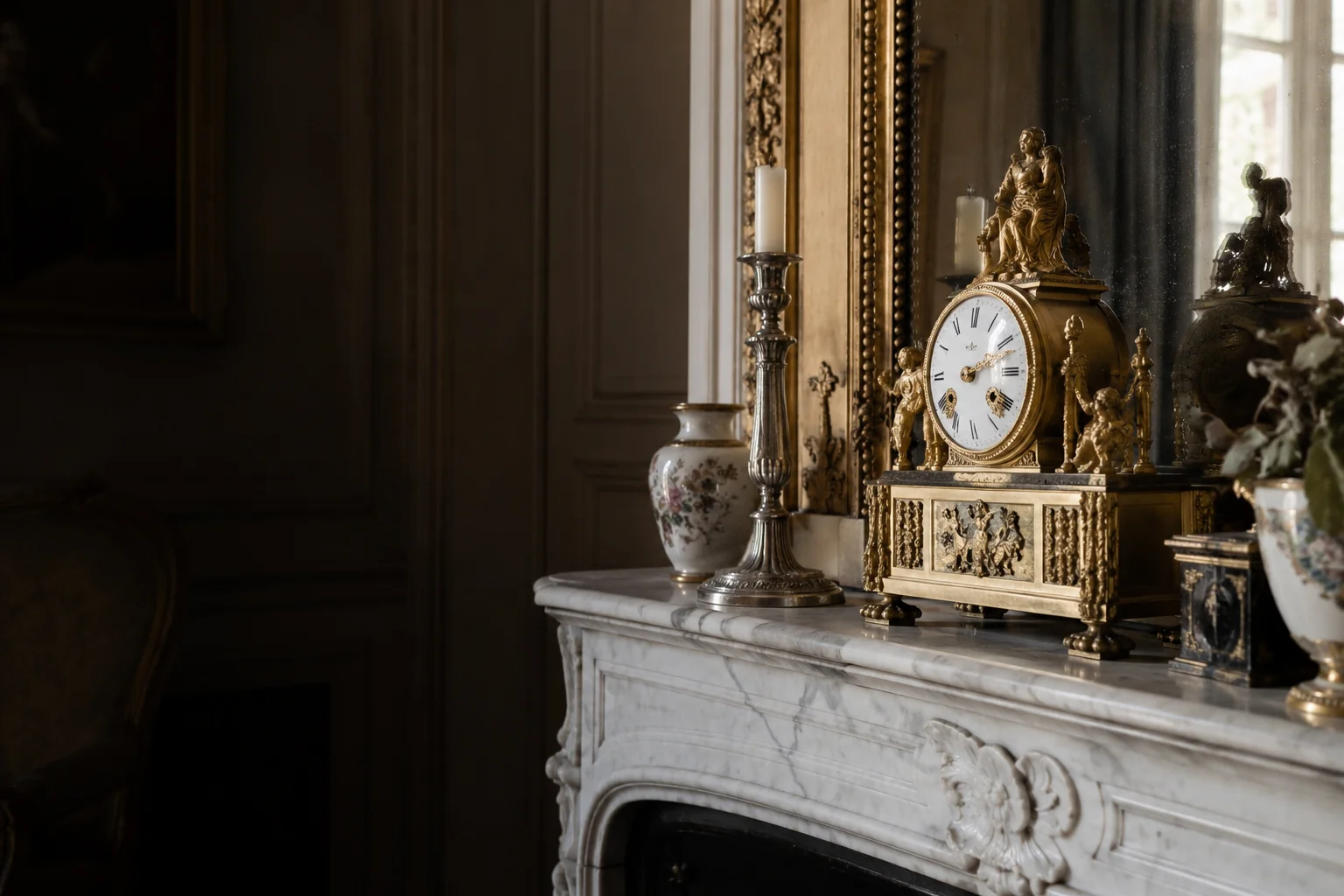
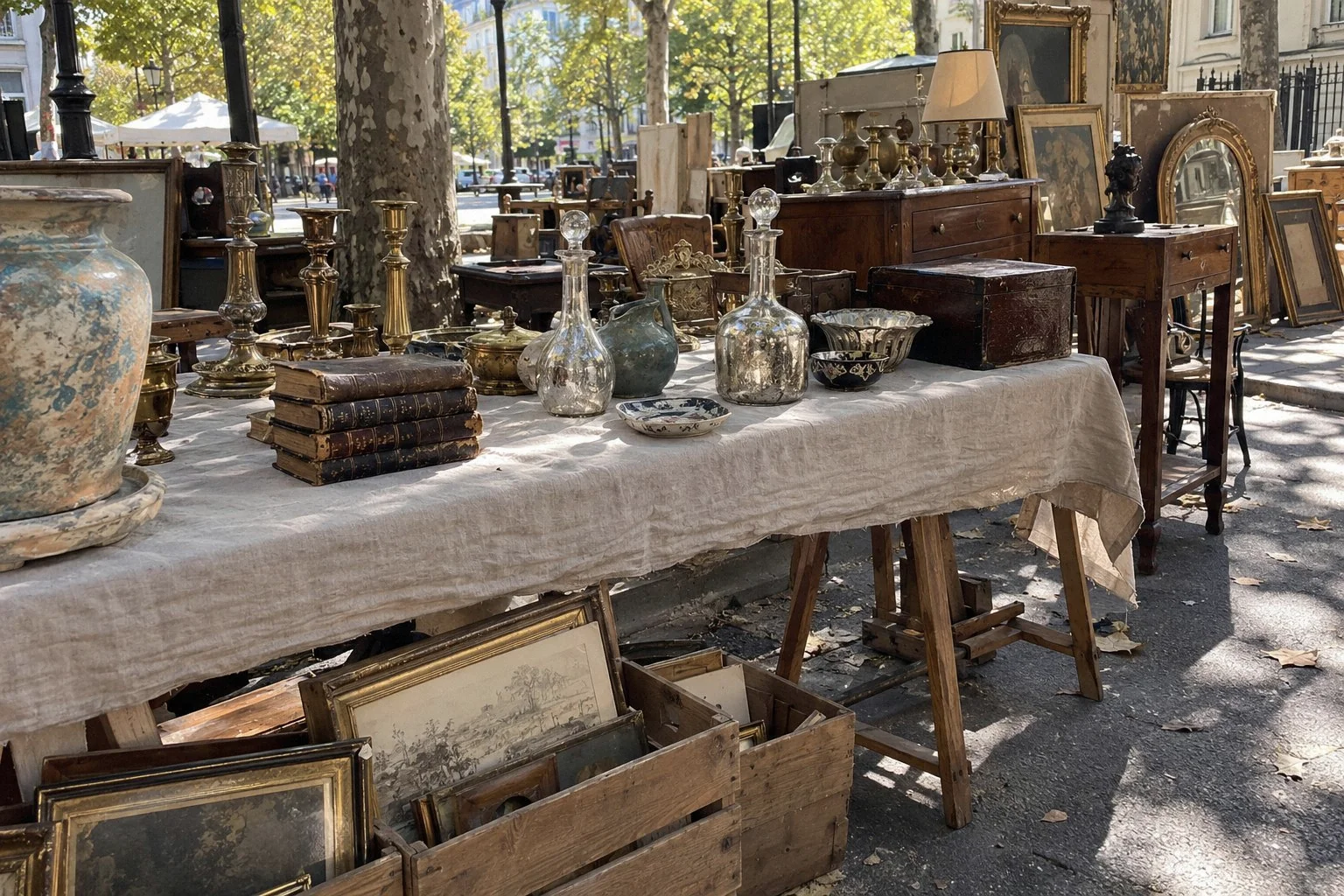
Mostly things you can carry under your arm: tableware and porcelain, silverware, small pieces of jewellery, small clocks and watches, postcards, prints and paintings, old toys, linen, books, curiosities. You also see furniture, but small objects dominate.
Vanves or Saint-Ouen: what is the difference?
The Saint-Ouen flea market, in the north of Paris, brings together several markets, many of them covered, with lots of furniture and large pieces. Vanves, in the south, is a pavement market, simpler and more direct. You mostly hunt for small objects, and you can see everything in the same morning.
What are the Puces de Vanves opening hours?
The market runs on Saturday and Sunday, all year round. The City of Paris gives opening hours of 7 am to 2 pm on Saturday, and from 7.30 am on Sunday.
In practice, it is a morning market. Many dealers start packing up around 1 pm, and some leave earlier. As everything happens outdoors, there are sometimes fewer stands when it rains or is very cold.
How do you get to the Puces de Vanves?
- Metro: line 13, Porte de Vanves station. This is the easiest way.
- Tram: T3a, Porte de Vanves stop.
- Bus: lines 58 and 95, which serve the Porte de Vanves.
- Bike: the City notes a Vélib' bike station about fifty metres from the market.
By car, parking around the Porte is often difficult at weekends. Public transport is more practical.
Good to know
- According to the City of Paris, the market is accessible to people with reduced mobility, and pets are allowed.
- With a pushchair or a wheelchair, the tram is easier than the metro, where you have to use stairs.
How do you browse well at the Puces de Vanves?
Come early
Professional dealers and collectors arrive as soon as it opens. If you are looking for a specific piece, the first hours are the best. Later on, it is calmer, and you often have more time to chat with the dealers.
Bring a way to pay
Many dealers prefer cash, especially for small amounts. Some accept cards or another means of payment, but it is not the rule. Ask before you decide, and bring small change.
Haggle politely
Haggling is part of the game, as long as you stay courteous. A few pointers:
- ask the price before criticising the item;
- make a reasonable offer, without a shocking gap;
- if you are taking several items from the same stand, ask for a price for the lot;
- if the dealer will not move, say thank you and come back later.
Check condition before you buy
Take the time to turn the item every way:
- porcelain and glass: chips, hairline cracks, restoration on the rim and under the base;
- metal: dents, repairs, worn gilding or silver plating;
- mechanisms: ask whether the watch or clock works, and what is missing;
- paper: stains, tears, folded corners, damp marks;
- signatures and marks: are they consistent with the item?
What is useful to bring?
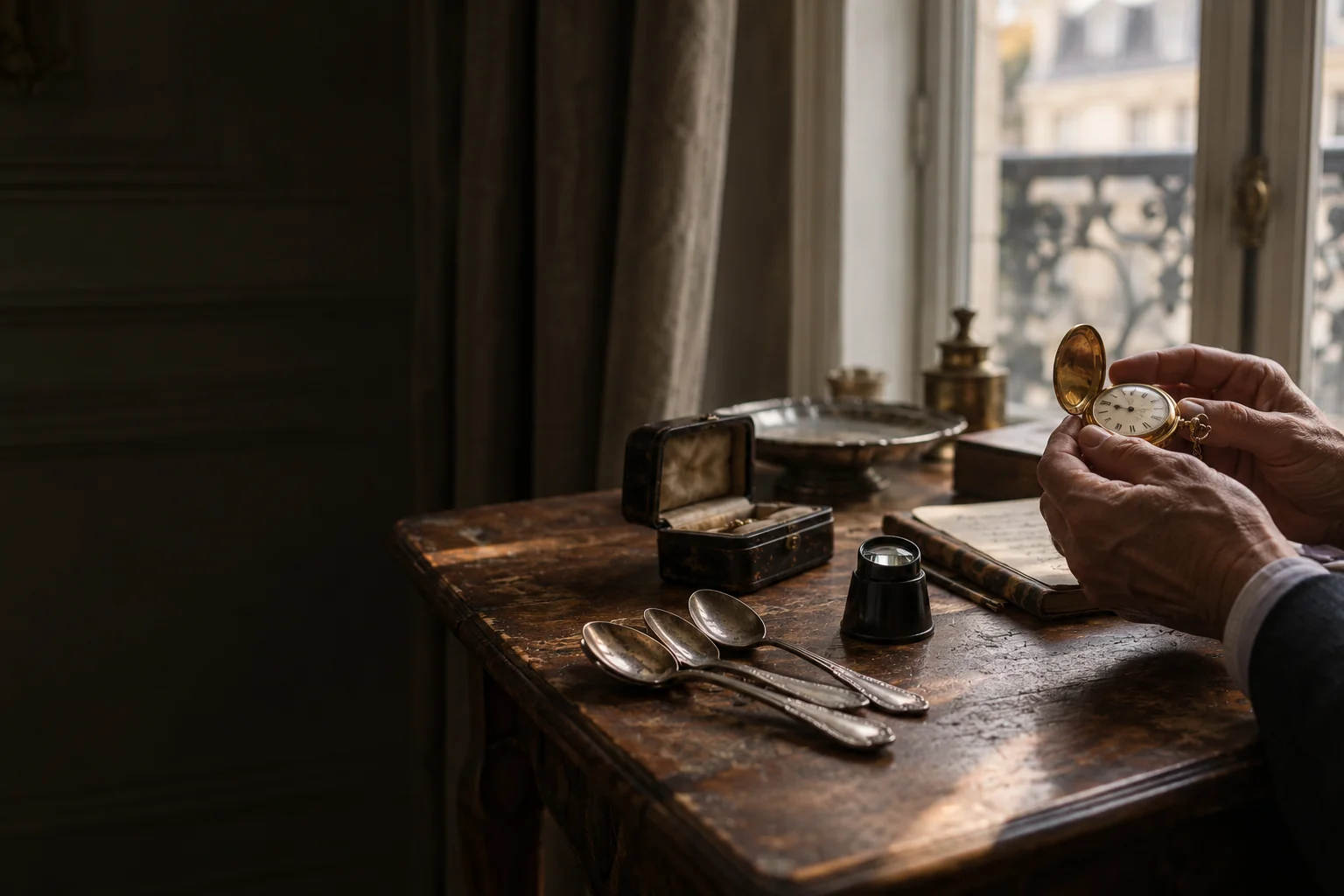
- a small torch and a magnifying glass;
- a tape measure, if you are looking for something to fit a particular space;
- a sturdy bag and paper to wrap fragile items.
How do you tell an antique from a copy?
At flea markets, reproductions sit alongside genuine antiques. A few clues help tell them apart:
- wear: on an old item, it is found where people touch it, such as handles, edges and the underside;
- screws and nails: old ones are often irregular; cross-head screws on a piece of furniture presented as 18th century should make you think twice;
- marks: on French solid silver, look for the hallmarks. We explain how to read them in how to recognise solid silver;
- weight: a bronze is heavy; a copy in resin or zinc is often lighter.
No single clue is enough on its own. If in doubt, ask the dealer what they know about the item.
Ask questions
Ask where the item comes from, what period it is, whether it has been restored. A serious dealer answers willingly, and also says when they do not know.
Can you get an item valued at the Puces de Vanves?
The stands at Vanves are run by dealers. So if you have things to sell, the simplest approach is to have them valued first.
Yes. We run a stand at the Puces de Vanves at the weekend, and you can come and show us a photo of your item on your phone. A clock, a piece of jewellery, a set of postcards, a painting: one clear photo is enough for a first opinion, free and with no obligation. To find out how to find us, see the page Murier Antiquités at the Puces de Vanves.
For a piece of furniture, a whole collection or a flat to clear, we can also come to you: the home valuation is free, and so is the trip, in Paris and the Ile-de-France. If you want to sell, we can buy your items with immediate payment.
Before you come, two articles can help you prepare your questions: how to value an antique clock and what your old postcards are worth.
Drop by our stand at the weekend, or send a few photos now on WhatsApp to 06 24 56 38 58 (+33 6 24 56 38 58 from abroad). You can also call us on the same number.