By Baptiste Murier, antique and second-hand dealer in Île-de-France.
To sell antique furniture in Paris or Île-de-France, there are four ways: an antique dealer or second-hand dealer who buys on the spot, an auction house, a private sale, or a house clearance that deducts the buyout from its bill. The right choice depends on the piece, your time and how urgent it is.
If you want immediate payment and a collection that is organised for you, a professional is the simplest route. If you have time and a sought-after piece, the other options are worth a look. Here is how to compare them.
What are the options for selling an antique piece of furniture?
Each option has its advantages and its limits:
- An antique dealer or second-hand dealer: they examine the piece, make you an offer, pay and organise the collection. This is the fastest route.
- An auction house: the piece is sold in public. The result is only known after the sale, and fees apply.
- A private sale: you set the price, but you handle the advert, the viewings and the transport.
- A house clearance with buyout: suited to emptying a whole home, not just selling one piece.
How does selling to an antique dealer or second-hand dealer work?
You send us photos, or we come to see the furniture at your home. We tell you what we buy, what we do not buy, and why. If our offer suits you, payment is immediate, by bank transfer.
A professional buys in order to resell, so they have to keep a margin. In return, you have no advert to write, no viewings to organise and no buyer to convince. This is the principle behind our buying of antiques and old objects.
The estimate is free and with no obligation, from photos or at your home. Travel is free in Paris and Île-de-France. You can hear our opinion without having to decide anything.
Which photos should you send for a first estimate?
A few views are enough, as long as they are sharp and well lit:
- an overall view of the piece;
- the front, the sides and the top;
- the inside, with drawers and doors open;
- the underside and the back, where a mark is sometimes found;
- the handles, the keyhole plates and the feet;
- any flaws: cracks, holes, repaired parts.
Can you sell antique furniture at auction?
Yes, it is possible, especially for a fine piece that is signed or well documented. It is described, presented and then sold at a public sale.
Several points are worth knowing before you start:
- the sale date is set by the auction house, and payment only arrives after the sale;
- selling fees apply: ask for the terms in writing;
- the announced estimate is only indicative and does not guarantee the result;
- a piece may find no buyer.
For everyday furniture, auctions are often less suitable. It is better to keep them for pieces whose quality justifies a public sale.
Is it better to sell your furniture privately?
On your own, you may hope for a higher amount than from a professional, but nothing is guaranteed. This route takes time and patience.
You have to take photos, write the advert, answer messages, receive strangers at home, negotiate, and then organise the transport. Large pieces are often the slowest to sell: the buyer has to come with a vehicle and some help.
Be careful with payment. Never hand over the piece before you have received and checked the money, and be wary of buyers who suggest unusual ways of paying.
Are flea markets and brocantes a solution?
The stalls at flea markets are run by dealers. The simplest way to sell a piece is to show it to one of them. We run a stand at the Puces de la porte de Vanves at weekends, and we are present at brocantes around Île-de-France. You can come with a photo on your phone.
What should you do to empty a whole home?
When there is furniture, but also crockery, linen, boxes and a cellar, selling piece by piece takes too long. A house clearance with buyout settles everything in one step.
Our house clearance service includes a free visit, the estimate, sorting, the buyout, the collection and, if needed, cleaning. The buyout amount is deducted from the price of the clearance. When the buyout covers it, the clearance can be free.
Furniture we do not buy but that can still be used is given to charities such as Emmaüs, the Secours catholique or the Armée du Salut, or to nearby ressourceries (reuse centres). Anything that cannot be reused follows the appropriate channels: the tip or recycling.
What if the furniture comes from an estate?
Before selling, make sure all the heirs agree, and speak to the notary in charge of the estate. A piece sold too quickly can create tension. We have set out this situation on the page antique dealer for an estate.
Can all antique furniture be sold?
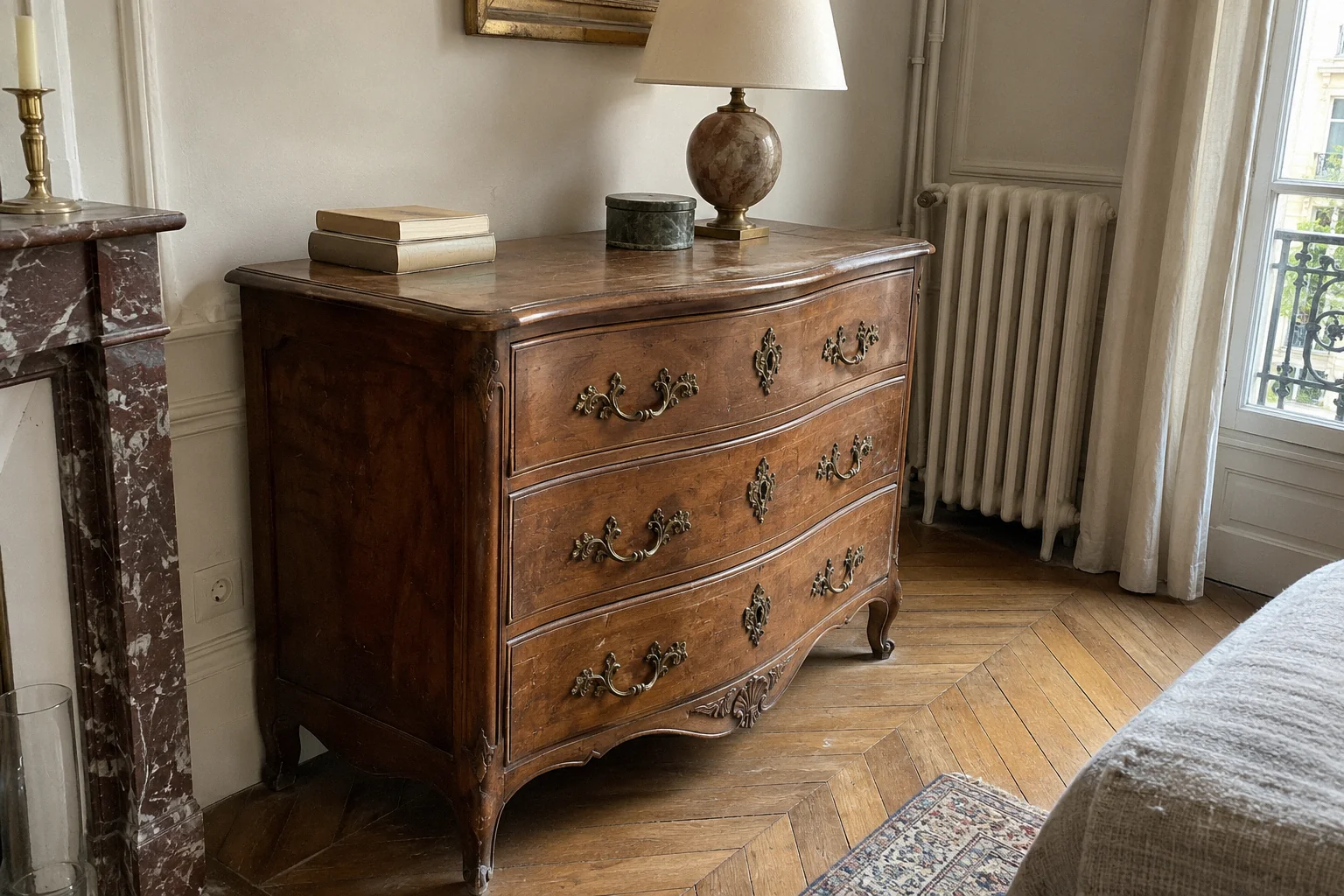
No. An old piece of furniture does not necessarily have value, and we would rather tell you so frankly. Several criteria matter:
- the period and style;
- the quality of the workmanship and the woods;
- the general condition and any restoration;
- the presence of original elements or, on the contrary, replaced parts;
- a stamp, a signature or a known provenance;
- the current demand for this type of furniture.
A badly damaged piece, a late copy or a recent mass-produced item is harder to sell. A period piece in good condition attracts more buyers. To learn how to do a first sort, read our article how to value antique furniture yourself. For an opinion on a specific piece, see our period furniture valuation.
What should you prepare before selling antique furniture?
A few simple steps help you avoid mistakes:
- Do not restore it: stripping, painting or a clumsy re-gluing can reduce the interest of an antique piece.
- Do not clean it thoroughly: a simple dusting is enough.
- Keep the papers: invoices, inventories, old photos, family memories.
- Write down what you know: where the piece comes from, who bought it, how long it has been in the family.
- Empty the drawers and keep the keys, if there are any.
- Measure it and note the access route: floor, stairs, corridor.
Are heavy pieces or pieces on upper floors a problem?
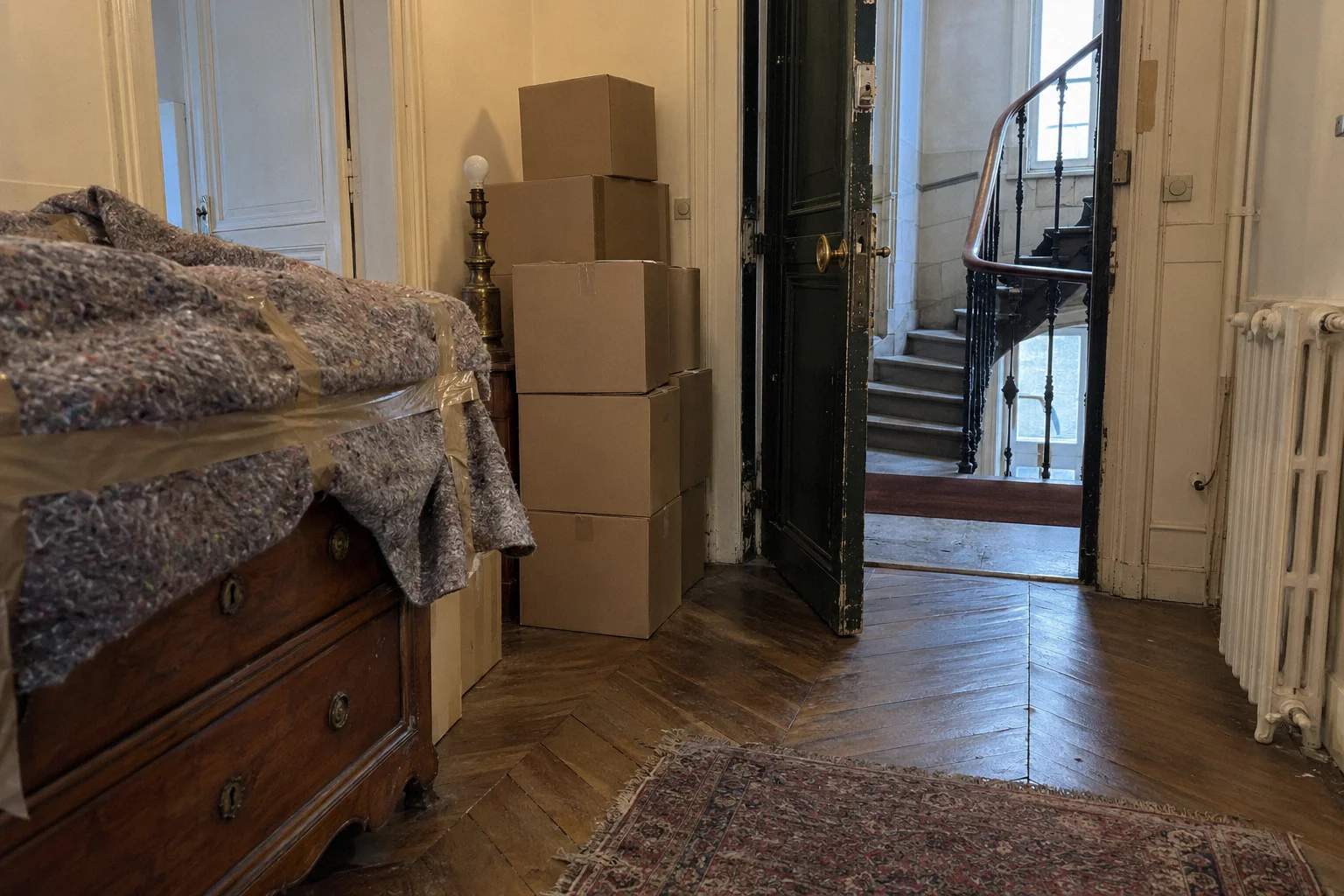
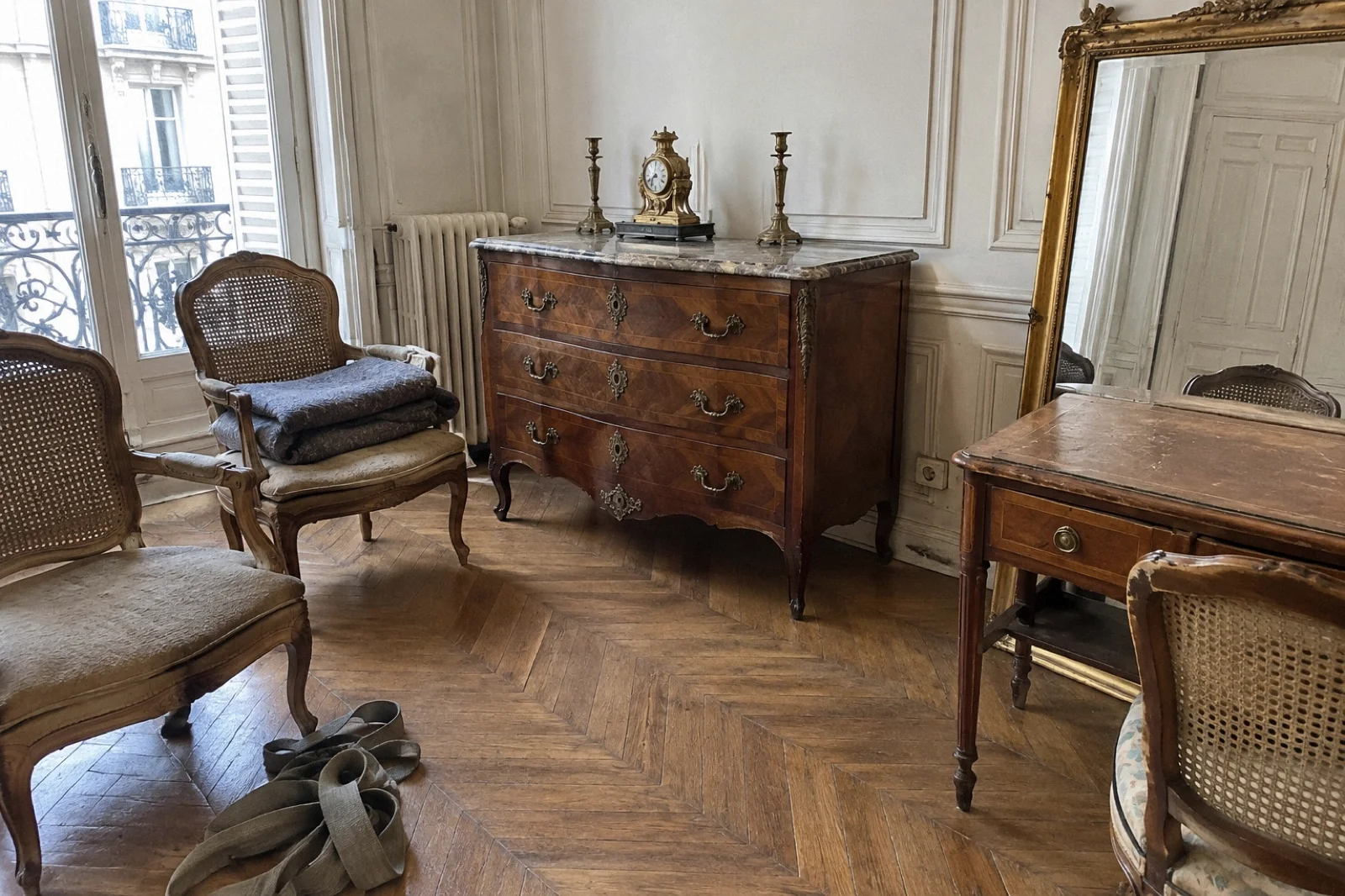
A sideboard, a wardrobe or a solid wood bed is heavy, and many Paris homes have no lift. That should not stop you from asking for an opinion. During the estimate, we look at access, the floor, the stairs and the width of the doors, and then we organise the collection accordingly.
How do you choose between these options?
Here are some simple guidelines:
- you are in a hurry, or you have several pieces: a professional, with immediate payment;
- you have a signed or exceptional piece: ask for an opinion first, then compare with auctions;
- you have time and a single everyday piece: a private sale may suit you;
- you have to empty a whole home: a house clearance with buyout.
In every case, get a valuation before deciding. The estimate is free and with no obligation: you remain free to sell elsewhere.
Not sure which route is best for your furniture? Call us on 06 24 56 38 58 (+33 6 24 56 38 58 from abroad), or send a few photos on WhatsApp to the same number. We will reply with a free estimate, with no obligation.