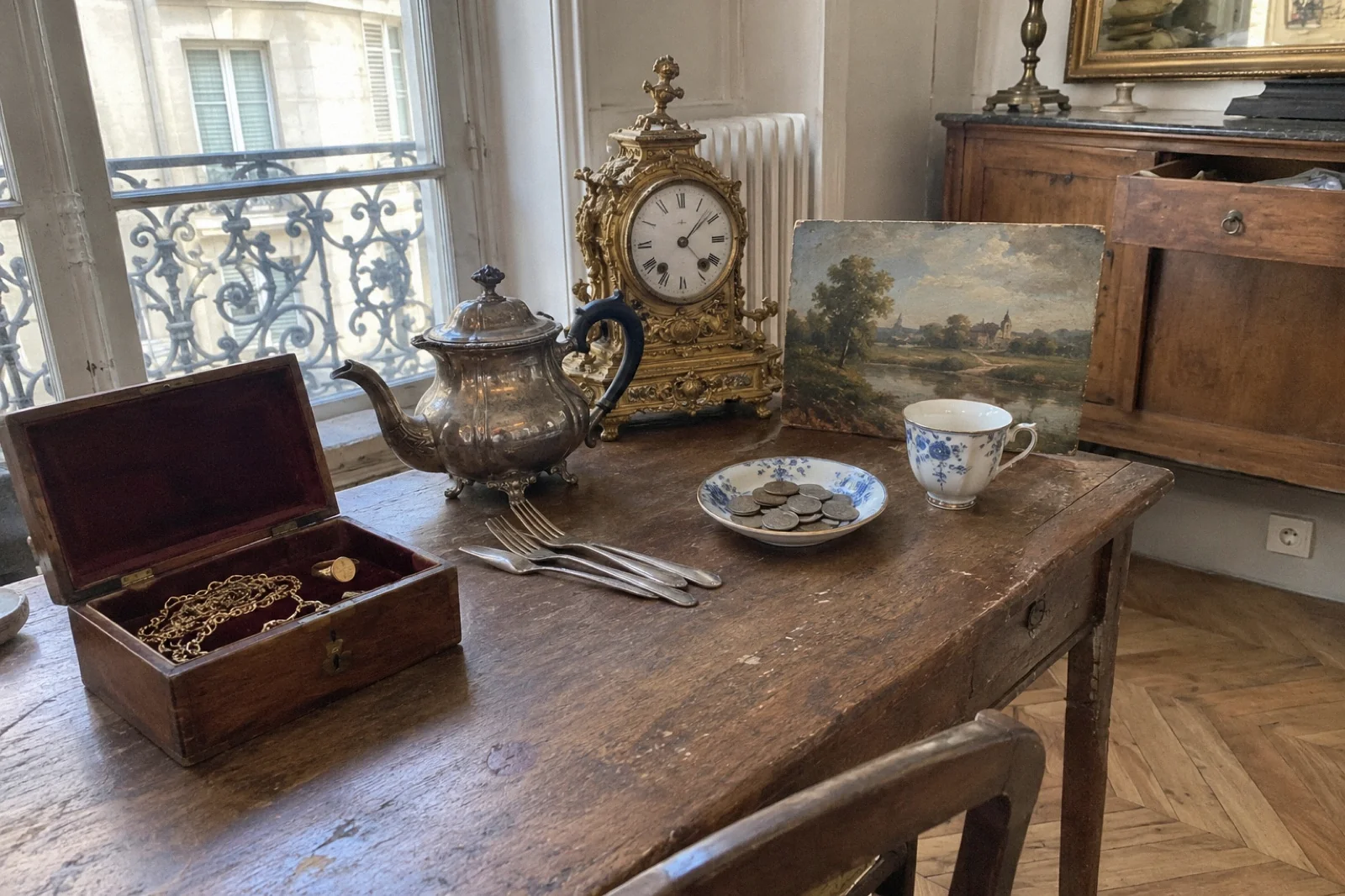
By Baptiste Murier, antique and second-hand dealer in Île-de-France.
The old items that are most often worth money are gold jewellery, solid silver, coins and medals, clocks and watches, signed paintings, period furniture, fine porcelain and Asian objects. But age alone is not enough. The material, the signature, the quality of the making, the condition and the demand count just as much. Here is the checklist to run through at home, and our advice for not throwing anything away by mistake.
Is an old item always valuable?
No, and that is the first thing to know. An item can be old without interesting many people. Conversely, a small, discreet object can be very sought after.
Four criteria come up almost every time:
- the material: gold, solid silver, bronze, fine porcelain, precious woods;
- the signature or mark: an artist, a maker, a foundry, a manufactory;
- the condition: a complete, unrestored item keeps more appeal;
- the demand: tastes change, and some items sell better than others depending on the period.
We do not give prices in an article, because every item has to be seen. This guide is here to help you know what to set aside.
Which old items are most often valuable?
Antique jewellery and gold
This is the first family to look at. Rings, brooches, christening medals, chains, wedding bands, gold watches: even a broken or odd jewellery piece can be worth something for its metal. Look for hallmarks, often very small, on the back or on the clasp.
Jewellery stuffed into a shoe box is often forgotten. Do not throw it away, even if it is damaged. To understand how it is examined, see our page on buying antique jewellery. For gold and precious metals, payment is made by bank transfer.
Silverware
Cutlery, full canteens, teapots, trays, goblets, napkin rings: solid silver is recognised by its hallmarks, but many pieces are silver-plated metal, which is of much less interest. A heavy old piece is not necessarily solid silver.
Do not break or scratch anything. A photo of the marks is often enough to get started. We explain the difference on our page about valuing antique silverware.
Coins, medals and currency
Gold coins, old silver coins, medals and old banknotes deserve careful sorting. Not all common coins are rare, and the sorting is what matters. A worn coin does not have the same appeal as a well-preserved one. Keep collections together, with their boxes and notebooks.
Clocks, cartel clocks and watches
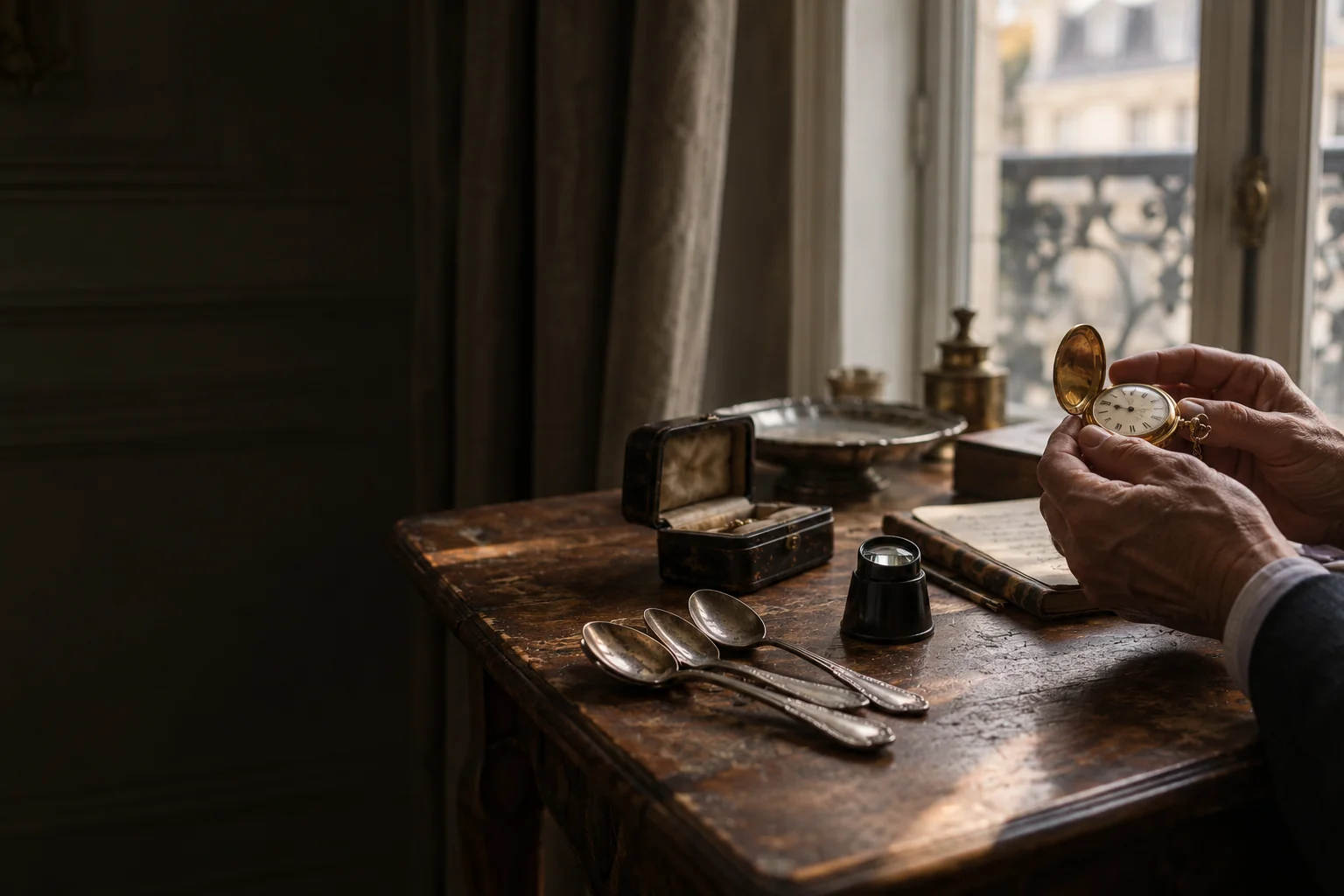
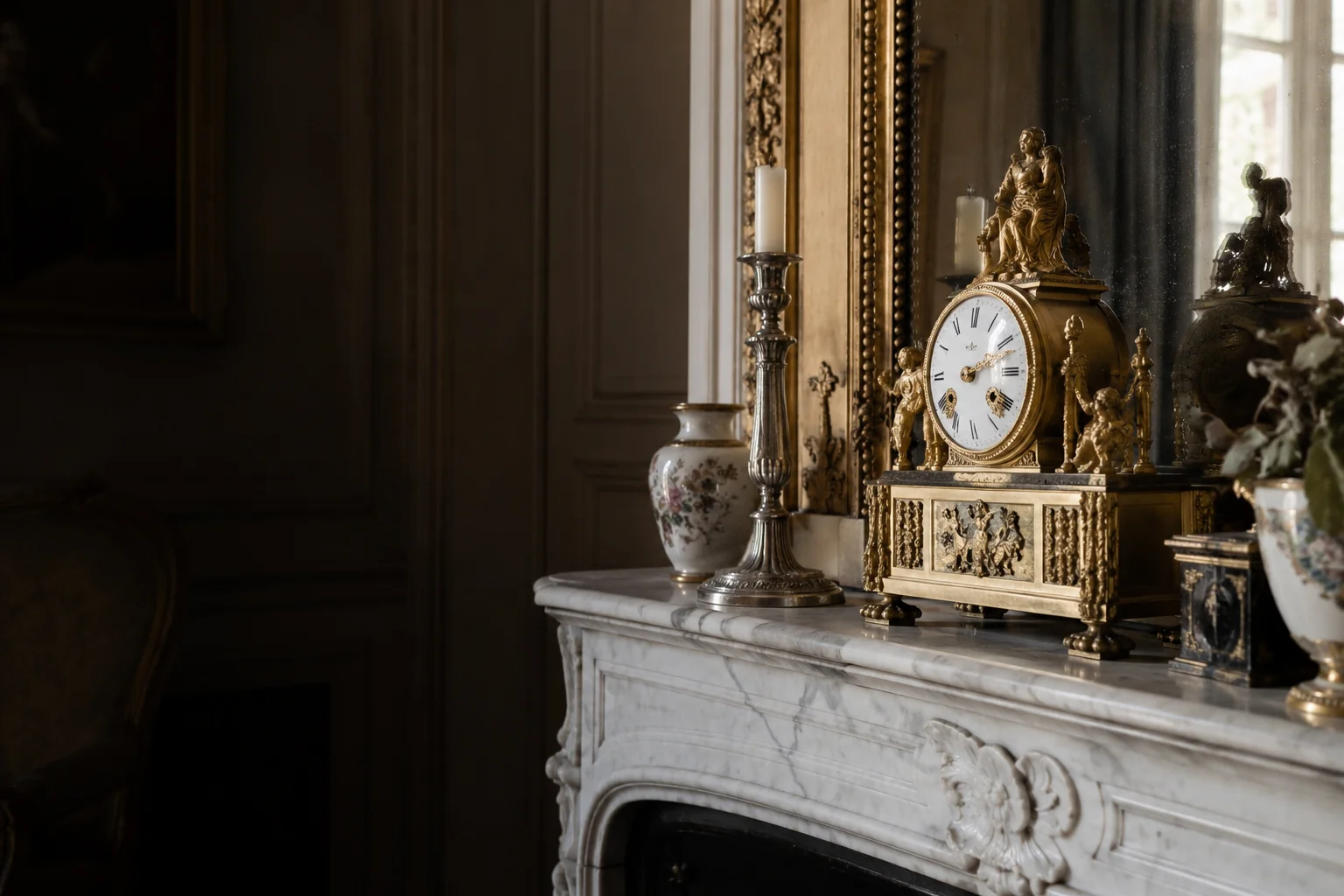
Mantel clocks, cartel clocks, longcase clocks, pocket watches and old wristwatches are sought after, whether or not they work. Note the mark on the dial, the name on the movement, and whether the pendulum, key and glass dome are present. Do not take anything apart: a badly reassembled movement can end up costing a lot in damage. Our page on valuing antique clocks and watches explains what we look at.
Paintings, engravings and drawings
A signed painting, an old landscape, a portrait, a watercolour or a framed engraving may be of interest. Look at the back of the frame: labels, stamps, inscriptions and workshop names give clues. Avoid rubbing the canvas, and do not move a fragile painting without protecting it.
Period furniture
Chests of drawers, writing desks, bureaus, armchairs, bookcases, sideboards: well-made antique furniture keeps its appeal, especially when its structure is original. Very common or bulky pieces are harder to sell. What matters: the quality of the wood, the marquetry, the bronze mounts, the joinery and the overall condition.
Porcelain, glass and works of art
Some earthenware, porcelain, crystal, signed glassware, bronzes and sculptures are worth money. Always turn the object over: a mark under the base can change a lot. A chip or a hairline crack matters too.
Asian objects and curiosities
Vases, statuettes, jade, lacquerware, screens, netsuke, prints: Asian art is a field of its own, with many later copies. It therefore needs close examination. Keep the original box if there is one. Our page on valuing Asian art gives a few pointers.
Postcards, books and small papers
Old postcards, posters, antique books, toys, medals, badges: collections that are kept together and well preserved are the most interesting. Do not sort them in a hurry. An ordinary card is sometimes sitting next to a sought-after one.
Which old items are harder to sell?
Some items often turn up in estates but find few buyers:
- mass-produced furniture, heavy and odd;
- everyday or incomplete tableware;
- decorative trinkets of recent manufacture;
- worn silver-plated metal;
- style reproductions with no particular mark or quality.
That does not mean you should throw them away without looking. What we do not buy, but can still be useful, can be given to charities such as Emmaüs, the Secours catholique or the Salvation Army (Armée du Salut), or to nearby resource recycling centres (ressourceries).
How do I check an item at home?
A few simple steps, without damaging anything:
- Look at the marks: hallmarks, signatures, labels, stamps, numbers.
- Turn the item over: underneath, the back, inside drawers, the bottom of boxes.
- Feel its weight in your hand: a heavy object is sometimes solid metal, but it is not proof.
- Note the flaws: chips, missing parts, repairs, signs of damp.
- Photograph it: an overall view, then close-ups of the marks and flaws, on a neutral background and in good light.
Do not rely only on an internet search. Similar items can have very different values depending on the condition and the details.
Where are valuable items most often found?
Often where people rarely look:
- at the back of dresser and sideboard drawers;
- in tin boxes, jewellery cases and old suitcases;
- in cellars and attics, in cardboard boxes;
- in the pockets of old clothes and in handbags;
- behind or under paintings, in false bottoms;
- in family houses, after an estate has passed to the heirs.
That is why we advise not throwing anything away before one last check. If you are preparing a house or flat clearance, sort the small items first: they are the ones that get lost most easily.
Should I clean or repair before having an item valued?
No. Cleaning a bronze, polishing silver, gluing a piece of porcelain back together or touching up a frame can erase clues and damage a patina. Dust gently if needed, without any product. Leave things as they are, and simply say what you know about the item: where it comes from, how long it has been in the family.
How do I get an old item valued?
You have two simple options:
- from photos: send a few images by WhatsApp for a first opinion;
- at your home: we come to you, free of charge, in Paris and Île-de-France.
Our valuation costs nothing and commits you to nothing. You keep your items if the offer does not suit you. If you choose to sell, payment is made immediately after the purchase.
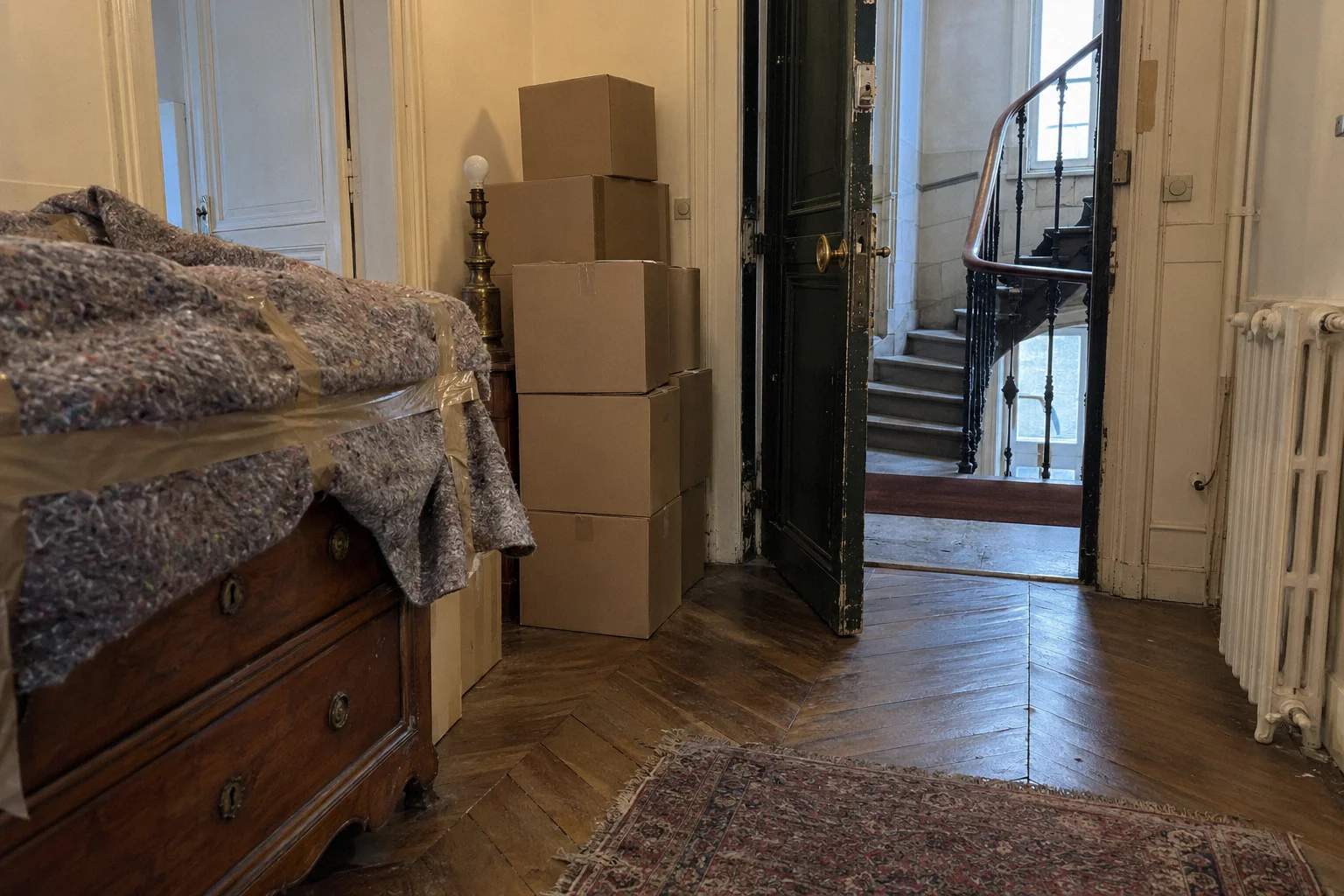
For an estate, a lot of items or a whole house, an on-site visit is often more practical. We sort with you what is of interest, what can be donated, and what has to go to the appropriate recycling and disposal channels.
What to remember
Before throwing anything away, look at the marks, turn items over and keep the small things: jewellery, cutlery, watches, coins, postcards. Clean nothing. And if in doubt, ask for an opinion: a photo is enough to start.
Call us on 06 24 56 38 58 (+33 6 24 56 38 58 from abroad), or send a few photos on WhatsApp to the same number: the valuation is free and without obligation.