By Baptiste Murier, antique and second-hand dealer in Île-de-France.
No, no second-hand dealer really buys everything, and you should be wary of anyone who promises it. A serious brocanteur (second-hand and antiques dealer) does, however, buy many things people assume are worthless: a clock that has stopped, odd pieces of cutlery, a box of postcards, a broken piece of jewellery. In Paris, we look at what you have, tell you what can be sold on, and pay straight away for whatever we buy. The rest can be cleared, given away or recycled. Here is how it works.
Does a second-hand dealer really buy everything?
The phrase "buys everything" is handy, but it is misleading. A dealer buys in order to sell. So he buys what he knows he can put back on sale: an old, collectable, decorative or useful object, in a condition that lets him offer it to a buyer.
That does not mean only high value pieces interest us. Many small things sell well, on a flea market stand or to collectors. We have a stand at the Puces de Vanves flea market at weekends, and we also take part in brocantes (flea markets) across the Île-de-France.
What does not sell, we do not buy. We would rather tell you plainly than waste your time.
What does a second-hand dealer buy in Paris?
Baptiste Murier is an antique and second-hand dealer with several specialities. Here is what we look at most often:
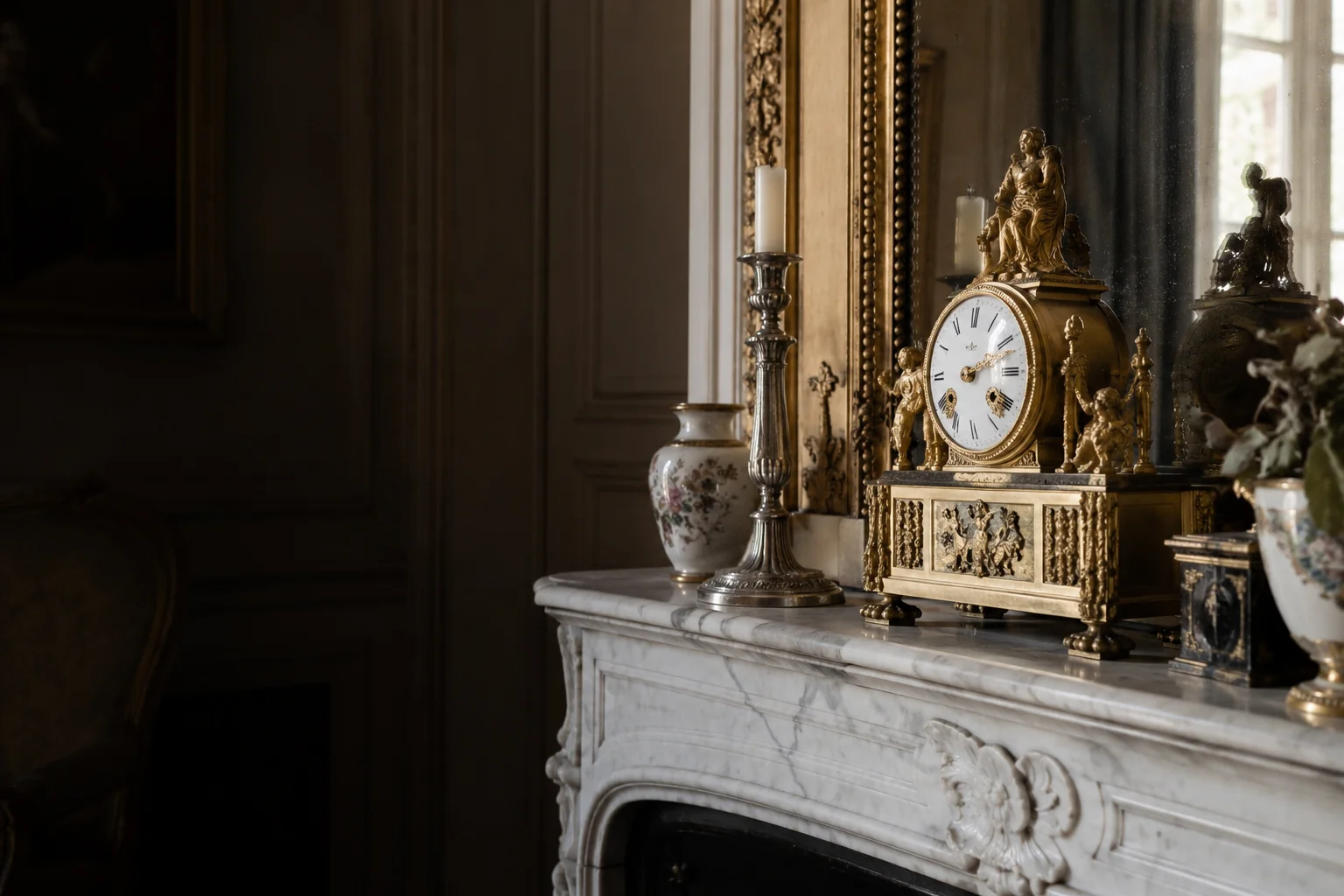
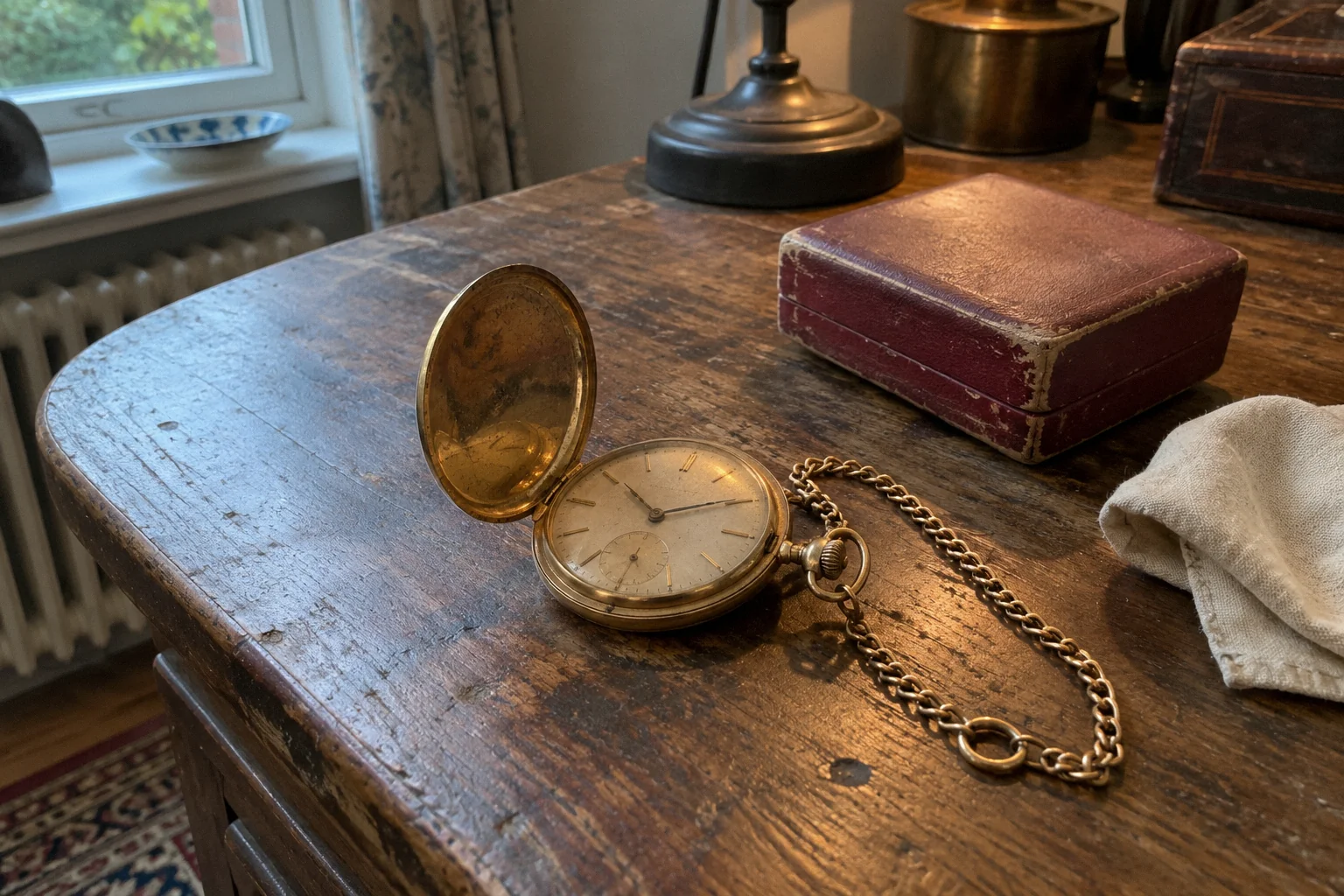
- clocks and watches: mantel clocks, wall clocks (cartels), pocket watches and old wristwatches, even if they have stopped;
- period furniture: chests of drawers, armchairs, desks, tables, bookcases;
- antique jewellery and gold: rings, brooches, chains, identity bracelets, broken ones included;
- silverware: cutlery, canteens of cutlery, teapots, trays;
- coins and medals: old coins, gold coins, religious or commemorative medals;
- old postcards: boxes, albums, whole collections;
- paintings: oils, watercolours, engravings;
- porcelain and Asian art: vases, services, figurines;
- curiosities: anything old and unusual that is hard to put in a category.
For a mixed lot of items, our page on buying antiques and old objects explains how we work. For gold and stones, see buying antique jewellery.
What does a second-hand dealer not buy?
Some items are too hard to sell, and we cannot buy them. These are often:
- furniture badly damaged by woodworm or damp;
- flat-pack or recently made furniture;
- everyday crockery, chipped or mismatched;
- household appliances, bedding, ordinary clothes;
- paperbacks and encyclopaedias;
- copies or reproductions passed off as old.
A broken item is not always worthless, though. A clock that no longer runs, a piece of jewellery with a broken clasp or a service with one piece missing can still interest a dealer. If in doubt, show it before you throw it away.
How does selling to a second-hand dealer work?
With us, it usually goes like this:
- You contact us. A phone call is enough, or a few photos sent on WhatsApp.
- We give a first opinion. From the photos, we tell you whether the items interest us and what we need to see up close.
- We come to your home if it helps. A home valuation is free and with no obligation, and travel is free in Paris and the Île-de-France.
- We make you an offer. You are free to accept or refuse it.
- We pay and take the items away. Payment is immediate, by bank transfer, then we remove the items we have bought.
Nothing obliges you to sell. A valuation does not commit you to anything.
How does a dealer value an item?
Several things count, and none is enough on its own:
- the period and how it was made: a handmade object does not sit in the same place as a recent mass-produced piece;
- the material: gold, solid silver, bronze, fine woods, porcelain;
- the condition: chips, repairs, missing parts, restorations;
- the marks: signature, stamp, hallmark, maker's stamp (estampille);
- current demand: some items sell more easily than others, and this changes over time;
- completeness: a clock with its pendulum and key, a service with no piece missing.
So an old object is not necessarily valuable, and a modest looking one may well sell. That is why it needs to be seen, or at least seen in photos.
For gold, the material plays a big part. Hallmarks help identify the metal, and an antique piece of jewellery can also be judged on its craftsmanship, not only its weight. We explain what we see, step by step.
How is a purchase of items paid for?
We pay immediately, by bank transfer. In France, a bank transfer is required for gold and precious metals.
We may ask for a form of ID at the time of sale. This is a normal precaution for a professional buying second-hand goods, and it also protects the seller.
What if you need to clear a whole home?
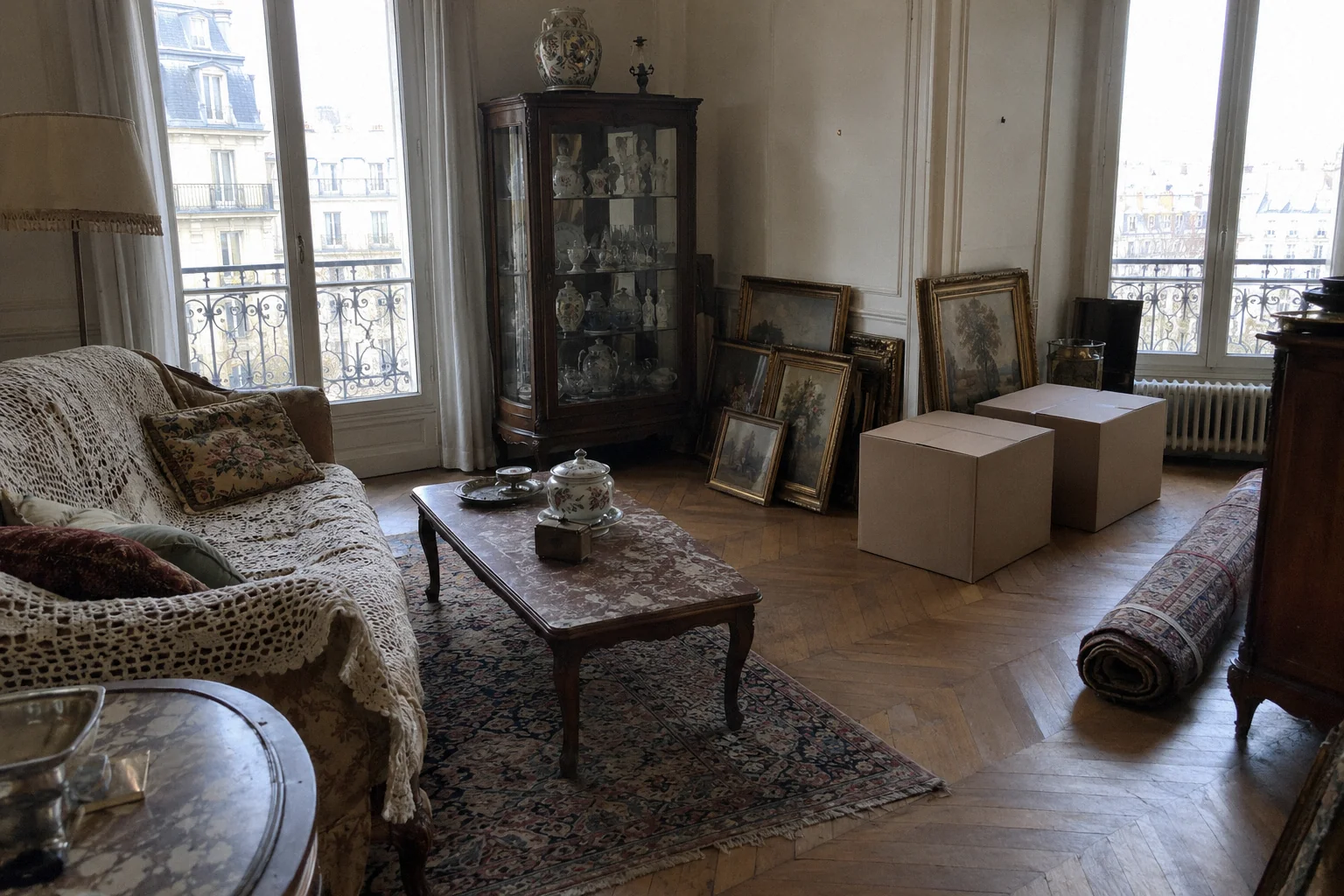
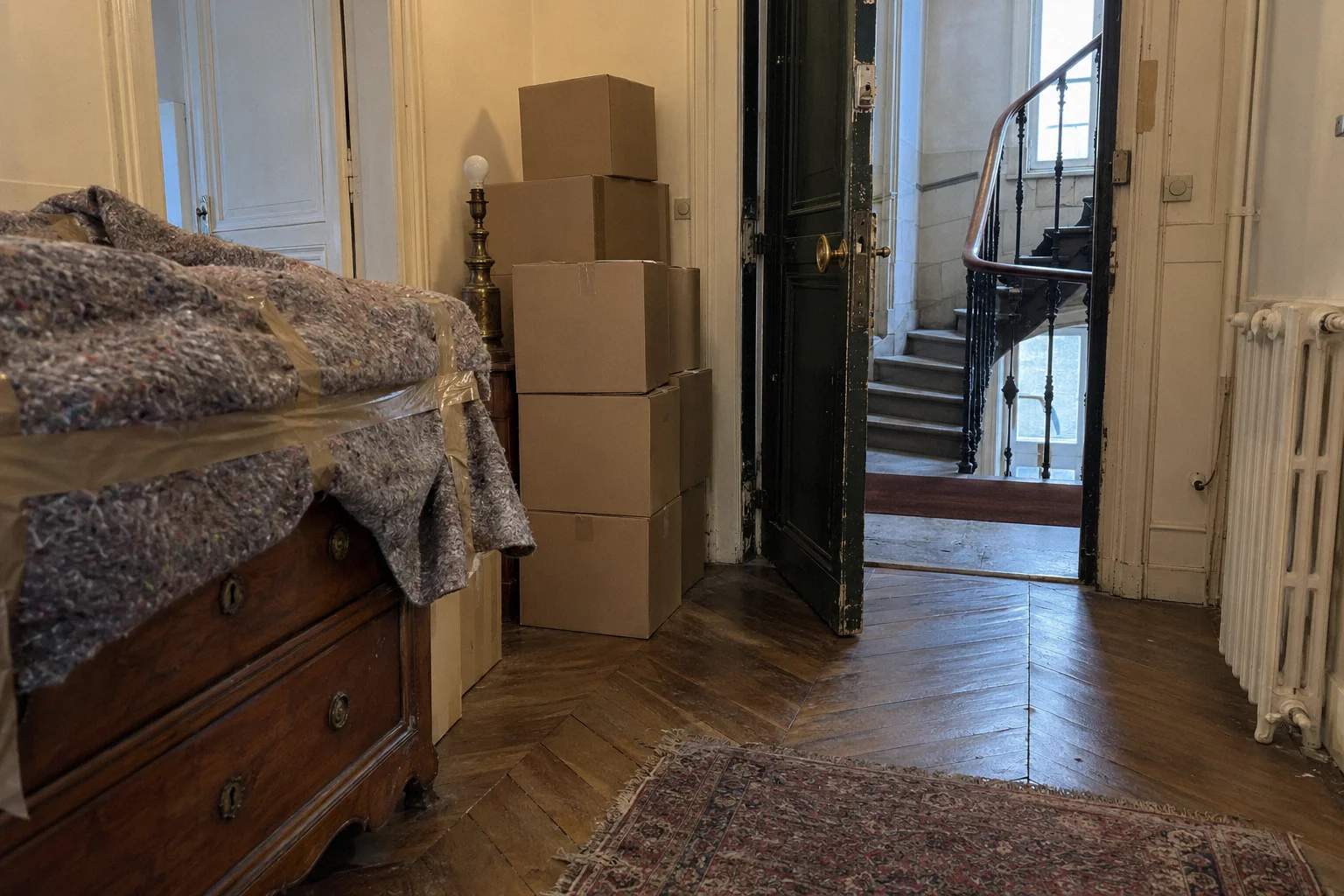
This happens often in Paris: an inherited apartment, a move, a chambre de bonne (former maid's room under the roof) or a cellar to empty. Valuable items then sit alongside many things of no interest to a dealer.
In that case, our house clearance service settles everything in one go:
- a free visit of the property;
- a valuation of whatever has value;
- sorting of the items;
- purchase of what can be sold on;
- removal of everything;
- cleaning, if needed, once the furniture has gone.
The amount we pay for items we buy is deducted from the cost of the clearance. When the purchase covers the clearance, the clearance can be free.
What happens to the things that are not bought?
Items still in usable condition go to charities such as Emmaüs, the Secours catholique or the Armée du Salut (Salvation Army), or to local ressourceries (reuse centres). The rest goes to the proper channels: the tip or recycling. Nothing is left behind.
Can you sell to a dealer without leaving home?
For a first opinion, yes. A few good photos often tell us whether an item interests us. To make them useful:
- photograph the whole item in daylight;
- add close-ups of signatures, marks and hallmarks, often under the base or inside;
- show the flaws, such as a chip or a repair;
- give the dimensions if you know them.
Send everything on WhatsApp to 06 24 56 38 58. For a piece of furniture, a collection or a whole home, a visit is still the best option.
We work all over Paris, and also in the Hauts-de-Seine, Val-de-Marne, Yvelines, Essonne and Seine-et-Marne. For the capital, see our page on antiques and house clearance in Paris, which covers buildings without a lift, maids' rooms and cellars.
How do you spot a dealer you can trust?
A few simple checks to avoid unpleasant surprises:
- he can be identified: name, phone number, SIREN number (French company registration number);
- he explains how he values things, instead of throwing out a figure without showing anything;
- he does not rush you and gives you time to think;
- he states the payment method before the sale;
- he does not say an item is "worthless" without having looked at it;
- he is happy for you to get a second opinion.
We are Murier Antiquités, SIREN 912 217 916. Our Google listing shows 4.6 out of 5 from 53 reviews, and you can find us at weekends at Vanves to see how we work.
Do you need to be careful with an inheritance?
Yes. Before selling anything after a death, make sure all the heirs agree. If a notaire (notary) is handling the estate, ask whether they first want an inventory of the furniture and objects.
Also take the time to set aside family keepsakes, even modest ones. Once the items have gone, it is hard to go back. We can value everything without buying anything, so that everyone knows where things stand before deciding.
Talk to us
If you have antiques to value or a home to clear in Paris, call us on 06 24 56 38 58 (+33 6 24 56 38 58 from abroad), or send a few photos on WhatsApp to the same number. The valuation is free and with no obligation.